
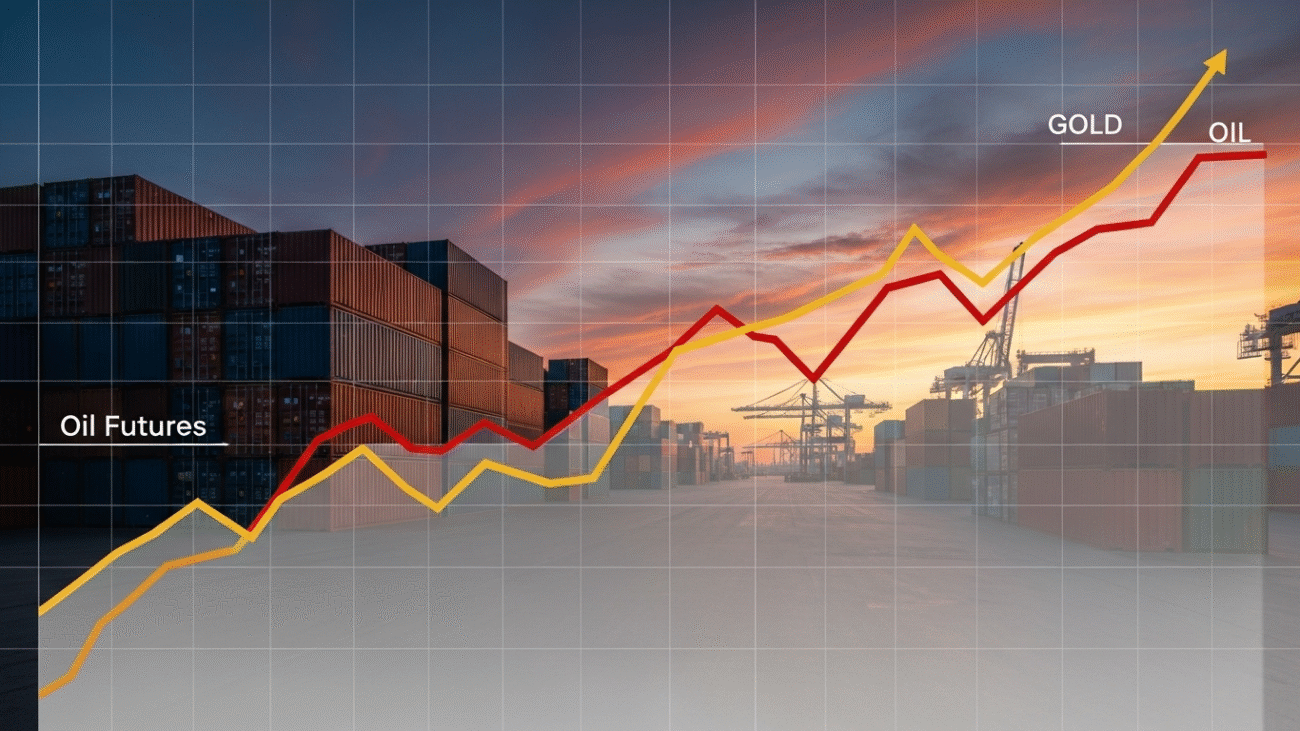
The global Raw Material and Commodity Market during the week of October 19-25, 2025, was defined by extreme divergence, with Precious Metals( Gold & Silver ) surging to unprecedented peaks as a safe-haven trade, while Energy Commodities grappled with a significant supply overhang. Industrial and Critical Raw Materials, particularly those central to the energy transition, found themselves caught in the crosshairs of escalating global trade wars, with new tariff announcements creating high volatility for exporters and manufacturers worldwide. For Indian exporters, like those using The Exporter Hub, this environment demands exceptional agility in pricing and supply chain management.
The Golden Rush: Safe-Haven Demand Propels Precious Metals
The most striking headline from the commodity sector this week was the continued, relentless ascent of Gold and Silver. Gold prices broke convincingly above the $4,300 per ounce mark, setting new all-time records. This monumental surge is fueled by a confluence of factors, making it a critical barometer of global risk:
- Geopolitical Turbulence: Heightened global political and policy uncertainty, including escalating tensions and the threat of additional tariffs between major economic blocs (like the US-China and US-India trade friction), has driven institutional and retail investors to the traditional safe-haven asset.
- Monetary Policy Expectations: Growing anticipation of further interest rate cuts by the US Federal Reserve, spurred by weaker-than-expected economic data, has lowered real interest rates. Gold, which offers no yield, becomes comparatively more attractive when the opportunity cost of holding it (in terms of foregone interest) decreases.
- US Economic Concerns: Lingering worries over regional bank health and the economic impact of the ongoing US government shutdown contributed significantly to the safe-haven scramble.
Silver followed suit, also hitting new record highs, driven by both its role as a precious metal and its strong industrial demand, especially in the booming solar and electronics sectors. For exporters dealing in goods with high silver content, the increased material cost is an immediate concern.
Energy Market: Oversupply Jitters Cap Oil’s Gains
In stark contrast to the precious metals boom, the Crude Oil market remained under considerable bearish pressure.
- Oversupply Dominates: Both Brent and West Texas Intermediate (WTI) crude benchmarks traded around five-month lows, hovering in the low to mid-$60s per barrel range. The market is increasingly focused on a projected global oil surplus nearing an estimated four million barrels per day (mb/d) in 2026. This oversupply is largely attributed to robust non-OPEC+ production, primarily from the US, Brazil, and Canada, even as OPEC+ production cuts are gradually unwound.
- Inventory Build-Up: US crude inventories showed another significant build-up, adding to the bearish sentiment.
- Geopolitical Risk Easing: News of tentative progress in Middle East peace talks, despite being fragile, temporarily eased the “war premium” on oil prices, allowing fundamentals (oversupply) to reassert their dominance in price formation.
Conversely, Natural Gas prices showed an upward trajectory, particularly in European and Asian hubs, driven by higher global demand and uncertainty surrounding the expiration of key pipeline deals. This volatility in energy costs is a critical input factor that affects manufacturing and logistics costs for exporters globally.
Industrial and Building Materials: Tariffs Create Volatility
For companies involved in the Building Material sector, such as Shiv’s Assets Group—which deals in AAC Blocks, TMT Bars, and Natural Sand—the week was marked by volatility caused by regulatory and geopolitical moves.
- Trade War Impact on Metals: The threat of new, massive tariffs on Chinese goods by the US, and the existing high tariffs on Indian exports (including textiles, gems, and chemicals), sent ripples through global manufacturing supply chains. This particularly impacts industrial metals like Steel, Aluminum, and Copper.
- Building Material Costs: Tariffs on steel and aluminum imports are keeping base prices for essential building inputs—like rebar and structural elements—elevated, forcing contractors and manufacturers to adjust their pricing and supply contracts. Even wood products are subject to tariff-induced price hikes in certain trade lanes.
- Critical Minerals Focus: The spotlight is on Critical Raw Materials (CRMs)—such as Lithium, Cobalt, and Rare Earth Elements—which are vital for the energy transition. The imposition of new export controls on Rare Earths by China, and the US’s retaliatory tariff threat, highlights the escalating struggle for resource security. This development is simultaneously driving investment into CRM recovery/recycling technologies and pushing global prices higher due to supply uncertainty.
This highly charged environment forces Indian exporters to constantly reassess sourcing strategies and factor in the added costs and delivery risks associated with a fragmented global supply chain. The ability to source materials competitively, or pivot to domestic alternatives, is becoming a key competitive advantage.
Source Link: IEA Oil Market Report – October 2025 Analysis
Add a Comment