
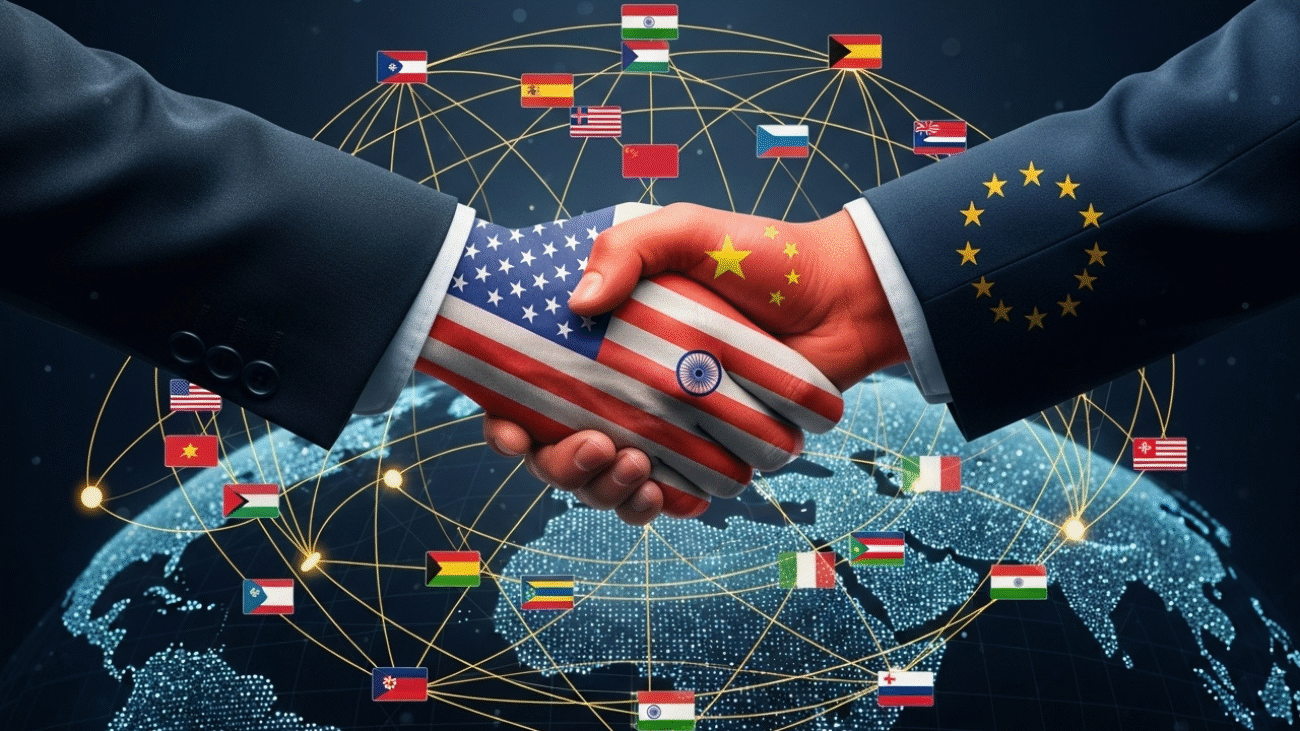
The global trading system( Trade Policy ) is in a state of unprecedented flux. This past week, from September 7th to September 14th, has brought to the forefront the deepening complexities of international trade, from escalating tariff wars to the slow but critical progress of new agreements. For exporters and importers, staying ahead of these policy shifts is no longer optional—it’s essential for survival and growth.
This period was marked by a palpable sense of uncertainty, with national interests increasingly taking precedence over multilateral cooperation. The United Nations Conference on Trade and Development (UNCTAD) released its September 2025 report, which highlighted how trade policy uncertainty has become a major source of global instability. Sudden, unilateral actions by major economies, particularly the United States, are sending shockwaves across supply chains, forcing businesses to re-evaluate their strategies in real-time.
1. The U.S.-China Trade Dialogue: A Tense Pause in Madrid
The most significant trade story of the week was the high-stakes meeting between U.S. and Chinese officials in Madrid. While previous talks have managed to stave off a full-blown trade war with 90-day pauses on escalating tariffs, this round was particularly tense. Just before the talks, China launched anti-dumping and anti-discrimination investigations into U.S. semiconductors, a direct response to Washington’s export curbs on advanced chip technology.
These talks underscore the deep-seated strategic competition between the two economic giants. While a full resolution remains elusive, the ongoing dialogue is a critical effort to prevent a complete collapse of trade relations. Exporters operating in either market are advised to monitor these developments closely, as even minor changes in policy can have major impacts on supply chain costs and market access.
2. India’s Trade Diplomacy Heats Up
For Indian businesses, this week has been a whirlwind of diplomatic activity. Commerce and Industry Minister Piyush Goyal confirmed that India is in “active dialogue” with the United States to finalize a trade deal. This comes even as U.S. Commerce Secretary Howard Lutnick has publicly linked a deal to India’s oil purchases from Russia, adding a new layer of complexity to the negotiations.
Furthermore, India-EU Free Trade Agreement talks have seen “rapid progress,” with officials from both sides holding the 13th round of negotiations in New Delhi. While major sticking points remain, particularly around non-tariff barriers, the renewed commitment from both sides is a positive signal for exporters of agricultural and industrial goods. Similarly, discussions with New Zealand, Oman, and Chile are progressing, signaling a broader strategy by India to diversify its trade partnerships and reduce its dependence on any single country.
The recent enactment of the Carriage of Goods by Sea Act, 2025, and the Bills of Lading Act, 2025, is a clear example of India’s commitment to modernizing its trade framework to align with global standards. This domestic policy reform is a crucial step towards facilitating smoother international trade and enhancing the competitiveness of Indian businesses.
3. EU’s Dual-Use Export Controls and Green Agenda
The European Union demonstrated its focus on both security and sustainability this week. The European Commission adopted a new regulation updating its list of dual-use items, adding strict controls on the export of advanced technologies such as quantum computers, semiconductor manufacturing equipment, and advanced electronic components. This move, which aligns with international export control regimes, is aimed at preventing sensitive technology from falling into the wrong hands.
Concurrently, the EU is making its green agenda a central pillar of its trade policy. Exporters, especially those in carbon-intensive sectors, are keenly watching developments related to the Carbon Border Adjustment Mechanism (CBAM) and other sustainability regulations. As a manufacturing and exporting hub, my company, Shiv’s Assets Group, which works in building materials like AAC Fly Ash Block and TMT Bars, must stay informed about these kinds of environmental regulations to ensure compliance and market access. The EU is also seeking stakeholder feedback on an amendment to the European Climate Law, which could introduce a more ambitious 2040 emissions target, signaling that the greening of trade is a long-term commitment.
4. WTO Reform & The Fight for a Fairer System
The World Trade Organization (WTO) remains at the heart of the debate on global trade governance. At the Shanghai Cooperation Organisation (SCO) Trade Ministers’ Meeting this week, India’s representatives reaffirmed their commitment to a multilateral, WTO-centered trading system. They also underscored the need for key reforms, including a permanent solution for public stockholding for food security, better special and differential treatment for developing nations, and the restoration of a fully functional two-tier dispute settlement system.
This push for reform comes at a critical time, as the WTO’s authority is increasingly challenged by unilateral actions and bilateral deals. Vietnam’s recent ratification of the Fisheries Subsidies Agreement is a positive development, marking a significant step towards a more sustainable global trading system. However, the overall sentiment remains one of cautious optimism as member nations navigate a complex web of competing interests.
Conclusion: A New Era of Trade
The events of the past week confirm that the era of predictable, rule-based global trade is giving way to a more fragmented and politically charged landscape. Businesses can no longer rely on static policies; they must be proactive, informed, and agile. By diversifying their markets, investing in supply chain resilience, and staying ahead of policy changes, companies can transform these challenges into opportunities for growth and innovation.
Full Video- YouTube