
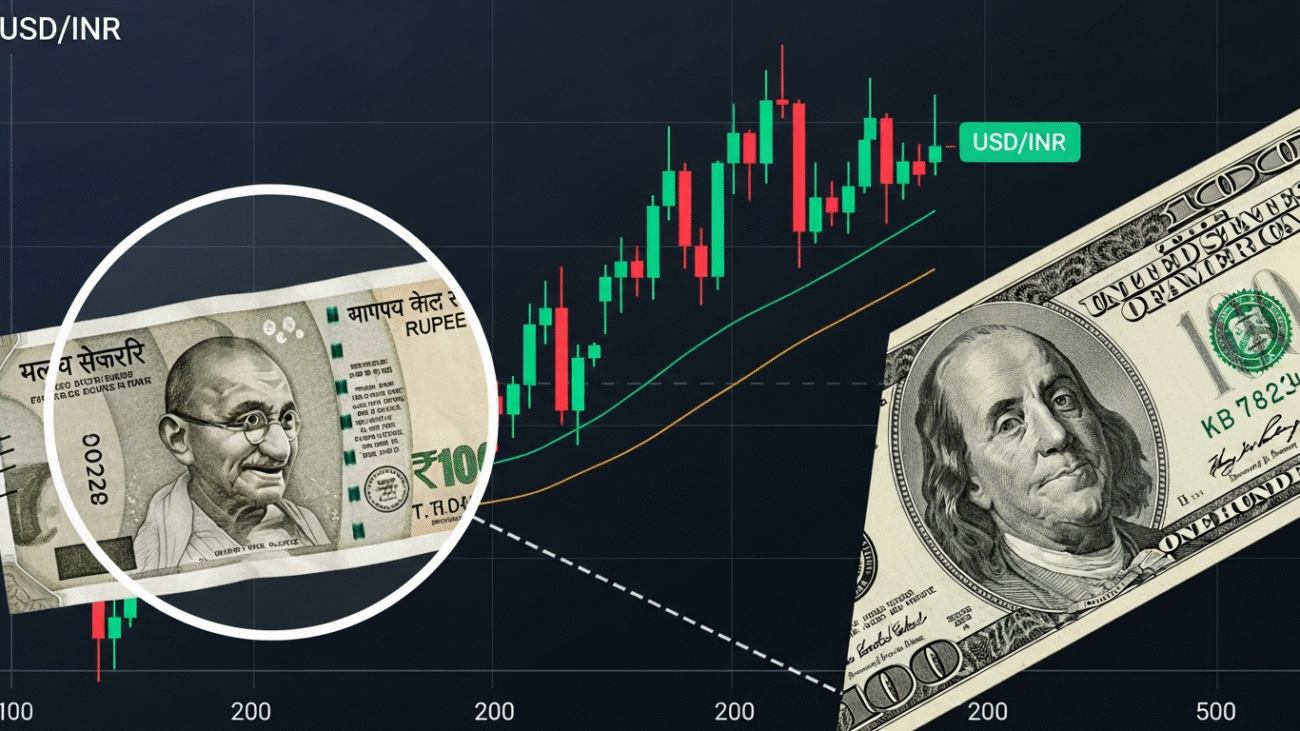
The first week of November 2025 (November 1-8) was characterized by heightened central bank divergence and persistent weakness in the Indian Rupee, which is now hovering near its all-time low. Key developments saw major central banks like the Bank of England (BoE) and the Reserve Bank of Australia (RBA) hold their rates steady, signaling an end to the global easing cycle, while the Indian currency struggled against a strong US Dollar. This environment creates urgent challenges for importers and new opportunities for exporters like those using The Exporter Hub.
1. 🏦 Central Bank Hold: The Global Easing Cycle Nears its End
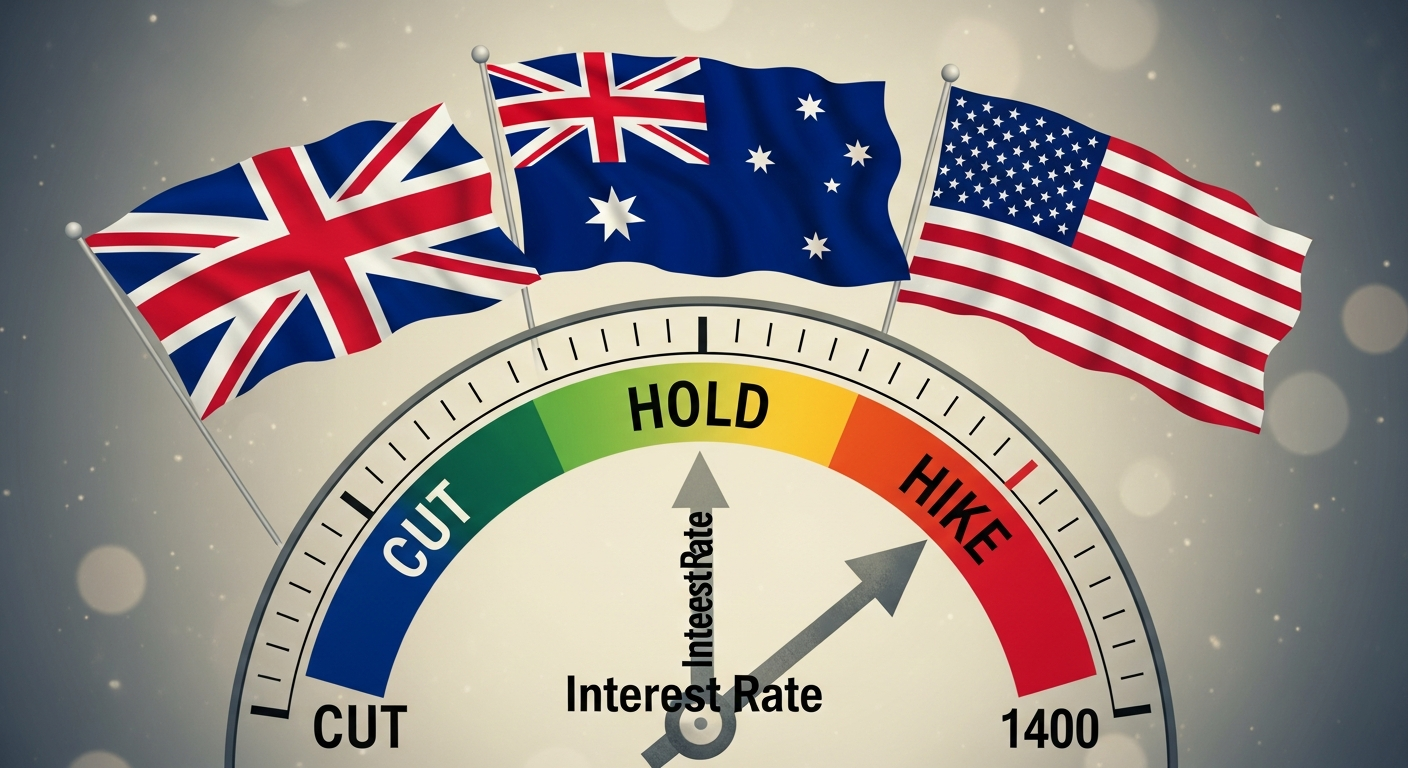
The prevailing narrative this week was the signal from multiple major central banks that their rate-cutting cycles are essentially over for the near term, with a focus shifting back to curbing inflation persistence.
- Bank of England (BoE) Holds Steady: On November 6, the Monetary Policy Committee (MPC) voted 5-4 to maintain the Bank Rate at 4.0%. The close vote—with four members preferring a 25 basis point cut—highlights the internal debate. The decision was driven by the judgment that while underlying disinflation is progressing, more evidence is needed, and the Bank noted that the risk of weaker demand is becoming more apparent than the risk of persistent high inflation. This firm hold supported the British Pound (£), contributing to a weaker Indian Rupee (₹) against it.
- Reserve Bank of Australia (RBA) Holds: The RBA left its cash rate unchanged at 3.60% on November 4, defying some market expectations for a cut. RBA Governor Michele Bullock cited a recent pick-up in inflation and strengthening consumer demand, particularly in the housing market, as reasons for caution. The RBA’s language signaled little appetite for further easing in the near term, strengthening the Australian Dollar (AUD).
- ECB and Fed Context: This week’s holds follow the US Federal Reserve’s cautious 25 bps cut last week and the European Central Bank’s (ECB) hold at 2.0%. The overall picture is that global monetary policy has shifted from aggressive easing to a “wait-and-see” approach, focusing on maintaining restrictive conditions to achieve the 2% inflation target.
2. 💱 Rupee’s Slide: Near Record Lows

The Indian Rupee ($\text{₹}$) was a major focal point in the forex market this week, trading under severe pressure and hovering near its all-time low recorded in September 2025.
- USD/INR Dynamics: The exchange rate for USD/INR ranged between approximately $\text{₹}88.61$ and $\text{₹}88.80$ this week, dangerously close to the September record low of $\text{₹}88.97$.
- Causes of Weakness: The primary drivers of the Rupee’s depreciation include:
- Persistent FII Outflows: Foreign Institutional Investors (FIIs) continue to withdraw capital from the Indian equity market, putting steady pressure on the currency.
- Stronger US Dollar Index (DXY): The US Dollar remains resilient, supported by strong US earnings data and the Fed’s cautious stance on further rate cuts.
- Corporate Hedging: Increased dollar buying by corporations and oil importers has created sustained demand for the dollar, further weakening the Rupee.
- Impact on Indian Businesses: The depreciating Rupee is a double-edged sword for your audience:
- Importers/Manufacturers (Shiv’s Assets Group): It makes the import of raw materials (like TMT bars, or specialized machinery) significantly more expensive, increasing input costs and squeezing margins.
- Exporters (The Exporter Hub): It provides a competitive advantage, as every dollar earned brings in more Rupees. This boosts the profitability of Indian exporters, making their goods cheaper for international buyers.
- Forex Reserves Decline: Reinforcing the pressure, the RBI reported this week that India’s foreign exchange reserves fell by $5.6 billion to $689.73 billion in the week ended October 31, suggesting the central bank has been intervening in the market to moderate volatility.
3. 📈 Equity Markets & Gold’s Resilience
Global and domestic equity markets showed resilience, with technology stocks driving momentum, while gold prices found support from the currency chaos.
- U.S. Equity Momentum: US stock indexes continued their rally, with the NASDAQ outperforming its peers, propelled by strong quarterly earnings reports from major technology stocks (like Amazon and AMD) and ongoing enthusiasm for AI investments. Despite the uncertainty caused by the ongoing government shutdown, optimism fueled by tech buoyancy kept the S&P 500 and Dow Jones near record levels.
- Indian Equity Market: Indian indices displayed muted performance this week compared to the previous strong rally, primarily due to the pressure from FII outflows linked to the weak Rupee and regulatory concerns in certain banking sectors.
- Gold Price Support: Gold prices found technical support and consolidated above the $\text{\$4,000}$ per ounce level. The metal’s resilience is being driven by the weakness in local currencies (like the Rupee and Yen), which makes gold more attractive to domestic buyers, as well as the persistent global geopolitical uncertainties.
Source Link : A crucial source for the central bank decisions and global market context
Add a Comment