
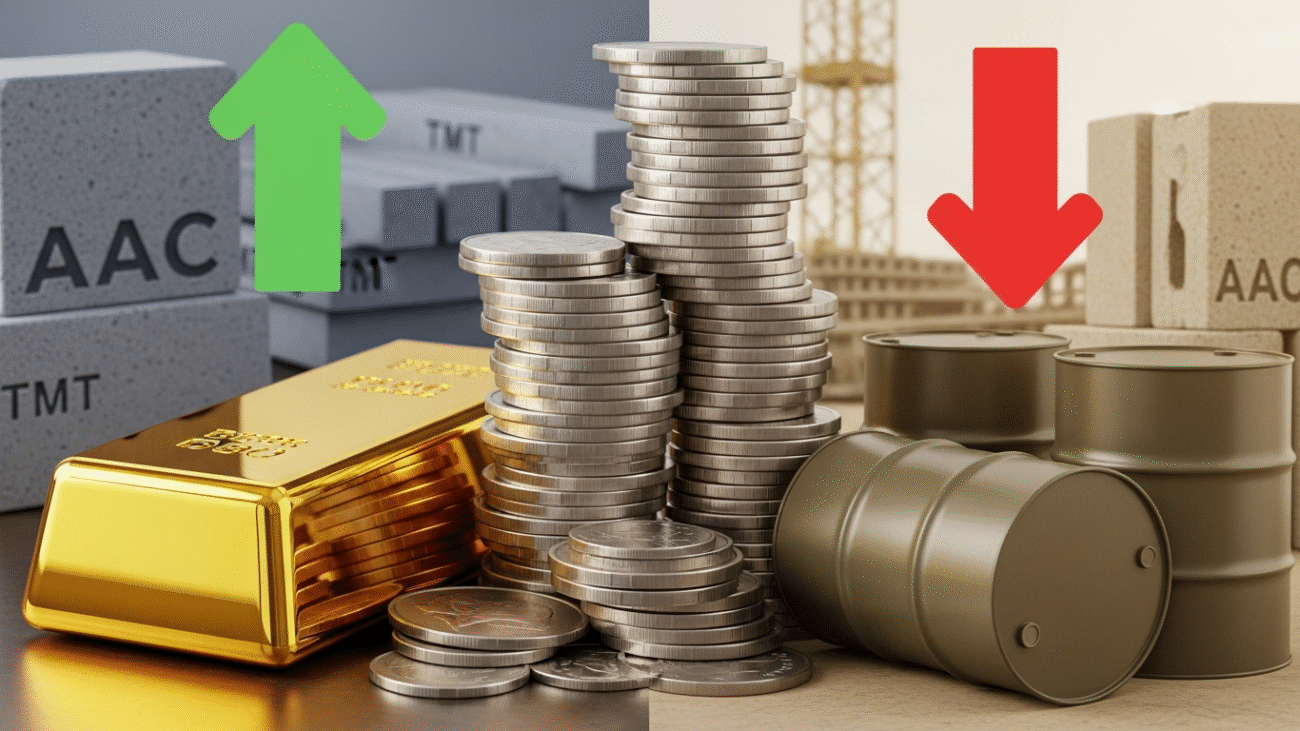
The final week of October 2025 delivered a sharp dichotomy across the global commodity landscape, with safe-haven assets like gold surging to near-record highs while energy prices continued their downward trend. Geopolitical shifts, particularly the easing of US-China trade tensions and a key Federal Reserve interest rate decision, acted as the primary market movers. For industries, especially construction, the volatility in metals and promising developments in the Indian building materials sector created a mixed but opportunity-rich environment.
1. 🛢️ Energy Markets: The Global Glut Deepens
The energy sector was defined by persistent oversupply concerns, pushing crude oil prices lower, marking a potential third consecutive monthly decline.
- Crude Oil’s Retreat: Brent Crude hovered just below $65 per barrel, while West Texas Intermediate (WTI) futures drifted toward the $60 mark. The primary pressure came from expectations of rising global output, even ahead of the scheduled OPEC+ meeting, which is reportedly inclined to increase production targets. Traders adopted a cautious stance, awaiting the outcome of both the OPEC+ decision and the highly anticipated US-China summit. The decline reflects a global market struggling with sluggish demand growth, particularly as consumption in China stagnates and the adoption of electric and hybrid vehicles accelerates.
- Indian Market Snapshot: On the Multi-Commodity Exchange (MCX), crude oil futures for November delivery fell, driven by weak demand in the spot market.
2. ✨ Precious Metals: Safe-Haven Rally Continues
Gold and silver prices experienced a significant surge, reinforcing their status as crucial safe-haven assets amidst lingering economic policy uncertainty and persistent central bank purchasing activity.
- Gold’s Historic Highs: Gold prices climbed toward an unprecedented $4,000 per ounce, fueled by strong central bank demand, which saw Q3 purchases up by a significant 28%. The gains were initially capped by hawkish signals from the Federal Reserve and a firm US dollar. However, even with optimism surrounding the US-China trade truce, the metal’s appeal during a period of global policy flux remained strong. The World Bank’s recent outlook forecasts a historically large, investment-driven rally of about 40% for gold in 2025.
- Silver’s Dual Role: Silver prices mirrored gold’s upward trajectory, also hitting near-record annual averages. The surge is attributed to its dual role as both a safe-haven asset and a key industrial metal essential for the fast-growing renewable energy and data center sectors.
3. 🏗️ Industrial Metals & Construction Materials: Mixed Signals
The industrial metals complex presented a mixed picture, heavily influenced by US-China trade dynamics and internal supply constraints, which are especially pertinent for building material manufacturers like Shiv’s Assets Group.
- Copper’s Volatility: Copper prices experienced a downward trend during the week, primarily due to the uncertainty caused by the ongoing US government shutdown and cooling sentiment following recent trade tensions. However, underlying structural factors—accelerating demand from AI data centers, grid infrastructure, and the energy transition—continue to point toward long-term scarcity. Market anticipation of new US tariffs created unusual price differentials between the COMEX and LME exchanges.
- Steel and Aluminium: Aluminium futures showed a modest rise on the MCX, driven by speculators building fresh positions amid a positive trend in the spot market and renewed demand from consuming industries. Conversely, Zinc futures saw a slight decline. The Indian steel sector continues to show robust growth in crude steel production and consumption, though the country remains a net importer of finished steel.
- Focus on Indian Building Materials (AAC Blocks & Fly Ash): The domestic market for sustainable building materials remains bullish. The AAC (Autoclaved Aerated Concrete) Blocks market in India is projected for strong growth, driven by:
- Government Initiatives: Policies promoting green building materials and energy efficiency.
- Sustainability Focus: Higher demand for lightweight, durable, and eco-friendly construction, aligning with the growing use of Fly Ash as a key raw material. India successfully recycled a high percentage of its generated fly ash in the last financial year into roadbuilding, cement production, and brick/tile production.
- Taxation Relief: News of a potential GST revision—including a 10% reduction in tax on materials like cement—is expected to significantly reduce construction costs, potentially boosting demand for all building materials, including your AAC Blocks and natural sand.
4. ⚖️ Macroeconomic Influencers: Trade Truce and Rate Cut
Two major global events defined the week’s market sentiment:
- Federal Reserve Rate Cut: The Fed delivered its second interest rate cut of the year (a 25-basis-point reduction), signaling a move toward a more accommodative monetary stance. Lower rates tend to inject liquidity into the financial system, generally supporting commodity prices, but the actual impact was complex and varied across asset classes.
- US-China Trade Truce: Presidents Trump and Xi Jinping reached a preliminary trade agreement, essentially a one-year truce. This significantly reduced trade tension uncertainty, a factor that had previously weighed heavily on industrial metals like copper. The deal is expected to bolster global economic growth, increasing future demand for raw materials, but its initial effect was to dampen the safe-haven appeal of gold.
Add a Comment