
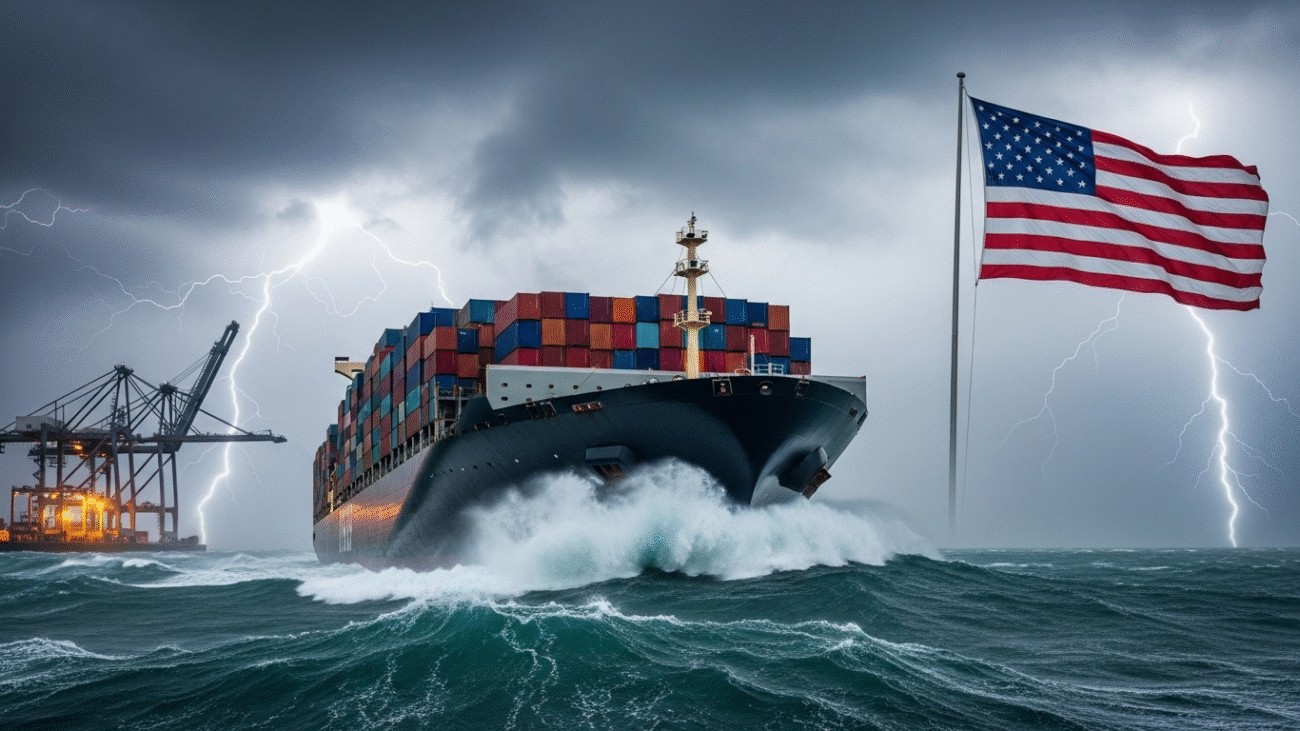
The week of October 12–18, 2025, marked a period of intense pressure and volatility across global logistics and shipping sectors. Supply chains faced a complex triple threat: a protracted US government shutdown slowing customs and air traffic, renewed industrial action at major European ports, and the implementation of significant new tariffs targeting Chinese-linked shipping. These simultaneous disruptions underscore the fragility of global trade networks and the critical need for exporters, like The Exporter Hub, to adopt advanced risk mitigation strategies.
The American Choke Point: US Government Shutdown
The ongoing US government shutdown, now in its third week, has emerged as a major choke point for international trade. While U.S. Customs and Border Protection (CBP) officers remain on duty, deemed “essential,” the furloughs of thousands of support staff and other agency personnel are creating significant friction and regulatory bottlenecks.
Key Impacts:
- Customs Delays: Although core port entry functions continue, documentation processing for shipments, especially those requiring clearances from non-operational agencies (like some agricultural or food safety inspections), is reportedly slowing. This mirrors previous shutdowns, where shipment dwell times at ports like Los Angeles-Long Beach rose by 15-20%.
- Air Cargo Strain: Staffing shortages among Federal Aviation Administration (FAA) air traffic controllers, who are working unpaid, have led to congestion and delays across major US air hubs. This instability is particularly damaging for time-sensitive high-value freight, such as pharmaceuticals and high-tech electronics.
- Uncertainty and Cost: The indefinite timeline of the shutdown injects profound uncertainty into supply chain planning, forcing shippers to seek expensive, last-minute rerouting or expedited freight options. For Indian exporters, like those utilizing the platform of The Exporter Hub, this translates directly to a higher risk of unpredictable lead times and increased final delivery costs to the US market.
Geopolitical Turmoil: The New Tariff Landscape
A major new development this week was the October 14, 2025, implementation of new US Section 301 measures, which impose phased-in service fees on maritime transport services of Chinese-owned and Chinese-built vessels calling at US ports.
The Details:
- Targeted Fees: The new policy introduces escalating fees over three years. Chinese-owned or operated vessels are charged a fee per net ton per voyage. Separately, non-Chinese operators using large Chinese-built ships also face fees, which can be charged per net ton or per container.
- Industry Reaction: The measure immediately prompted major carriers to assess their fleet deployment, with some actively adjusting their networks to minimize exposure to the new cost structure. While carriers have initially stated that no surcharges are immediately planned, the new operational costs are likely to translate into higher overall shipping rates on Transpacific routes over the long term.
- Retaliation from China: In a direct reciprocal move, China began imposing new port fees on US-owned, operated, or controlled vessels on October 14. This tit-for-tat escalation increases operational costs for US carriers and deepens the global trade tensions that have characterized the logistics market throughout 2025. This dual-tariff environment adds another layer of complexity for exporters globally, as it affects pricing strategies and carrier selection for trade between the world’s two largest economies.
European Port Congestion: Strikes Return
On the Asia-Europe trade lane, ports in Northern Europe were hit by renewed industrial action, amplifying existing congestion concerns.
Port Disruption:
- Rotterdam and Antwerp-Bruges: The first half of the week saw strikes from lashing companies in Rotterdam and “work-to-rule” action by pilots in Antwerp-Bruges. This industrial action, stemming from ongoing labor disputes over working conditions and pay, caused severe delays and significant vessel backlogs.
- Backlogs and Delays: By mid-week (October 15), the strikes in both ports were reported to have ended temporarily, but port authorities warned it would take several days to clear the vessel and cargo backlogs. This congestion further strains the already low schedule reliability on the Asia-Europe corridor and poses a risk to inventory planning for European importers.
Freight Rate Dynamics: A Bearish Outlook Attempts a Correction
Despite the operational disruptions, the overall market for ocean freight remains defined by oversupply and weakening demand following the mid-year ‘front-loading’ ahead of tariff deadlines.
- Asia-Europe Rates: Spot rates on the Shanghai to Rotterdam route saw a modest 6% jump this week, driven by carriers implementing a General Rate Increase (GRI) and new Freight All Kinds (FAK) rates effective October 15. This was a clear attempt to stop the post-Golden Week rate slump, but analysts are largely skeptical that this rate increase will hold, predicting that the oversupply-driven downward trend will soon resume.
- Drewry World Container Index (WCI): The composite WCI recorded a 2% increase this week to $1,687 per 40ft container, marking its first increase after 17 consecutive weeks of decline. While a positive sign for carriers, the broader market outlook remains cautious, forecasting further rate contraction into the final quarter of 2025 unless a significant supply shock or demand spike occurs.
The confluence of US regulatory friction, new geopolitical tariffs, and European labor woes has transformed the logistics landscape from one of simple recovery to one of perpetual crisis management. For businesses, especially export-focused platforms like The Exporter Hub, this volatile environment requires maximum agility, digital visibility, and diversified carrier and route selection to maintain schedule integrity and cost control.
Add a Comment