
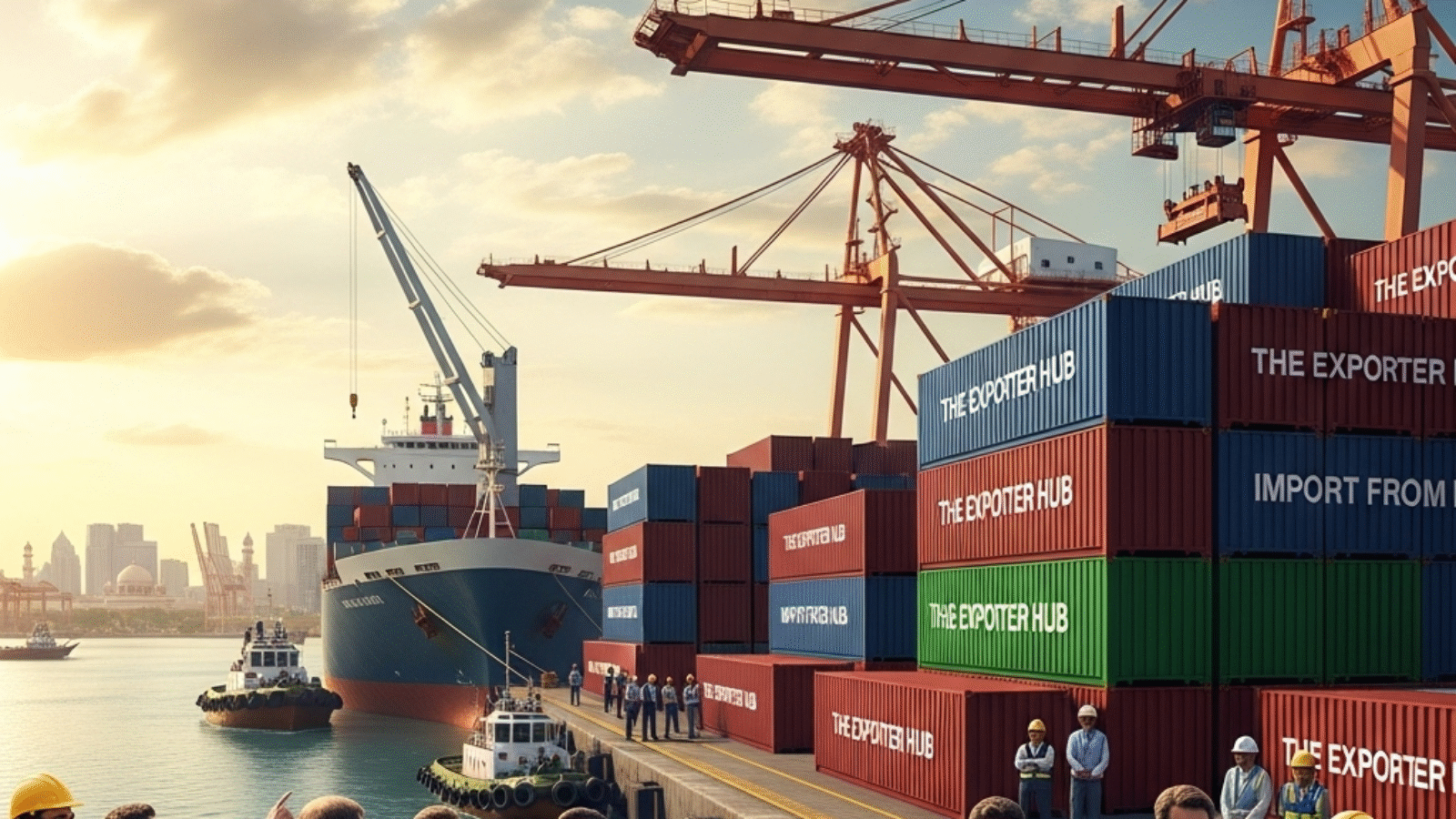
Importing goods from India( Import From India ) can be a great business move. It lets you access a wide range of products at good prices. To do well, you need to know the import process inside out. TheExporterHub.com is a great tool that connects you with India’s trusted exporters. It makes importing easier for you.

With the right help, you can handle the tough parts of international trade. This guide will show you how to import goods successfully. It covers all the key steps you need to know.
Key Takeaways
- Understand the import process and regulations
- Identify reliable Indian exporters through platforms like TheExporterHub.com
- Navigate the complexities of international trade
- Capitalize on the benefits of importing goods from India
- Ensure compliance with import regulations and laws
Understanding India’s Export Market
India is a big player in global trade, offering many chances for businesses to import goods. The country has a wide range of products for different markets around the world.
Key Industries and Products
Several key industries drive India’s export market. Some of the top export categories include:
- Textiles and Garments: India is famous for its textile industry. It produces high-quality fabrics, clothes, and accessories.
- Pharmaceuticals and Chemicals: Indian pharmaceutical companies are known worldwide for their affordable, high-quality medicines and chemical products.
- Jewelry and Handicrafts: India’s rich cultural heritage is seen in its exquisite jewelry and handicrafts. These are highly sought after in international markets.
India’s Position in Global Trade
India is a key player in global trade, with its exports playing a big role in the country’s economy. Its strategic location and trade agreements with many nations make it a reliable supplier.
Recent Export Trends
Recent trends show a growing demand for Indian goods worldwide. The country’s export sector is adapting to market changes, focusing on innovation and quality.
To navigate this thriving market, businesses can use platforms like TheExporterHub.com. It connects buyers with verified Indian exporters, making imports easier.
Benefits of Importing from India
India is becoming a top choice for imports due to its growing manufacturing and business-friendly environment. This makes it easier for businesses to find quality products at good prices. By importing from India, you can improve your product range and stay ahead in the global market.
Competitive Pricing and Cost Advantages
Importing from India means getting products at lower prices without losing quality. This is great for businesses wanting to save money without sacrificing quality. It’s a smart move for optimizing your supply chain.
Product Diversity and Specialization
India offers a wide range of products, from textiles to electronics. This variety lets you find many products in one place, making imports easier.
English-Speaking Business Environment
India’s business scene is welcoming to international trade, with many English speakers. This makes talking and negotiating with suppliers much easier, cutting down on misunderstandings.
Growing Manufacturing Capabilities
India’s manufacturing sector is booming, thanks to government support and new infrastructure. This means better quality products and more goods available for export.
| Benefits | Description |
|---|---|
| Competitive Pricing | Cost-effective solutions without compromising on quality |
| Product Diversity | Wide range of products across various industries |
| English-Speaking Environment | Smoother communication and negotiation with suppliers |
| Growing Manufacturing | Improved product quality and increased availability of goods |
Using platforms like TheExporterHub.com can help you take advantage of India’s strengths. You’ll get better prices, a wide variety of products, and a business-friendly environment. This can really boost your importing success and help your business grow.
How to Import from India: Essential Steps
To import from India, you must follow key steps. Importing goods from India can be profitable. But, it needs careful planning and action.
Establishing Your Business Entity
First, register your business and get any needed licenses or permits. This is important for following Indian export rules and your country’s import laws.
Obtaining Necessary Import Licenses
It’s crucial to understand India’s import regulations and get the right licenses. TheExporterHub.com can help you find verified exporters. They know the rules, making things easier for you.
Creating an Import Strategy
A good import strategy is essential for success. It includes:
- Market Research: Find the products you want to import and check their demand in your market.
- Budget Planning: Set your budget for products, shipping, and customs duties.
- Timeline Development: Plan your import process timeline, from finding products to delivery.
By following these steps and using resources like TheExporterHub.com, you can handle importing from India. This will help you build a successful business.
Finding Reliable Indian Suppliers
Finding a reliable supplier is key when importing from India. India has a wide range of products, from textiles to machinery. It’s important to find suppliers who deliver quality products on time.

Using TheExporterHub.com for Verified Exporters
TheExporterHub.com connects you with verified Indian exporters. It checks if exporters are real and reliable. This makes you feel secure when buying products.
How TheExporterHub.com Verifies Indian Exporters
TheExporterHub.com checks business licenses and export history. It also looks at other important credentials. This helps avoid fake suppliers and ensures you deal with real ones.
Navigating the Platform Effectively
Use TheExporterHub.com’s search features to find what you need. It also helps you talk to suppliers easily. This makes it simpler to agree on terms and details.
Alternative Sourcing Methods
While TheExporterHub.com is great, you might also look at trade shows, referrals, and online directories. But, always check suppliers carefully to avoid scams.
Evaluating Supplier Credentials
Look for suppliers with a good export history and certifications. Also, check their customer reviews. Make sure they can produce quality products and have good quality control.
Red Flags to Watch For
Watch out for suppliers who ask for money first without showing samples. Also, be cautious of those who don’t communicate well or have a history of late deliveries. Doing your homework can help avoid problems and losses.
Experts say verifying suppliers is crucial for a smooth import process. Use platforms like TheExporterHub.com and be careful when choosing suppliers. This way, you can import from India with confidence.
Understanding Import Regulations
Getting to know the U.S. import rules is crucial for importing from India. The U.S. has strict rules to make sure imported goods are safe and of good quality.
U.S. Import Regulations for Indian Goods
When you import from India, you must follow several U.S. rules. These include:
- FDA requirements for food, drugs, and cosmetics
- CPSC standards for consumer products
FDA Requirements
The FDA checks on food, drugs, and cosmetics. Make sure your Indian supplier meets FDA standards. This includes correct labeling and safety checks.
CPSC Standards
The CPSC has rules for consumer products. Items like toys, electronics, and furniture must meet these standards to enter the U.S.
Product-Specific Compliance Requirements
Each product has its own set of rules. For example, textiles need to show what materials they’re made of. Electronics must pass certain safety tests.
Restricted and Prohibited Items
Know what can’t be imported into the U.S. This includes some chemicals, endangered species, and fake goods.
Recent Regulatory Changes
Keep up with new U.S. import rules. TheExporterHub.com can help you understand these changes and follow the latest rules.
By following U.S. import rules, you can make importing from India easier. TheExporterHub.com connects you with trusted Indian exporters. They can help you navigate the rules.
Essential Documentation for Importing
To import goods from India, you need to gather important documents. It’s key to have accurate and complete paperwork for easy customs clearance.
Commercial Invoice and Packing List
The commercial invoice and packing list are key in the import process. The commercial invoice shows the transaction details, like the goods’ value. The packing list lists what’s in each shipment.
Certificate of Origin
A Certificate of Origin is needed to prove where the goods came from. It’s important for figuring out tariffs and following trade rules.
Bill of Lading/Airway Bill
The Bill of Lading or Airway Bill is a receipt for the goods and a title document. It has info on the shipment, like who carried it and where it’s going.
Import License and Permits
You might need an import license or special permits for certain goods. Make sure you meet all the rules.
Product-Specific Certificates
Some items need extra certificates, like quality or safety ones. Check what’s needed for your goods.
Documentation Verification Process
It’s vital to check all documents for correctness and fullness. TheExporterHub.com can connect you with trusted Indian exporters, making this easier.
| Document | Purpose | Importance Level |
|---|---|---|
| Commercial Invoice | Details the transaction value | High |
| Certificate of Origin | Certifies the country of origin | High |
| Bill of Lading/Airway Bill | Receipt and document of title | High |
| Import License and Permits | Compliance with regulations | High |
Navigating Customs Clearance
To ensure a smooth import process from India, it’s critical to understand US customs clearance procedures. Navigating customs clearance is a complex but crucial step when importing goods from India to the USA. Understanding the intricacies of this process can help you avoid delays and ensure compliance with US regulations.
U.S. Customs Entry Process
The U.S. Customs entry process involves submitting required documentation to clear your imported goods. This includes a commercial invoice, packing list, and a bill of lading or airway bill. Ensuring that all documents are accurate and complete is vital to avoid any clearance issues.
Determining Harmonized System (HS) Codes
Harmonized System (HS) codes are used to classify your imported goods for duty assessment. Accurately determining the HS code for your products is essential. Misclassification can lead to incorrect duty payments or even delays in customs clearance.
Calculating Import Duties and Taxes
Once you’ve determined the correct HS code, you can calculate the import duties and taxes owed. The U.S. Customs and Border Protection (CBP) website provides resources to help you determine these costs.
Duty Drawback Opportunities
Duty drawback is a program that allows you to reclaim duties paid on imported goods that are later exported or destroyed. Understanding and utilizing duty drawback opportunities can help reduce your import costs.
Free Trade Agreements
Free trade agreements (FTAs) between the US and other countries, including India, can reduce or eliminate duties on certain goods. Familiarizing yourself with these agreements can help you take advantage of potential savings.
| FTA | Description | Benefit |
|---|---|---|
| United States-India Trade Agreement | Reduces tariffs on specific goods | Lower import duties |
| Generalized System of Preferences (GSP) | Provides duty-free treatment for certain products | Duty-free imports |
Working with Customs Brokers
Customs brokers are experts in navigating the complexities of customs clearance. They can help ensure that your imports comply with all regulations and that you take advantage of available duty savings programs.
“Using a customs broker can simplify the customs clearance process and help avoid costly mistakes.”
– U.S. Customs and Border Protection
TheExporterHub.com can guide you through the customs clearance process. They connect you with verified Indian exporters and provide the necessary tools and information for a smooth import experience.
Shipping and Logistics Considerations
To import from India, you must handle shipping and logistics well. This means choosing the right shipping method, knowing your shipment terms, and managing risks.
Choosing Between Air, Sea, and Land Freight
When picking a shipping method, think about cost and time. Air freight is quick but pricey. Sea freight is cheaper for big shipments but takes longer.
Cost Comparisons
- Air freight: Best for urgent or valuable items.
- Sea freight: Good for lots of or heavy goods.
- Land freight: Handy for moving goods within nearby countries or areas.
Transit Times
| Shipping Method | Typical Transit Time |
|---|---|
| Air Freight | 3-7 days |
| Sea Freight | 15-30 days |
| Land Freight | Varies by distance |
Incoterms and Shipping Terms
Knowing Incoterms is key. They set delivery terms and affect costs and duties. Learn about FOB and CIF to understand your obligations better.

Insurance and Risk Management
Shipping goods comes with risks like damage or loss. Marine insurance can safeguard your goods. Know what it covers and what it doesn’t.
Managing Shipping Delays
Delays can occur for many reasons, like customs issues or weather. Plan ahead and have backup plans to deal with these problems.
By carefully thinking about these shipping and logistics points, you can make importing from India easier. Using sites like TheExporterHub.com can also help. It connects you with trusted Indian exporters.
Payment Methods and Financial Considerations
When you import goods from India, knowing about payment methods and financial aspects is key. TheExporterHub.com helps you understand these, connecting you with trusted exporters in India.
Letters of Credit
Letters of Credit (L/C) are a secure way to pay for imports from India. They ensure payment to the seller when they present the right documents. This method builds trust between the buyer and seller, making transactions smoother.
Wire Transfers and Digital Payments
Wire transfers are a common choice for international payments. They’re easy but might cost more. Digital payments are becoming popular for their convenience and quickness. Remember to look at the fees and exchange rates for these options.
Currency Exchange Considerations
Changes in currency exchange rates can affect your import costs. Watching exchange rates and using hedging strategies can reduce losses. TheExporterHub.com can help you find suppliers who can help manage these risks.
Managing Financial Risks
To handle financial risks, think about using escrow services. They hold the payment until you confirm the goods are delivered. Also, talk to your supplier about payment terms to fit your budget.
Escrow Services
Escrow services are a neutral third party that holds your payment until conditions are met. This adds security to your transactions.
Payment Terms Negotiation
When you negotiate payment terms, like how much to pay upfront versus on delivery, it helps with your cash flow. Good communication with your supplier is crucial for successful negotiations.
| Payment Method | Security Level | Transaction Speed |
|---|---|---|
| Letter of Credit | High | Moderate |
| Wire Transfer | Low | Fast |
| Digital Payments | Moderate | Fast |
Quality Control Strategies
Effective quality control is key to your importing business’s success from India. It’s vital to ensure products meet your standards. This keeps customers happy and protects your brand.
Pre-Shipment Inspections
Pre-shipment inspections are a must. They check if products match your specs before shipping from India.
Finding Reliable Inspection Services
To do good inspections, you need trustworthy services. TheExporterHub.com connects you with top exporters and inspectors in India. This way, your products get a thorough check before shipping.
What to Include in Inspection Reports
Inspection reports should detail the product’s condition, packaging, and if it meets your specs. This info helps you make smart import decisions.
Product Testing and Certification
Product testing and certification are also crucial. They ensure your imports follow all rules and standards.
| Type of Product | Testing/Certification Required | Regulatory Body |
|---|---|---|
| Electronics | Compliance with safety standards | UL (Underwriters Laboratories) |
| Food Products | Compliance with food safety regulations | FDA (Food and Drug Administration) |
| Textiles | Compliance with flammability standards | CPSC (Consumer Product Safety Commission) |
Managing Product Quality Issues
Even with the best planning, quality issues can happen. It’s important to have a plan to handle them. This helps keep your business running smoothly.
Establishing Quality Standards with Suppliers
Working with suppliers to set quality standards is crucial. TheExporterHub.com helps you communicate with suppliers. This ensures your imports meet your quality expectations.
Leveraging TheExporterHub.com for Successful Importing
TheExporterHub.com is your entry to a vast array of Indian products. It makes importing easier. You can make your import process smoother with its features.
Advanced Search Features for Finding Indian Products
TheExporterHub.com has advanced search features for finding Indian products. You can filter by category, supplier location, and more. This helps narrow down your search.
Verification Process and Trust Indicators
The platform’s verification process ensures you work with reliable Indian exporters. Trust indicators like supplier ratings and reviews help you make better choices.
Communication Tools and Support Services
TheExporterHub.com offers communication tools and support services for smooth transactions. This includes messaging systems and customer support for any issues.
Success Stories and Case Studies
The platform shares success stories and case studies of businesses that imported from India successfully. These stories can inspire and guide you in your importing journey.
Using TheExporterHub.com simplifies importing from India and connects you with verified exporters. It saves time, reduces risks, and boosts your import operations’ efficiency.
Conclusion: Succeeding in Your Import Journey
Importing from India can be rewarding if done right. Follow the steps in this guide to handle the import process well. This will help you build a strong business relationship with Indian suppliers.
To import from India successfully, know about India’s export market and import rules. Use resources like TheExporterHub.com to find verified Indian exporters. This makes importing easier.
TheExporterHub.com is a great tool for your import journey. It connects you with trusted Indian exporters. This helps you find reliable suppliers and makes sourcing easier.
When importing from India, focus on quality control and logistics. Also, keep up with import rules. With the right help and resources, you can grow your business through imports.
FAQ
What are the benefits of importing goods from India?
Importing goods from India has many advantages. You can find products at competitive prices and enjoy a wide range of options. India’s growing manufacturing sector and business-friendly environment also help. Plus, the English-speaking workforce makes importing easier.
How do I find reliable Indian suppliers?
To find trustworthy Indian suppliers, use TheExporterHub.com. It connects you with verified exporters. You can also explore other options, but always check the supplier’s credentials and watch for any red flags.
What are the essential steps to import from India?
To import from India, start by setting up your business. Then, get the necessary import licenses. Next, plan your import strategy, including market research, budgeting, and setting a timeline.
How do I navigate U.S. import regulations for Indian goods?
To comply with U.S. import rules, follow FDA and CPSC standards. Be aware of items you can’t import and keep up with regulatory updates.
What documentation is required for importing from India?
You’ll need several documents for importing from India. These include a commercial invoice, packing list, and certificate of origin. You’ll also need a bill of lading/airway bill, import license, and permits. Don’t forget product-specific certificates.
How do I manage shipping and logistics when importing from India?
When shipping from India, choose between air, sea, or land freight. Consider costs and transit times. It’s important to understand Incoterms, shipping terms, and insurance. Managing risks is also crucial.
What payment methods can I use when importing from India?
For payments, you can use letters of credit, wire transfers, or digital payments. Keep in mind currency exchange and manage financial risks well.
How can I ensure product quality when importing from India?
To ensure quality, do pre-shipment inspections and product testing. Certifications are also key. Set quality standards with suppliers and handle any quality issues effectively.
How can TheExporterHub.com help me import from India?
TheExporterHub.com connects you with verified Indian exporters. It offers advanced search, verification, and trust indicators. You also get communication tools and support services.
What are the best practices for importing from India?
For successful importing, understand India’s export market and regulations. Stay updated on export trends, regulatory changes, and market developments. This knowledge helps in making informed decisions.
[…] a large corporation seeking a reliable partner, this article will equip you with the knowledge to import goods from India smoothly and […]