
Table of Contents
FOB Incoterm 2020 Introduction: The Most Recognized Incoterm
FOB (Free On Board) is the most famous Incoterm in international trade. It is the gold standard for many traditional commodity trades and is highly favored by importers because it gives them full control over the main carriage freight and insurance—the most expensive parts of the journey.
Like FAS, FOB is strictly restricted to sea and inland waterway transport. The rule is clear: the seller (exporter) bears the cost and risk of the goods until they are physically loaded on board the vessel at the named port of shipment. This guide explains this defining moment and why it’s crucial to use FOB correctly on platforms like TheExporterHub.com.
1. What is FOB (Free On Board) Incoterm 2020?
Under the FOB Incoterm, the seller fulfills their delivery obligation when the goods are:
- On board the vessel.
- At the named port of shipment.
- Cleared for export from the origin country.
Transfer of Cost and Risk
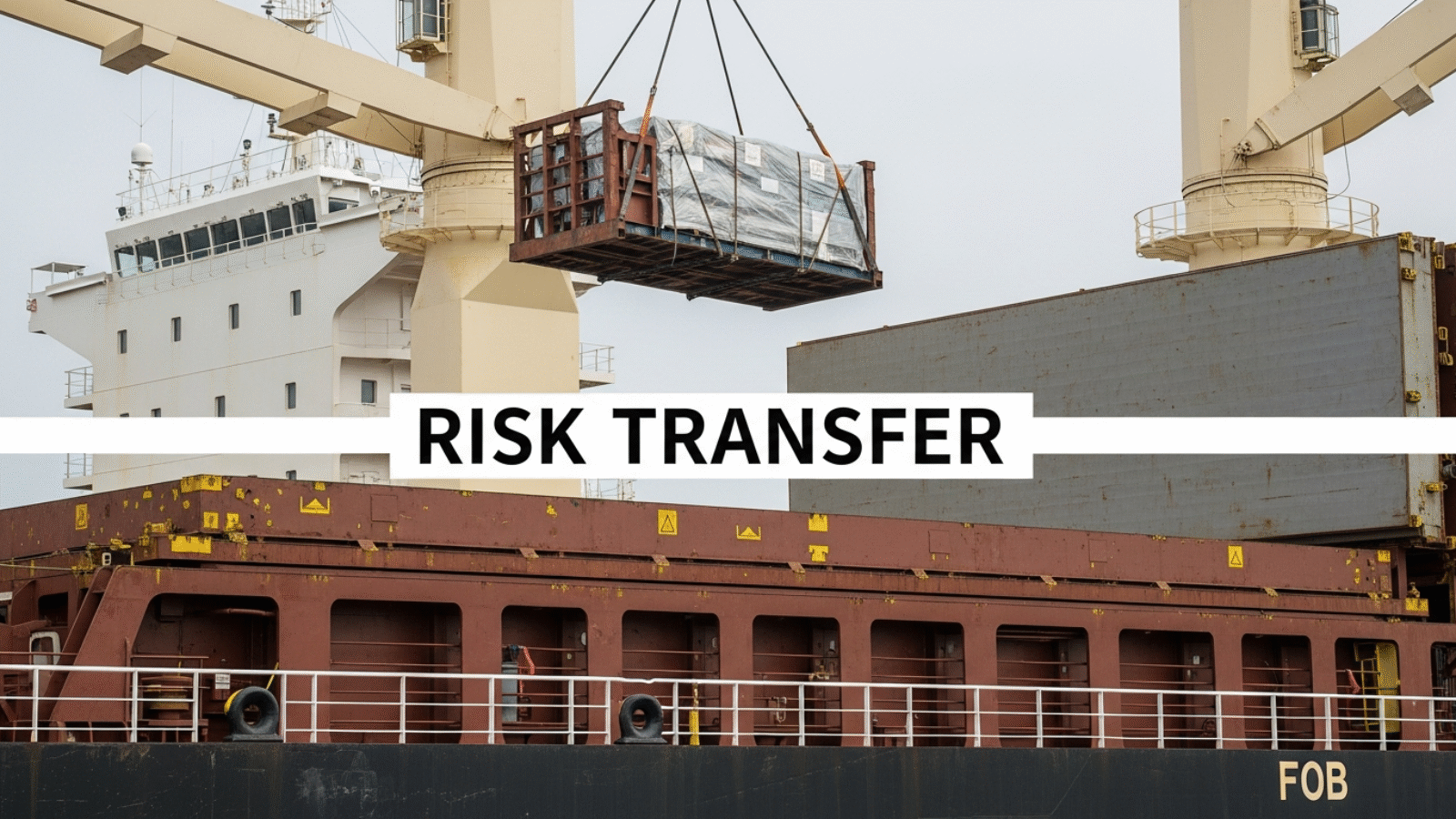
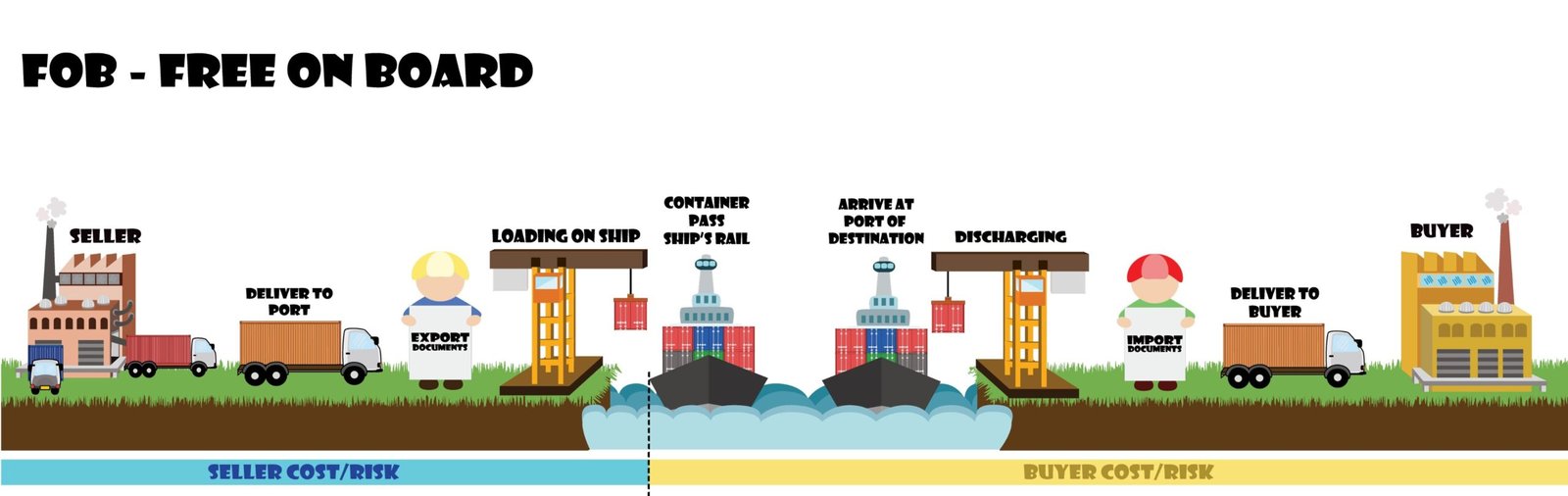
- Risk Transfer (The Defining Moment): Both the risk of loss or damage and the transfer of costs shift from the seller to the buyer when the goods are placed on board the vessel.
- Exporter’s Responsibility: The seller handles all costs and risks until the goods pass over the ship’s rail and are successfully loaded. This includes local transport, delivery to the port, export clearance, and the loading costs.
- Importer’s Responsibility: The buyer assumes all risk and costs from the moment the goods are on board. This includes main carriage, insurance, and all costs from the port of destination onwards (unloading, import clearance, local delivery).
2. The Shift in Risk: On Board the Vessel
The key responsibility shift under FOB is the physical act of loading.
- Under FAS: The buyer handles the cost and risk of loading.
- Under FOB: The seller handles and pays for the cost and risk of loading the goods onto the ship.
Once the goods are secured on the ship, the seller’s obligation ends, and the buyer assumes responsibility for everything, including contracting the main carrier (the ship itself) and acquiring insurance to cover the long voyage.

3. Why FOB is Often Misused for Containers
As with FAS, FOB is often misused for containerized cargo, which is typically transported via multimodal means.
- The Problem: For containers, the goods are delivered to the port terminal days before the ship arrives. The seller loses control when the container is dropped off at the yard, not when it’s loaded onto the ship (the risk transfer point).
- The Risk Gap: If the container is damaged while sitting in the port terminal yard, the risk—according to the strict definition of FOB—still technically lies with the seller, even though the seller cannot control the goods once they are gated in.
Industry Advice: Because FOB defines risk transfer by the physical act of loading onto the vessel, it should only be used for bulk cargo, loose cargo, or heavy machinery where the seller can directly observe and control the goods until they are loaded. For all containerized goods, use FCA.
4. Exporter and Importer Responsibilities
FOB is a traditional “F-Term,” emphasizing the buyer’s control over the main, international part of the journey.
| Responsibility | Exporter (Seller) under FOB | Importer (Buyer) under FOB |
| Delivery & Risk | Bears all risk and cost until goods are on board the vessel. | Assumes risk from the moment goods are on board the vessel. |
| Export Clearance | MANDATORY: Must obtain export licenses and handle all export formalities. | Not responsible. |
| Loading | MANDATORY: Must arrange and pay for the cost and risk of loading onto the vessel. | Not responsible. |
| Main Carriage | Not responsible for contracting or paying for the main freight. | MANDATORY: Must contract and pay for the main carriage. |
| Insurance | Not responsible for the buyer’s risk during carriage. | Responsible for insuring the goods from the moment they are on board. |
5. Conclusion: When to Use FOB
FOB remains an excellent and clear Incoterm for importers who have strong control over their ocean carrier contracts and can secure highly competitive freight rates. It is the preferred method for purchasing large quantities of commodities, minerals, or other non-containerized goods from Indian ports.
However, if you are an Indian exporter shipping manufactured goods in containers, offering FCA provides a clearer and more legally sound boundary for risk transfer, aligning responsibility with the actual logistics process.
Add a Comment