
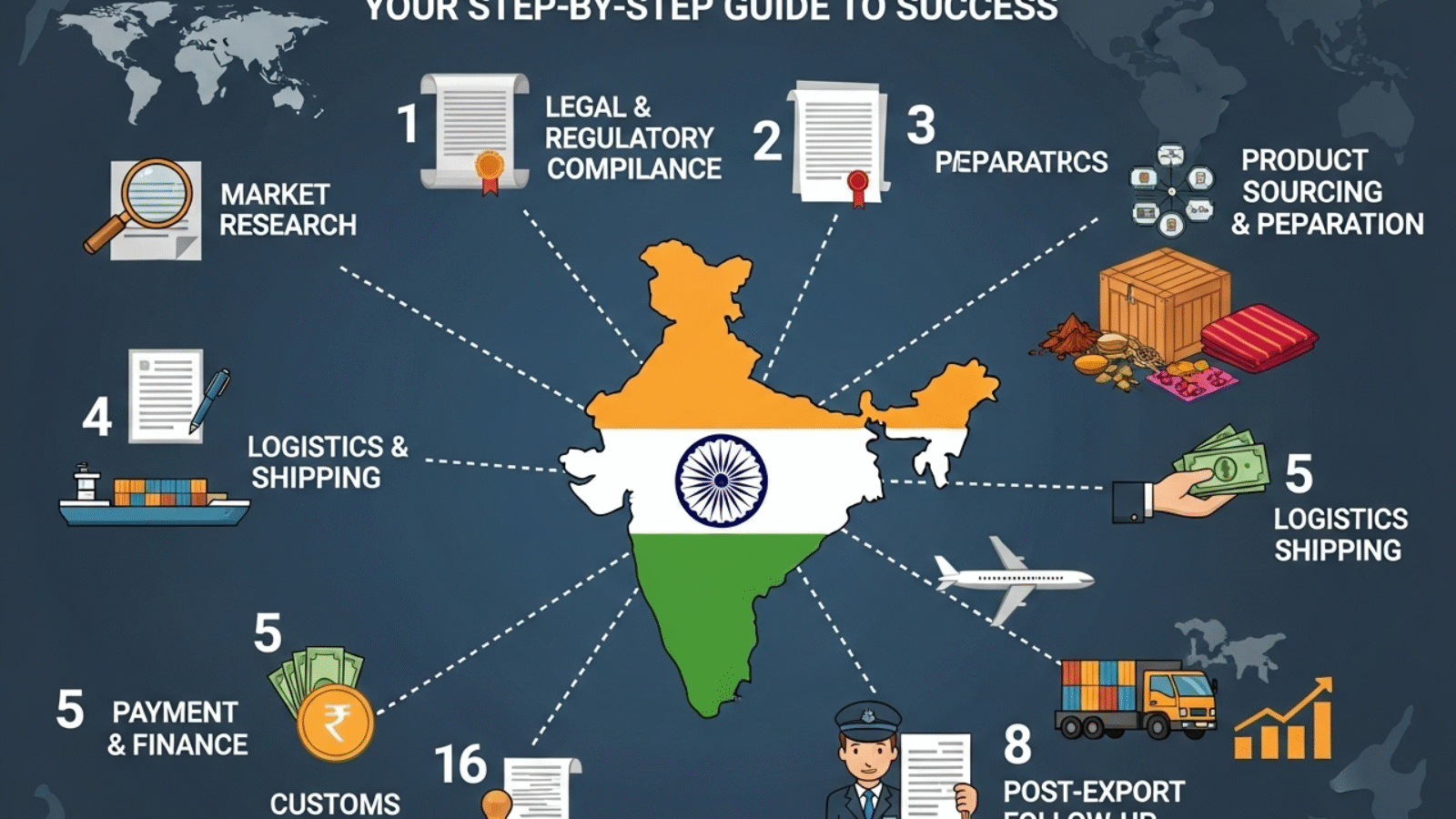
India’s export industry is booming, making it an ideal time for businesses to go global. In 2023 alone, India’s exports surpassed $770 billion. This presents a lucrative opportunity for entrepreneurs.

With The Exporter Hub, you can become a successful exporter. You’ll learn to navigate the complexities of exporting and tap into global markets. This guide will walk you through the essential steps to build a thriving export business.
Key Takeaways
- Understand the benefits of exporting from India
- Learn the steps to start an export business
- Discover how to navigate global markets
- Find resources to support your export journey
- Maximize your export potential with The Exporter Hub
Understanding the Indian Export Landscape
To navigate the Indian export landscape, you need to know the current trends and key sectors. It’s important to understand the opportunities and challenges in the global market. This knowledge is crucial for starting to export from India.
Current Export Trends and Opportunities
India’s export sector is growing fast, thanks to industries like textiles, machinery, and pharmaceuticals. The focus is on diversifying products and finding new markets. By identifying emerging opportunities, you can align your products to capitalize on these trends.
Key Export Sectors and Products from India
India excels in several sectors, including IT services, spices, and textiles. Knowing these sectors can guide your export business decisions. Below is a table showing some major export products from India:

| Sector | Key Products | Export Value |
|---|---|---|
| Textiles | Garments, Fabrics | $30 billion |
| Pharmaceuticals | Generic Medicines | $20 billion |
| IT Services | Software Development, IT Consulting | $150 billion |
By focusing on these sectors and understanding trends, you can craft a winning export strategy from India.
Benefits of Starting an Export Business in India
Exporting from India can be very profitable. The government supports exports with policies and advantages. Knowing these benefits can help your business grow.
Economic Advantages for Entrepreneurs
Starting an export business in India has many economic benefits. You can use the country’s vast resources and skilled workers. This lets you make high-quality products at good prices, attracting international buyers.
Exporting also means more money and reaching more markets. This reduces your reliance on just the domestic market. By selling to more places, you can grow your business and make more money.
Government Incentives and Support Programs
The Indian government helps exporters with incentives and programs. Schemes like the Merchandise Exports from India Scheme (MEIS) and Remission of Duties and Taxes on Export Products (RoDTEP) cut costs and boost profits.
Here’s a quick look at MEIS and RoDTEP:
| Scheme | Benefits | Eligibility |
|---|---|---|
| MEIS | Provides financial incentives on exports of specified goods | Exporters of notified products |
| RoDTEP | Remits duties and taxes on exported products | All exporters |
Using these government incentives can help your export business grow and stay competitive.

Essential Prerequisites Before You Begin Exporting
Before starting to export from India, you need to prepare well. It’s important to have the right legal and financial setup. This is key for a successful export business.
Legal Requirements and Business Structure
First, you must set up a legal entity. Choose a business structure that fits your export business, like a sole proprietorship or private limited company. Registering your business and getting the right licenses are crucial. They help you follow Indian laws and regulations.
Financial Preparations and Capital Requirements
Good financial planning is a must. You need to figure out how much money you’ll need for production, marketing, and logistics. Exploring financing options like loans or grants can also help your export venture.
Market Research and Product Viability
Doing deep market research is vital. It helps you understand your target market and if your product will work. Key steps include:
- Identifying your target audience and their needs
- Analyzing competitors and market trends
- Evaluating the demand for your product

By focusing on these key steps, you can set your export business up for success. Good planning and preparation will help you deal with the challenges of exporting from India.
How to Start Export from India: The Registration Process
Starting your export journey from India needs a good understanding of the registration process. This step is key for following Indian export rules and getting government incentives.
Obtaining an IEC (Import Export Code)
The first step is getting an IEC, or Import Export Code, from the Directorate General of Foreign Trade (DGFT). This 10-digit code is needed for any business wanting to export or import goods from India. To apply, you’ll need your PAN card, proof of address, and other documents. The process is easy and can be done online.
Additional Registrations and Licenses
You might also need to get other registrations like the Registration Cum Membership Certificate (RCMC) and Goods and Services Tax Identification Number (GSTIN). The RCMC is for export benefits and is from the Export Promotion Council. GSTIN is for tax under the Goods and Services Tax regime. Having all these registrations makes exporting smoother. The Exporter Hub can help you through this process, making it simpler to start exporting from India.
Key registrations include:
- IEC (Import Export Code)
- RCMC (Registration Cum Membership Certificate)
- GSTIN (Goods and Services Tax Identification Number)
Identifying Your Target Markets and Buyers
To succeed in exporting from India, finding the right markets and buyers is key. You must do deep research to understand where your products are wanted. Also, finding reliable buyers and distributors is important.
Researching International Market Demand
Understanding international market demand is vital. You need to find countries where your products are in demand. Use reports, statistics, and online databases to learn about market trends and consumer behavior.
Analyze this data to see where your products could do well.
Finding Potential Buyers and Distributors
After finding your target markets, look for buyers and distributors. Attend trade shows and events to meet potential partners. Use online platforms like trade directories and social media to reach more people.
Working with export promotion councils and trade organizations can also help you find verified buyers.
Evaluating Competition in Target Markets
It’s important to know who your competitors are in your target markets. Look at their strengths, weaknesses, and strategies. This helps you find areas where you can stand out.
Use competitor analysis reports and market surveys to get the information you need.

By researching markets, finding buyers, and understanding competition, you can build a strong export strategy. This will help you succeed in the export business from India.
Mastering Export Documentation and Procedures
Exporting from India requires you to know the essential documents well. These documents are key to a smooth export process. Each one has its role, making your export journey easier.
Commercial Documents Required
Commercial documents are vital for any export deal. You’ll need a commercial invoice and a packing list. These details help with customs clearance and payment.
Regulatory and Compliance Documents
Regulatory documents keep you in line with Indian and foreign rules. You might need an export license and a certificate of origin. Following these rules avoids delays and legal trouble.
Digital Documentation Platforms
Digital platforms have changed the export game. They make creating, sending, and tracking documents easier. This means less paper and more speed in your export work.
Learning about export documents and procedures makes your exports better. The right tools and documents help you grow your business faster.
Logistics and Shipping for Indian Exporters
Logistics and shipping are key to getting your products to international markets on time. They ensure timely delivery, which is crucial. By understanding these elements, you can boost your export business’s success.
Choosing the Right Shipping Method
Choosing the right shipping method is vital for timely and cost-effective delivery. Consider the type of goods, their destination, and the delivery speed needed. Air freight, ocean freight, and land transportation are the main options, each with its own pros and cons.
Packaging and Labeling Requirements
Proper packaging and labeling are crucial for meeting international standards and ensuring products arrive safely. You must follow the packaging standards of the destination country. Also, make sure your labels are clear, accurate, and follow all laws.
Working with Freight Forwarders and Shipping Agents
Freight forwarders and shipping agents can make logistics easier by handling customs clearance, documentation, and transportation. When picking one, look for experience, reliability, and a wide network of international contacts. They can help you overcome complex logistics challenges and ensure efficient delivery.
By picking the right shipping method, ensuring proper packaging, and working with reliable freight forwarders, you can improve your logistics and shipping. This boosts customer satisfaction and helps your export business thrive.
Financial Aspects of Export Business
Starting an export business in India needs careful planning. It’s important to understand the financial parts that affect your business.
Pricing Your Products for International Markets
Setting the right price for your products is key to success in global markets. You must think about production costs, demand, and what others charge. Competitive pricing strategies can help you enter new markets and draw in more customers.
Payment Terms and Methods
Knowing about payment terms and methods is crucial for getting paid by international buyers. Common ways include Letters of Credit (L/C), Telegraphic Transfer (T/T), and Cash Against Documents (C/A.D). Choosing the right payment method depends on your risk level and the buyer’s trustworthiness.
Managing Currency Risks and Banking Relationships
Handling currency risks is vital because exchange rates change. You can lessen these risks with financial tools like forward contracts and options. Also, a good bank relationship can give you access to better financial options.
| Financial Aspect | Description | Benefit |
|---|---|---|
| Pricing Strategy | Competitive pricing based on market analysis | Market penetration and increased sales |
| Payment Terms | Secure payment methods like L/C and T/T | Reduced risk of non-payment |
| Currency Risk Management | Using forward contracts and options | Protection against exchange rate fluctuations |
Mastering these financial areas can make your export business more profitable and competitive worldwide.
The Exporter Hub: Your Partner in Export Success
Starting an export business from India can be tough. But with the right partner, you can succeed. The Exporter Hub is here to help you.
Services and Resources Offered
The Exporter Hub offers many services and resources. They help with export rules, logistics, and getting into new markets. This ensures you have everything to succeed globally.
Navigating Export Challenges
The Exporter Hub makes exporting from India easier. They give expert advice and support. This helps you run your business smoothly and reach your goals.
Success Stories and Case Studies
The Exporter Hub has helped many businesses succeed. Here are some success stories:
| Company | Product | Export Market |
|---|---|---|
| ABC Exports | Textiles | USA |
| XYZ Enterprises | Spices | Europe |
| PQR Industries | Handicrafts | Australia |
The Exporter Hub’s help was key to these businesses’ success. They offer valuable insights and guidance. This helps exporters make smart decisions and grow.
The Exporter Hub is committed to your success in exporting from India. With their services and expert advice, you can overcome challenges and thrive globally.
Conclusion: Building a Sustainable Export Business from India
Creating a lasting export business needs careful planning and action. This guide shows how to start a successful export business from India. It’s important to know the export scene, follow rules, and use available help.
To send goods from India, you must do several things. You need to get the right permits, find the best markets, and learn about export papers. The Exporter Hub is a great tool to help you with these steps.
Using The Exporter Hub’s services can make exporting from India easier and more efficient. This lets you concentrate on growing your business. It helps you succeed in the global market for the long haul.
FAQ
What are the key sectors for export from India?
India’s main export sectors are textiles, pharmaceuticals, and IT services. These areas have a lot of potential for growth and profit.
How do I start an export business from India?
To start exporting from India, first understand the export scene. Then, build a strong business base. Register your business and follow Indian export rules.
What government incentives are available for Indian exporters?
Indian exporters can use schemes like MEIS and RoDTEP. These help cut costs and boost profits.
What is the importance of obtaining an IEC for exporting from India?
Getting an Import Export Code (IEC) is key for exporting from India. It lets you follow export rules and get government help.
How do I identify my target markets and buyers for export?
To find your target markets and buyers, do market research. Look at the competition and create good marketing plans. This helps reach buyers and distributors.
What are the essential documents required for exporting from India?
You need commercial documents like invoices and packing lists for exporting from India. Also, you need regulatory and compliance documents.
How can I manage the logistics and shipping for my export business?
To handle logistics and shipping, pick the best shipping method. Follow packaging and labeling rules. Work with experienced freight forwarders for smooth delivery.
What are the financial aspects I need to consider for my export business?
When exporting, think about pricing for international markets. Manage payment terms and methods. Also, handle currency risk to boost profits and stay competitive.
How can The Exporter Hub support my export business?
The Exporter Hub helps with export rules, logistics, and market access. It guides businesses through exporting complexities for success in global markets.
What are the benefits of starting an export business in India?
Starting an export business in India has economic benefits, government support, and access to a large manufacturing base. It’s a great opportunity for entrepreneurs.
[…] you must transform supplier discovery into a meticulous risk management process. This step-by-step guide is built for the serious importer, turning caution into a competitive […]
[…] most dramatic shift in India’s export portfolio is the meteoric rise of Electronic Goods and Components, particularly […]
[…] Key Benefits of the Deal for Indian Exporters […]