
Table of Contents
DAP Incoterm 2020 Introduction: The Convenience of DAP
DAP (Delivered at Place) is arguably the most common Incoterm for modern multimodal trade, especially for those importers who want the convenience of having their goods delivered nearly all the way to their door but prefer to handle the final steps of customs clearance and unloading themselves.
Under DAP, the seller (exporter) handles the entire logistics chain—from their factory through international transit, right up to the agreed-upon receiving point in the buyer’s country. This makes DAP highly attractive for both importers on TheExporterHub.com seeking simplicity and exporters who have strong, reliable international freight forwarder contracts. DAP clearly defines that the seller pays for carriage and bears all risk up to the named final location, providing immense clarity and transparency in pricing.
1. What is DAP (Delivered at Place) Incoterm 2020?
Under the DAP Incoterm, the seller fulfills their delivery obligation when:
- The goods are placed at the buyer’s disposal.
- On the arriving means of transport (e.g., the delivery truck).
- Ready for unloading.
- At the named place of destination (which can be a warehouse, factory, port terminal, or even a specific address).
Transfer of Cost and Risk
- Exporter’s Responsibility (Cost & Risk): The seller is responsible for all costs and risks associated with bringing the goods to the named final destination. This includes local transport, export clearance, main carriage, and any transport within the destination country up to the delivery point.
- Transfer Point: Both cost and risk transfer from the seller to the buyer at the named destination, precisely when the goods are ready for unloading.
Crucially, Import Customs Clearance (including duties and taxes) is explicitly the buyer’s responsibility under DAP.
2. The Defining Moment: Ready for Unloading
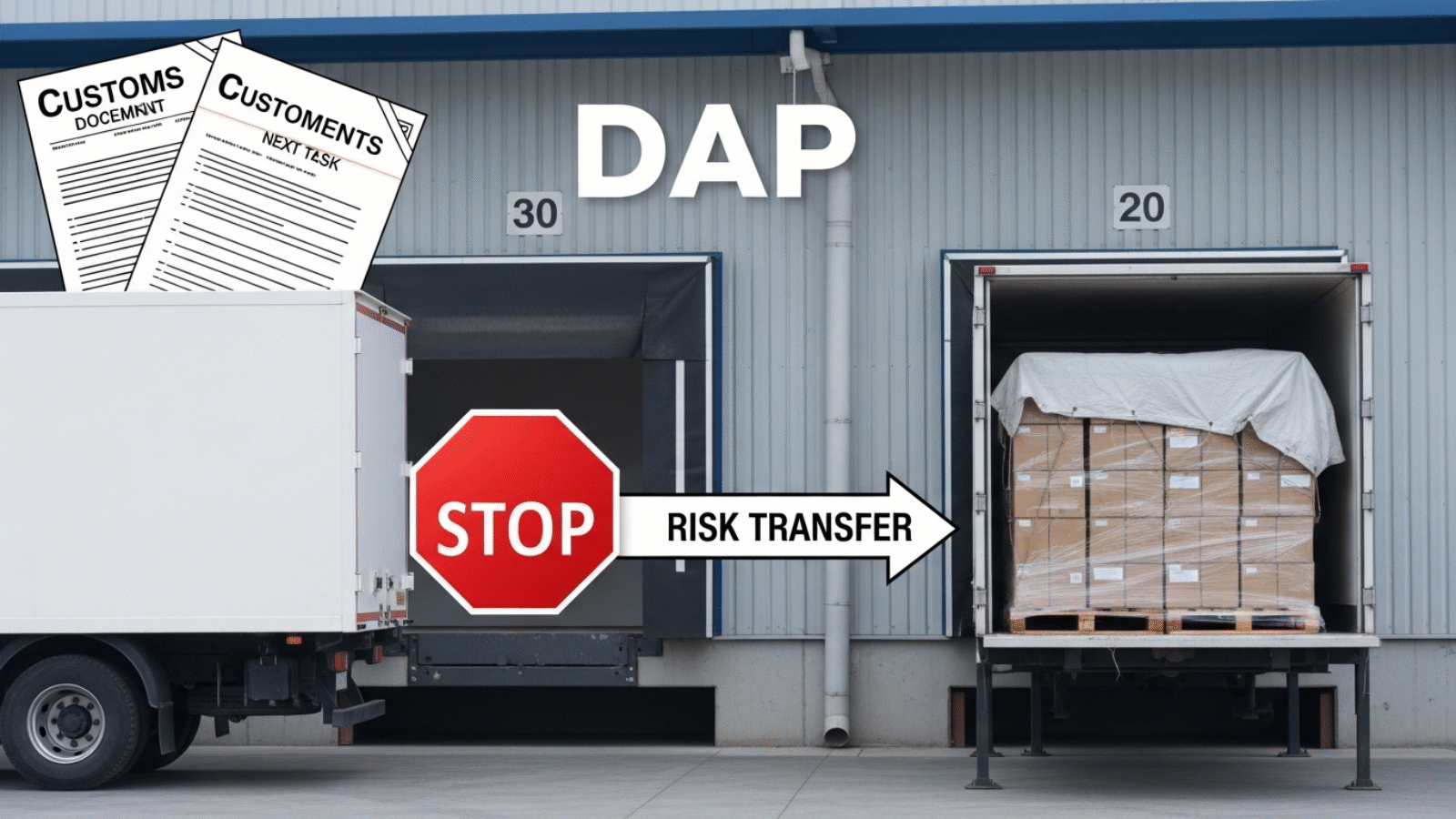
The primary point of distinction for DAP is the moment of risk transfer, which occurs just before the goods are unloaded.
- Risk Transfer: Once the goods have safely arrived at the buyer’s named location and are available on the delivery vehicle, the seller’s responsibility for the goods ends.
- Unloading Responsibility: The buyer is responsible for both arranging and paying for the physical unloading of the cargo at the receiving point.
- Why this matters: If the delivery truck arrives safely but is damaged during the buyer’s unloading process, the buyer bears the risk and the cost of the damage.
This feature makes DAP ideal when the buyer is certain they possess the necessary cranes, forklifts, or labor to safely unload the goods at their specific facility.

3. Exporter and Importer Responsibilities
DAP places heavy logistical responsibility on the seller, but final regulatory and physical handling on the buyer.
| Responsibility | Exporter (Seller) under DAP | Importer (Buyer) under DAP |
| Delivery & Risk | Bears all risk and cost until goods are ready for unloading at the named destination. | Takes delivery and assumes risk from the point the goods are ready for unloading. |
| Export Clearance | Responsible for all export formalities, licenses, and duties in the origin country. | Not responsible. |
| Main Carriage | Must arrange and pay for the carriage to the named destination. | Not responsible. |
| Unloading | Not responsible. | MANDATORY: Must arrange and pay for unloading the goods. |
| Import Clearance | Not responsible. | Responsible for all import duties, taxes (VAT/GST), and customs clearance fees. |
| Insurance | No obligation to the buyer, but the seller maintains ‘all-risks’ insurance to cover their own risk during transit. | No obligation, but should consider contingency insurance. |
4. DAP vs. DPU: The Unloading Distinction
As noted in the DPU article, the difference between the two terms comes down to a single physical step:
- DAP: Seller delivers to the place, ready for unloading. Buyer unloads.
- DPU: Seller delivers and unloads at the place. Seller unloads.
If you are an importer and are unsure if your receiving facility can safely handle the unloading of a heavy product like a large piece of machinery or a container of AAC blocks, it is safer to negotiate for the seller to use DPU.
5. Conclusion: When to Use DAP
DAP is the workhorse of modern Incoterms, providing a perfect blend of high service and clear responsibility separation.
- Use DAP when:
- The buyer wants the seller to manage the entire complex, international logistics chain.
- The buyer is happy to handle the simpler, last-mile steps: unloading and import clearance (duties/taxes).
- The buyer wants to maintain control over the payment of local customs duties, as this is often complex to calculate accurately beforehand.
For professional trade between an Indian exporter and a global importer, DAP ensures the exporter delivers their goods with guaranteed freight and risk management, while the importer retains control over their local costs and regulatory obligations.
Add a Comment