
Table of Contents
CPT Incoterm 2020 Introduction: The Importance of Multimodal Trade Terms
In modern global trade, shipments often involve multiple modes of transport—a truck from the factory, a train to the port, and a ship overseas. For these multimodal journeys (meaning using more than one type of transport), traditional terms like FOB are unsuitable. This is where CPT (Carriage Paid To) shines.
CPT is a highly valuable Incoterm because it balances the responsibilities: the seller (exporter) gives the buyer (importer) the convenience of prepaid freight, while the buyer assumes responsibility for the transit risk much earlier. This rule is particularly well-suited for containerized cargo and is frequently used by professional exporters on platforms like TheExporterHub.com who want to offer competitive landed costs to their international buyers.
1. What is CPT (Carriage Paid To) Incoterm 2020?
Under the CPT Incoterm, the seller has two main responsibilities regarding the shipment:
- Cost Responsibility: The seller must contract and pay for the carriage (main freight) of the goods to the named place of destination (e.g., a port, airport, or buyer’s city warehouse).
- Risk Responsibility: The seller hands the goods over to the carrier (or the first carrier, if multiple modes are used) at an agreed-upon point in the country of origin.
The defining feature of CPT:
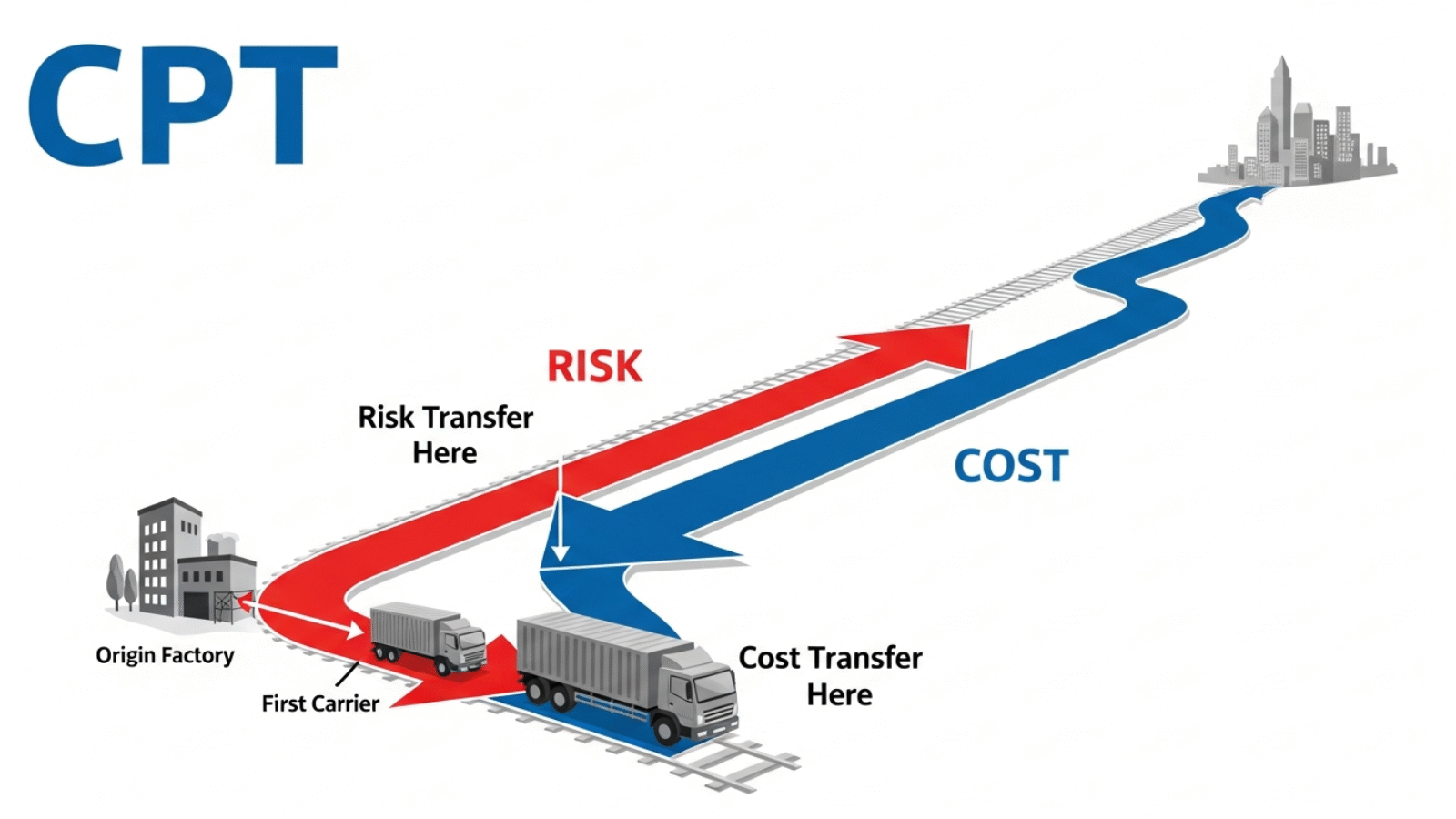
The risk transfers from the seller to the buyer at the place of shipment (when handed to the first carrier), while the cost transfers at the place of destination.
This creates a unique two-point transfer system: the seller pays for the ride, but the buyer owns the risk during the ride.
2. The Critical Split: Cost vs. Risk Transfer
Understanding where cost and risk transfer under CPT is essential to avoid disputes:
A. Transfer of Risk (The Critical Point)
The risk of loss or damage to the goods transfers from the exporter to the importer when the goods are handed over to the first carrier nominated by the seller.
- Example: An exporter in Gujarat, India, uses CPT to ship goods to a buyer in Berlin, Germany. The exporter hands the container to a trucking company at a container freight station (CFS) near Ahmedabad. The risk transfers to the German buyer the moment the container is accepted by the truck/CFS in Ahmedabad.
B. Transfer of Cost
The cost transfers at the named place of destination.
- Example: The Indian exporter pays for the truck from Ahmedabad to Mumbai Port, the ocean freight from Mumbai to Hamburg, and the rail freight from Hamburg to a rail terminal in Berlin. The exporter is responsible for paying all these costs. The cost responsibility ends before the goods are unloaded at the destination and before any import clearance is done.
The importer, therefore, needs to arrange for insurance to cover the goods from the moment they are picked up by the first carrier in India, even though the exporter is paying the freight bill.

3. Key Responsibilities under CPT (Exporter vs. Importer)
CPT is an “E-Term” for cost and an “F-Term” for risk, blending responsibilities:
| Responsibility | Exporter (Seller) | Importer (Buyer) |
| Delivery | Must hand over goods to the carrier. | Must take delivery at the named destination. |
| Export Clearance | Responsible for all export formalities, licenses, and duties in the origin country (e.g., India). | Not responsible. |
| Main Carriage | Must contract and pay for the carriage to the named destination. | Not responsible for arranging payment, but assumes the risk. |
| Risk of Loss/Damage | Risk until handed over to the first carrier. | Risk from the time of handover to the first carrier until final delivery. |
| Insurance | No obligation, but may choose to purchase “contingency insurance” to protect their money until payment is received. | Must purchase insurance to cover the goods for the entire transit, as the risk is theirs from the start. |
| Import Clearance | Not responsible. | Responsible for all import formalities, duties, and taxes at the destination. |
| Unloading | Not responsible for unloading at the final destination. | Responsible for unloading at the named place of destination. |
4. CPT vs. CIP: Why Insurance is the Only Difference
CPT is closely related to its sister Incoterm, CIP (Carriage and Insurance Paid To). The only difference is insurance:
- CPT: The seller pays for carriage, but insurance is optional (buyer’s choice, but recommended).
- CIP: The seller pays for carriage AND must procure mandatory insurance cover for the buyer.
For containerized, high-value shipments, especially those traveling long distances and using multiple carriers, the buyer is strongly advised to request CIP to ensure the seller procures high-level insurance.
5. Conclusion: When to Use CPT
CPT is a powerful tool for exporters who want to control the logistics chain to ensure efficiency, but without taking on the high risk of the entire journey. It is best used for:
- Multimodal Shipments: Anytime the goods move by truck, rail, and sea/air.
- Seller-Controlled Freight: When the exporter has strong freight contracts and can secure better rates than the buyer.
- Intermediate Risk Transfer: When the exporter is willing to handle export formalities and freight booking (unlike EXW or FCA), but wants the risk to pass as early as possible.
For importers, using CPT means they must immediately arrange for insurance upon contract signing. While the cost is conveniently covered by the seller, the risk is the buyer’s from the earliest point of shipment, making CPT an Incoterm for the informed and prepared importer.
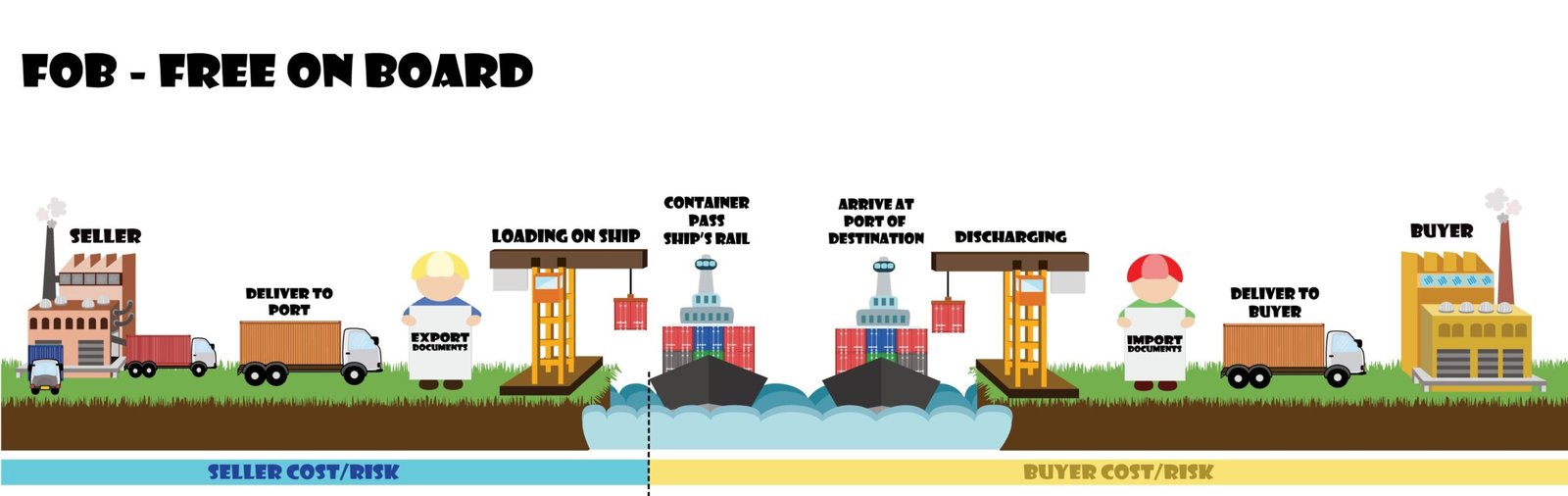
[…] The Problem: For containers, the goods are delivered to the port terminal days before the ship arrives. The seller loses control when the container is dropped off at the yard, not when it’s loaded onto the ship (the risk transfer point). […]
[…] should not be used for containerized cargo; the multimodal rule CPT should be used instead, as the risk transfer point (to the first carrier) better reflects container […]