

Table of Contents
CIP Incoterm 2020 Introduction: The Premium Choice for Global Security
In today’s global economy, where high-value, manufactured goods are often shipped across continents using a combination of road, rail, and sea (multimodal transport), ensuring maximum cargo security is paramount. CIP (Carriage and Insurance Paid To) is the Incoterm designed specifically for this purpose.
CIP is identical to CPT in terms of cost and risk transfer, but it goes one critical step further: it places a mandatory obligation on the seller (exporter) to purchase insurance in favor of the buyer (importer). For professional importers on TheExporterHub.com dealing with crucial machinery, electronics, or other high-value commodities, CIP offers unmatched peace of mind, ensuring the shipment is protected from the moment it leaves the seller’s premises.
1. What is CIP (Carriage and Insurance Paid To) Incoterm 2020?
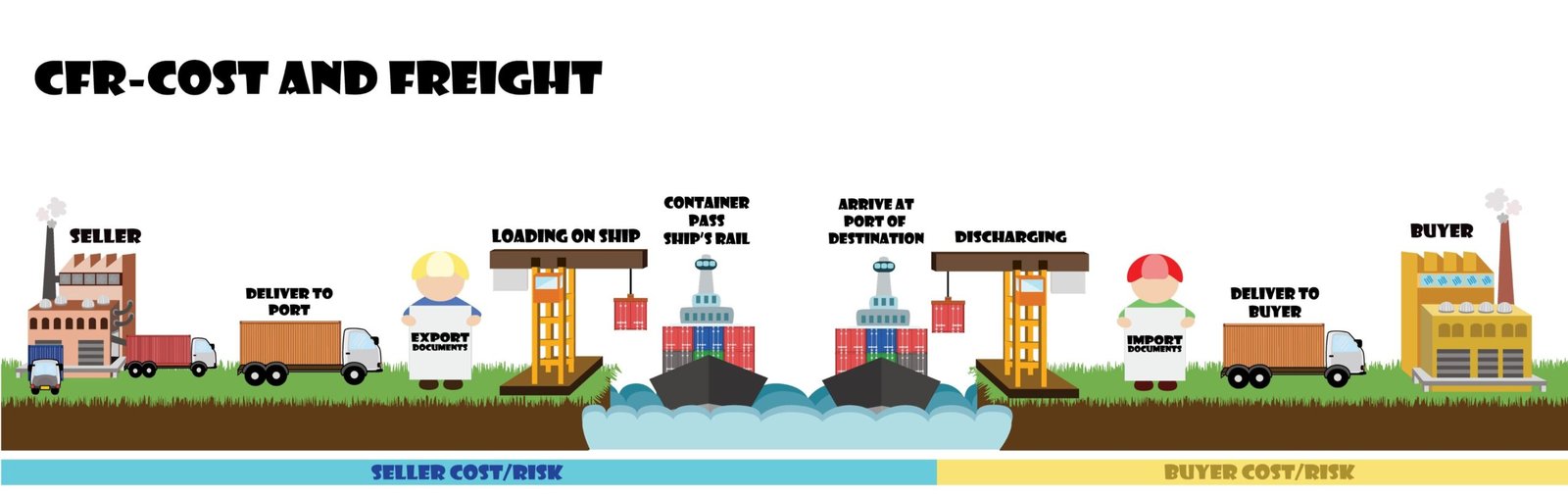
Under the CIP Incoterm, the seller has three primary obligations:
- Contract Carriage: The seller must arrange and pay for the main carriage (freight) necessary to bring the goods to the named place of destination.
- Export Clearance: The seller handles all formalities required to export the goods from the country of origin.
- Mandatory Insurance: The seller must obtain cargo insurance against the buyer’s risk of loss or damage to the goods during transit.
Like CPT, CIP is characterized by the two-point transfer:
- Risk Transfer: The risk passes from the seller to the buyer when the goods are handed over to the first carrier at the place of shipment.
- Cost Transfer: The seller pays for the freight up to the named place of destination.
The buyer takes delivery at the destination and handles all import clearance and final unloading.
2. The Critical Role of Insurance under CIP
The mandatory insurance requirement is what distinguishes CIP from CPT and makes it the safer choice for buyers. The Incoterms® 2020 update standardized the minimum level of insurance required under CIP.
A. Insurance Level: Clause A (Maximum Cover)
The seller must obtain insurance that complies with the Institute Cargo Clauses (A) or similar clauses.
- Clause A provides the highest level of coverage (known as ‘all-risks’ coverage), covering all potential losses unless specifically excluded (e.g., willful misconduct, nuclear war, inherent vice).
- This is a significant benefit for the buyer because the risk transferred the moment the goods were given to the first carrier. Even though the buyer bears the risk from that early point, they are protected by the seller’s procured insurance for the entire main journey.
B. The Value of the Insurance
The insurance coverage must be for at least 110% of the contract price (including the cost of the freight) in the currency of the contract. This ensures that the buyer is fully compensated and has a slight margin to cover claims processing costs if the goods are lost or damaged.

3. CIP vs. CIF: Multimodal vs. Sea-Only
While CIF (Cost, Insurance, and Freight) also requires mandatory insurance, there are two key differences:
| Feature | CIP (Carriage and Insurance Paid To) | CIF (Cost, Insurance, and Freight) |
| Transport Mode | Multimodal (Suitable for container, rail, road, air) | Sea and Inland Waterway only |
| Risk Transfer Point | Handover to the First Carrier | When goods are placed On Board the vessel |
| Minimum Insurance | Institute Cargo Clauses (A) – High Level | Institute Cargo Clauses (C) – Low Level |
CIP is therefore the superior and more appropriate choice for virtually all containerized and high-value cargo shipments that utilize multiple modes of transport.
4. Exporter and Importer Responsibilities
| Responsibility | Exporter (Seller) under CIP | Importer (Buyer) under CIP |
| Delivery | Hands goods over to the first carrier. | Takes delivery at the destination. |
| Risk | Bears risk until handover to the first carrier. | Bears risk from handover until the final destination. |
| Cost | Pays for pre-carriage, export clearance, and main freight to the destination. | Pays for unloading at destination, import clearance, duties, and taxes. |
| Insurance | Must obtain ‘all-risks’ (Clause A) insurance for the buyer. | Pays the premium indirectly (it’s built into the price), but is the beneficiary of the policy. |
Conclusion: Why Indian Exporters Should Offer CIP
For exporters in India specializing in high-value products (like machinery, electronics, or processed goods), offering CIP can be a major competitive advantage. It assures the international buyer that the entire transit—from the factory gate in Bharuch, Gujarat, to the buyer’s city in Europe or the US—is covered by comprehensive, ‘all-risks’ insurance, which is a major trust signal on a platform like TheExporterHub.com.
While CPT requires the buyer to manage and pay for their own insurance, CIP is an all-in-one solution that removes the risk from the buyer’s hands, making the seller’s offering much more attractive and secure.
Add a Comment