

Table of Contents
CIF Incoterm 2020 Introduction: Convenience Meets Security on the Ocean
CIF (Cost, Insurance, and Freight) is one of the most recognizable and widely used Incoterms in global sea trade. Like its sister rule, CFR, CIF requires the seller (exporter) to pay the freight cost up to the named port of destination. However, the critical difference—and what makes CIF so popular with buyers—is the added, mandatory obligation for the seller to procure marine insurance on the buyer’s behalf.
CIF is used strictly for sea and inland waterway transport and is a reliable choice for importers on TheExporterHub.com who want a fixed cost that includes shipping and insurance up to the destination port, while the exporter handles the often-complex logistics and documentation from origin.
1. What is CIF (Cost, Insurance, and Freight) Incoterm 2020?
Under the CIF Incoterm, the seller fulfills their delivery obligation when the goods are:
- Placed on board the vessel at the port of shipment.
- Cleared for export in the country of origin.
- The seller has secured and paid for marine insurance covering the main voyage.
Transfer of Cost and Risk
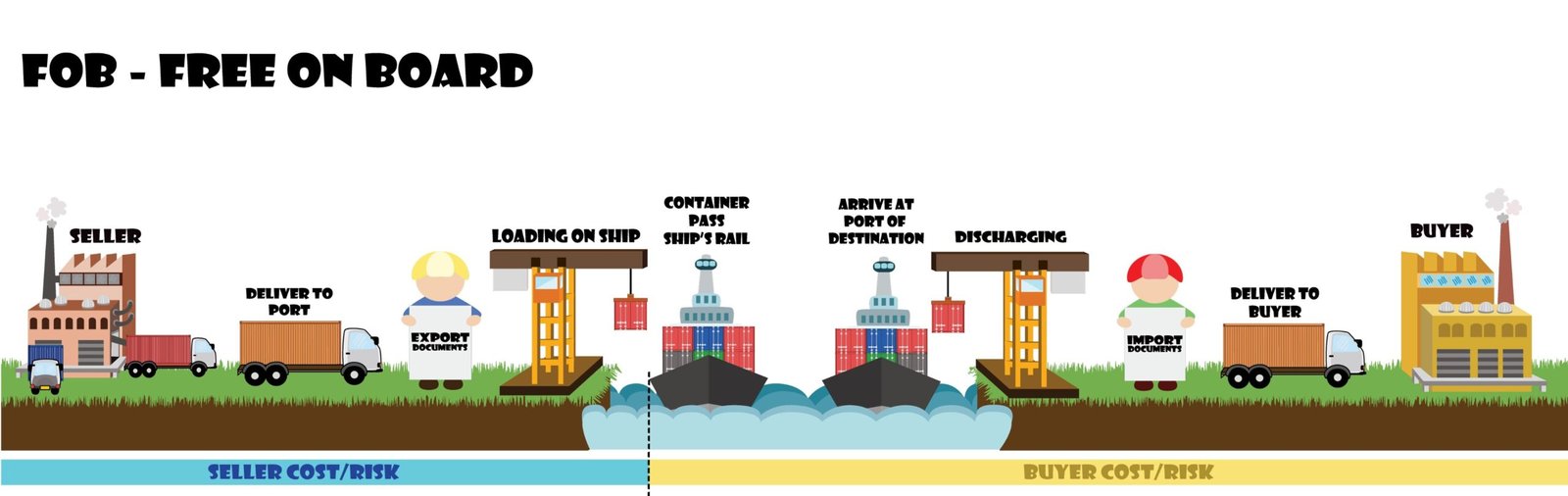
- Risk Transfer: The risk of loss or damage transfers from the seller to the buyer when the goods are placed on board the vessel at the port of shipment (same as FOB and CFR).
- Cost Transfer: The seller pays for the freight and insurance up to the named port of destination.
The buyer assumes the risk of the voyage, but is compensated because the seller has purchased insurance on their behalf.
2. The Insurance Obligation: Clause C (Minimum Cover)
The insurance requirement under CIF is mandatory, but the level of coverage is standardized by the Incoterms® 2020 rule:
- Minimum Coverage: The seller must obtain insurance that complies with the Institute Cargo Clauses (C) or similar clauses.
- Clause C provides the lowest level of coverage (e.g., covering major incidents like sinking, fire, or grounding of the vessel).
- Coverage Value: The insurance must be for at least 110% of the contract price (including the cost of the freight) in the currency of the contract.
CIF vs. CIP: Insurance Level Matters
Importers of high-value goods should be aware of the difference between CIF and the multimodal rule CIP:
- CIF (Sea Only): Seller must procure Clause C (minimum coverage).
- CIP (Multimodal): Seller must procure Clause A (all-risks coverage).
If an importer requires comprehensive (‘all-risks’) insurance for goods shipped by sea, they must explicitly agree with the seller in the contract to upgrade the CIF insurance from Clause C to Clause A.

3. Exporter and Importer Responsibilities
CIF requires the exporter to manage and pay for almost everything up to the destination port, except for the risk management itself, which is handled via insurance.
| Responsibility | Exporter (Seller) under CIF | Importer (Buyer) under CIF |
| Delivery & Risk | Bears all risk and cost until goods are on board the vessel. | Assumes risk from the moment goods are on board until final delivery. |
| Export Clearance | Responsible for all export formalities. | Not responsible. |
| Main Carriage | Must arrange and pay for the carriage to the destination port. | Not responsible for arranging payment. |
| Insurance | MANDATORY: Must procure minimum Clause C insurance for the buyer. | Pays the premium indirectly (built into the price) and is the beneficiary of the policy. |
| Unloading & Import Clearance | Not responsible for unloading at the destination port or import customs. | Responsible for all destination terminal handling charges (THC), unloading, import duties, and taxes. |
4. Conclusion: When to Use CIF
CIF is the definitive choice for sea-only trade when the seller has better access to freight and insurance rates, and the buyer wants the convenience of an inclusive price up to the destination port.
- Use CIF when:
- Shipping non-containerized goods, bulk commodities, or vehicles (as it is a sea-only rule).
- The buyer requires the seller to provide mandatory insurance coverage.
- The seller can secure competitive freight and insurance deals and wishes to offer a simple, comprehensive quote.
As with FOB and CFR, CIF should be avoided for containerized cargo. For goods shipped in containers, CIP is the recommended multimodal alternative, as it aligns the risk transfer point correctly and mandates higher insurance coverage (Clause A).
Add a Comment