
Table of Contents
EXW Incoterm 2020 Introduction: Understanding the Foundation of International Trade Terms
In the complex world of global commerce, clearly defining responsibilities is paramount. Imagine buying a product from a factory in India: who pays for local transport? Who handles customs paperwork? Who is responsible if the goods get damaged on the way to the port? This is where Incoterms® 2020 come in. Published by the International Chamber of Commerce (ICC), these 11 universally recognized rules define the exact responsibilities, costs, and risks between buyers (importers) and sellers (exporters) in international transactions.

Among these, EXW (Ex Works) stands as the bedrock—the Incoterm that places the minimum obligation on the seller. While it might seem straightforward, understanding EXW is crucial, especially for new importers, as it shifts almost all responsibilities to the buyer right from the start. This guide will deep-dive into EXW, explaining its nuances, benefits, risks, and when it is (and isn’t) the right choice for your international trade deals.
What is EXW (Ex Works) Incoterm 2020?
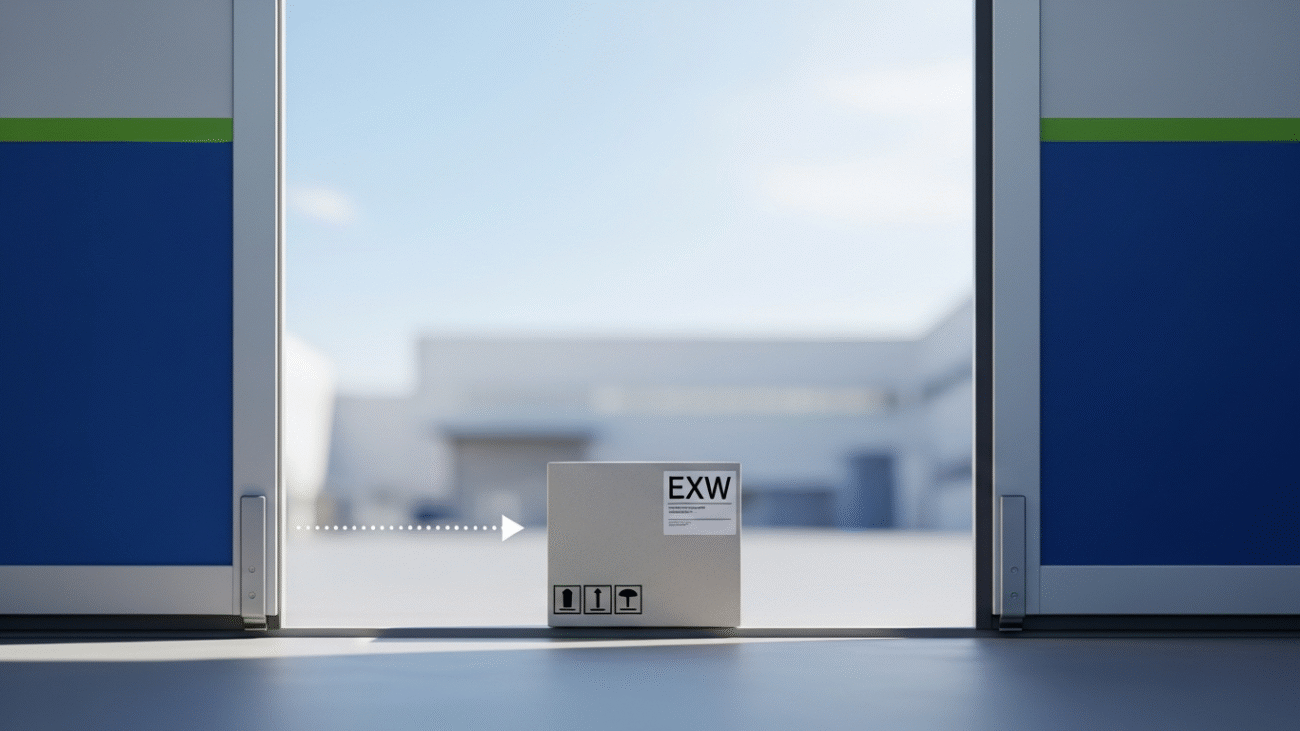
Under the EXW Incoterm, the seller (exporter) fulfills their obligation by simply making the goods available at their own premises—be it their factory, warehouse, or another named place. Once the goods are ready for collection at the agreed-upon location, all subsequent costs and risks associated with transporting the goods to the final destination are transferred to the buyer (importer).

This means the buyer is responsible for:
- Loading the goods onto the first carrier (unless otherwise specified and agreed upon).
- All local transport from the seller’s premises to the port or airport.
- Export customs clearance in the origin country.
- Main carriage (international shipping).
- Import customs clearance in the destination country.
- Unloading at the final destination.
- All associated costs and risks throughout the entire journey.
Essentially, the seller’s job is done when the goods are packaged and waiting at their door.
When is EXW (Ex Works) Most Suitable?
EXW is often chosen in specific scenarios:
- For Experienced Importers with Strong Logistics: Buyers who have established their own freight forwarders and customs brokers in the origin country, or who have consolidation agents handling multiple shipments from various local suppliers.
- When Sourcing from Multiple Suppliers in One Region: An importer might buy small quantities from several factories in a single industrial cluster (e.g., electronic components from different units in Bengaluru, India). They then arrange for a single freight forwarder to collect all these EXW shipments and consolidate them into one larger, cost-effective shipment (e.g., a Full Container Load – FCL).
- Domestic Sales that May Later be Exported: Sometimes, a transaction initially starts as a domestic sale within the seller’s country, but the buyer intends to export it later. EXW naturally fits this initial domestic transfer.
- When the Exporter Lacks Export License/Expertise: Smaller or newer exporters might prefer EXW as it minimizes their responsibility and the need for in-depth knowledge of export procedures, which can be complex.
Benefits for the Exporter (Seller) under EXW
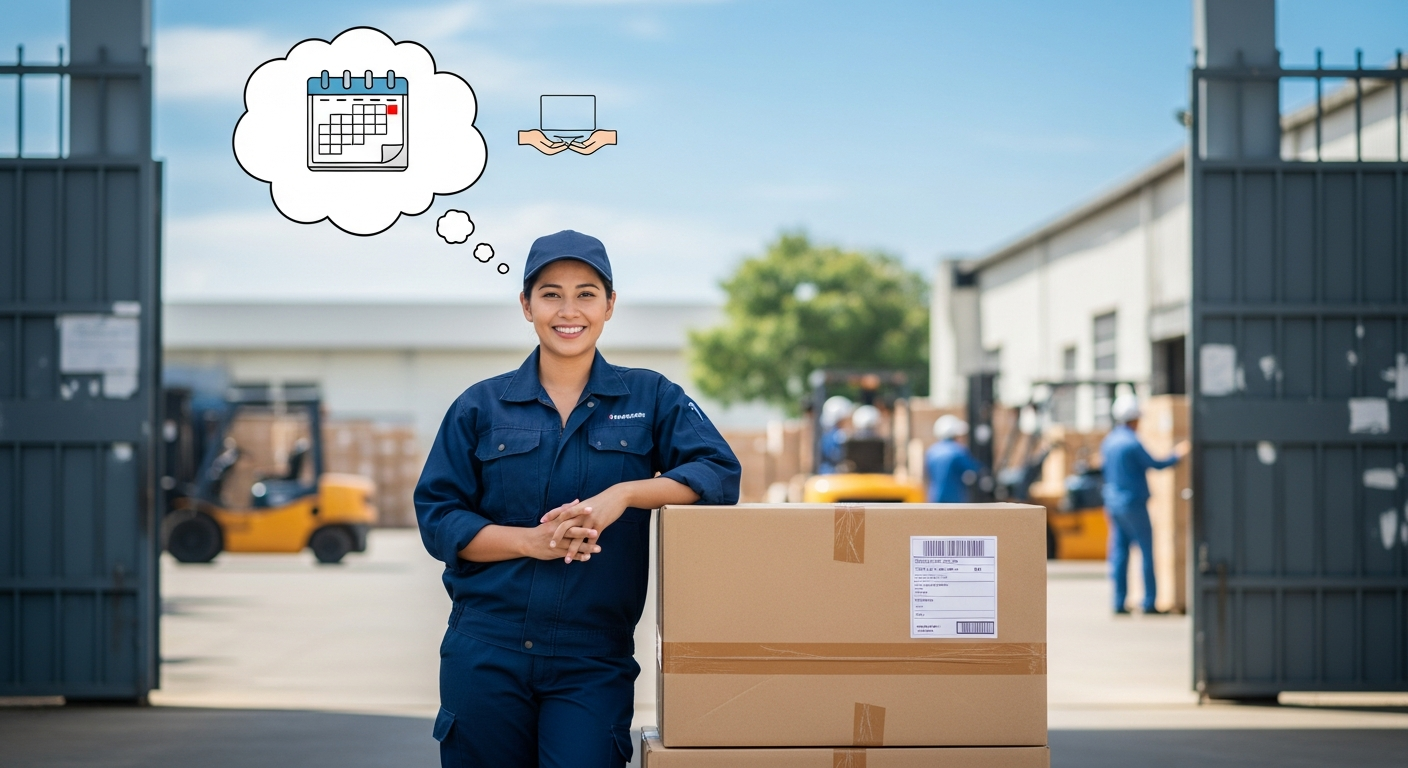
- Minimum Risk: The greatest advantage is the minimal risk. Once the goods are available at their premises, the seller is largely absolved of liability for loss or damage.
- Minimum Cost & Effort: The seller incurs almost no costs related to shipping, insurance, or customs beyond preparing the goods for collection. Their pricing can be purely based on production cost.
- Simplified Documentation: The seller’s involvement in export documentation is limited, simplifying their administrative burden. They generally only need to provide commercial invoices and packing lists.
Risks & Responsibilities for the Importer (Buyer) under EXW
While EXW offers a potentially lower product price, it comes with significant responsibilities and risks for the importer:

- Loading Risk: The buyer (or their designated carrier) is typically responsible for loading the goods. If the seller helps with loading, any damage during this process is usually at the buyer’s risk.
- Export Customs Clearance: The buyer is responsible for all export formalities, including obtaining export licenses, permits, and paying any export duties or taxes in the origin country. This can be challenging without local expertise.
- Local Transport & Logistics: Arranging reliable local transport from the seller’s premises to the international port/airport can be complex, especially in unfamiliar countries like India, where traffic, permits, and trusted transporters are key considerations.
- Proof of Export: The buyer needs to ensure proper proof of export is obtained and provided to the seller. Without this, the seller might face issues with tax authorities (e.g., GST refunds in India) if they cannot prove the goods left the country, which could cause friction.
- Hidden Costs: While the product price might seem lower, the total “landed cost” for the importer can be higher due to potentially inefficient or expensive local logistics and customs handling if not managed expertly.

EXW Considerations When Sourcing from India
When dealing with Indian exporters, especially for products like building materials (AAC blocks, TMT bars) or other industrial goods, remember these points:
- Local Expertise is Crucial: Unless you have a strong, trusted freight forwarder or agent in India, EXW can become very challenging. Finding reliable local transport and navigating Indian customs can be complex.
- GST Implications for Exporter: In India, exporters typically supply goods at a 0% GST rate (zero-rated supply) if they ensure the goods are indeed exported. Under EXW, since the buyer handles export clearance, the Indian seller needs documented proof of export to claim their GST refunds or avoid paying GST domestically. Ensure your chosen carrier can provide this proof.
- FCA as an Alternative: Often, FCA (Free Carrier) is a better choice than EXW when sourcing from India. Under FCA, the seller is responsible for export customs clearance and delivering the goods to a named place (e.g., a specific freight forwarder’s warehouse). This small shift in responsibility can greatly ease the burden on the importer while still giving them control over main carriage.
Conclusion: EXW – A Double-Edged Sword for Importers
EXW offers the exporter the simplest path, but it places the heaviest burden on the importer. While an EXW price might appear attractive at first glance, a wise importer must meticulously calculate the full spectrum of costs and risks—from factory gate to final destination—before committing. This includes local transport, export formalities, loading, main carriage, insurance, and import clearance.
For experienced buyers with a robust logistical network and local presence in India, EXW can be efficient. However, for those new to international trade or unfamiliar with the intricacies of Indian logistics and customs, other Incoterms like FCA might offer a more balanced and less risky starting point, providing better cost control without taking on excessive operational complexity. Always choose the Incoterm that best aligns with your capabilities and risk appetite.