Exporter Verification: 3 Ways to Save Millions on Trade Fraud
Introduction: The Hidden Cost of Trust in Global Trade
For Indian exporters, the global market offers unprecedented growth opportunities. However, every international handshake carries a hidden cost: risk. A single large export deal gone wrong—due to fraud, non-payment, or a baseless cargo rejection—can instantly wipe out the profits earned from a dozen successful transactions. The financial exposure in international trade is often in the millions.
This is why verification is not just an administrative step; it is a critical financial defense mechanism. Platforms like The Exporter Hub prioritize connecting verified parties because they recognize that trust must be earned through documented due diligence. This article breaks down the three crucial ways robust verification saves exporters potentially millions in losses, litigation, and lost time.
1. Defense Against Fraud and Non-Payment (Saving Credit Risk Millions)
The most immediate and catastrophic loss for any exporter is non-payment. This risk is primarily mitigated by verifying the Importer (Buyer). Fraudulent activity often exploits the trust required in international transactions, such as promising secured payments (like Letters of Credit) that turn out to be fake, or simply disappearing after receiving goods shipped on an open account basis.
How Verification Saves Money:
Financial Vetting: Verification involves checking the financial stability, credit history, and regulatory standing of the importer. By ensuring the buyer has the fiscal capacity and proven history of paying debts, the exporter avoids engaging with financially weak or malicious entities.
Saving: A $100,000 shipment lost to fraud requires $100,000 in revenue to cover the loss. Verification prevents this direct write-off.
Licensing and Registration: Confirmation of the buyer’s valid Import Export Code (IEC), business registration, and required operational licenses in their home country minimizes the risk of the goods being legally detained or rejected due to the buyer’s non-compliance.
Vetting on Platforms: When an Indian exporter (like Shiv’s Assets Group) connects with an importer via a verified platform like The Exporter Hub, they receive an initial layer of assurance that the counterparty has passed identity and basic financial checks, elevating trust above a cold email lead.
2. Mitigating Quality Disputes and Rejection Costs (Saving Operational Millions)
While payment fraud is a direct hit, operational losses due to disputes over quality or quantity can be equally devastating, particularly when dealing with bulk goods or building materials (like AAC Blocks or TMT Bars).
Verification is a Two-Way Shield:
Supplier (Exporter) Verification: Exporters dealing with large international buyers are often subjected to factory audits, capacity checks, and quality management system (QMS) reviews.Exporters who have already been verified for their capacity, quality control, and ethical sourcing stand a much better chance of winning high-value contracts. This pre-verification saves the exporter the cost and time of repeated buyer audits.
Saving: Pre-verification minimizes the risk of a buyer later rejecting an entire shipment due to quality issues, which triggers astronomical costs (return freight, customs penalties, storage fees, and disposal costs—often exceeding the value of the goods themselves).
Specification Clarity: Verified companies often have standardized documentation and clear quality management processes. This reduces ambiguity, a primary cause of multi-million dollar trade disputes and subsequent litigation.
3. Reducing Litigation, Arbitration, and Opportunity Costs (Saving Time and Future Millions)
Legal disputes in international trade are notoriously expensive, complex, and slow. Arbitration in a foreign jurisdiction can cost tens of thousands of dollars just in initial legal fees, plus months or years of lost management focus.
Verification Acts as an Insurance Policy:
Legal Standing Check: Verifying the legal standing and structure of the counterparty ensures that if a dispute does arise, the exporter is dealing with a legitimate entity that can actually be sued or subjected to arbitration, rather than a shell company.
Reputation Protection: Verification helps maintain the exporter’s reputation. Avoiding a buyer known for non-compliance prevents the exporter from becoming collateral damage in an import customs investigation, thus protecting future licensing and trade opportunities.
Saving: Avoiding one protracted legal dispute that costs $50,000 in fees and 300 hours of management time translates into significant savings and allows the company to focus on profitable activities.
The Exporter Hub: Making Verification Standard
The platform’s model, which connects verified exporters (like those in the Indian manufacturing sector) with reliable importers, is fundamentally designed around this financial imperative. By registering and completing the verification process, an exporter is not just getting a badge; they are building a demonstrable financial credibility profile that attracts high-value, low-risk clients.
In an industry where margins are often tight, protecting those margins from catastrophic failure is the key to sustainable growth. Verification is the single best investment an exporter can make to secure their financial future and save potentially millions in unnecessary loss.
The world of international commerce might seem complex, filled with jargon like “tariffs” and “FTAs,” but at its heart, it’s simply nations deciding how easily they will buy and sell goods from one another.
India, now one of the world’s fastest-growing major economies, is in the middle of a massive trade transformation. As a student new to this topic, you can understand India’s strategy by focusing on three essential themes: The Tariff Tightrope, The Bridge Builders (FTAs), and The Export Boosters (Government Schemes).
Let’s break down these critical concepts using real, current examples.
1. The Tariff Tightrope: The Power of Trade Barriers
The most fundamental concept in trade is the tariff.
🌍 What is a Tariff?
A tariff is essentially a tax or duty that one country imposes on the goods and services imported from another country. Think of it as a gate fee.
Goal: Tariffs are primarily used to make imported goods more expensive, protecting local (domestic) producers from foreign competition. They are also a significant source of government revenue.
🇺🇸 The US-India Tariff Negotiation Example
India’s relationship with the United States—its largest trading partner—perfectly illustrates the use of tariffs as a negotiating tool.
The Conflict: In recent years, the US administration has imposed substantial tariffs, including a 50% duty on a wide range of Indian goods (like textiles, engineering goods, and footwear), citing geopolitical concerns and a perceived trade imbalance. This is a classic example of using a tariff as a penalty or leverage.
The Impact: These high tariffs make Indian products less competitive for US buyers, hitting key Indian export sectors hard.
The Negotiation: In response, India has engaged in high-stakes talks for a Bilateral Trade Agreement (BTA). The primary goal of this negotiation is to get the US to lower or remove those penalty tariffs, while India considers concessions on lowering its own tariffs for certain US products (like large motorcycles, almonds, or high-end whiskey).
The “tariff tightrope” shows that a tariff isn’t just a number; it is a policy instrument used to shape diplomatic and economic relationships.
2. The Bridge Builders: Forging Trade Agreements
While tariffs act as barriers, Trade Agreements are the bridges built to remove them.
🤝 What is a Trade Agreement?
A Trade Agreement is a pact between two or more countries aimed at promoting trade by establishing specific rules and, crucially, reducing or eliminating tariffs on most goods and services traded between them.
Free Trade Agreement (FTA): A specific, comprehensive type of agreement that aims to remove nearly all tariff and non-tariff barriers, creating a vast, shared market.
🇦🇪 The India-UAE CEPA Example
India is currently pursuing an aggressive “bridge-building” strategy through FTAs to diversify its exports and reduce reliance on just a few partners.
India-UAE Comprehensive Economic Partnership Agreement (CEPA): Signed in 2022, this was a massive step. The agreement immediately eliminated or reduced tariffs on over 80% of traded goods between India and the UAE.
The Benefit: An Indian exporter selling jewellery or textiles to the UAE now faces zero or significantly lower tariffs, making their goods cheaper and instantly more competitive than the same goods from a non-FTA country. This is a game-changer for profitability.
The EFTA Pact: More recently, India signed a landmark deal with the European Free Trade Association (EFTA) bloc (Switzerland, Norway, Iceland, Liechtenstein), securing a commitment of $100 billion in investment into India over 15 years, proving that these deals are about much more than just duties—they are about investment and job creation.
These agreements are foundational to India’s goal of expanding its global footprint by guaranteeing lower-cost access to huge, developed markets.
3. The Export Boosters: Government Schemes
Beyond negotiating with other countries, India’s government actively promotes its own exporters through targeted schemes. This is called Export Promotion.
🚀 What is Export Promotion?
Export Promotion involves government policies, financial incentives, and regulatory support designed to help domestic companies sell more goods and services abroad.
Goal: To make Indian products more competitive globally by lowering the hidden costs of manufacturing and shipping.
💰 Key Schemes in India’s Trade Environment
Two schemes are central to India’s current export promotion strategy:
A. Remission of Duties and Taxes on Exported Products (RoDTEP)
When an Indian company manufactures goods, they pay several hidden domestic taxes and duties (like state taxes on fuel, electricity duty, etc.) that are not refunded under GST.
How it Works:RoDTEP refunds these previously un-refunded taxes to the exporter. The refund is provided as a transferable electronic credit (e-scrip) based on a percentage of the exported product’s value.
The Impact: By neutralizing these embedded costs, RoDTEP ensures that “taxes are not exported,” making the final price of the Indian product more competitive in the global market.
B. Production Linked Incentive (PLI) Scheme
The PLI scheme is a powerful tool designed to attract large-scale investment and manufacturing.
How it Works: The government offers financial incentives (up to 4-6% of the incremental sales) to companies that achieve specific production and sales targets. This covers 14 key sectors, including electronics, pharmaceuticals, and automobiles.
The Impact: This scheme has successfully convinced major global brands (like Apple’s suppliers) to move significant manufacturing operations to India, transforming the country into a global hub for high-tech items, such as smartphones, and dramatically increasing India’s high-value exports.
Conclusion: India’s Role in a Changing Global Market
India’s current trade environment is defined by this dynamic interplay: fighting for fair access via the Tariff Tightrope, securing long-term markets through Trade Agreements, and boosting domestic competitiveness with Export Promotion schemes.
For a student of commerce, understanding these three themes offers a clear view of how India is strategically navigating the global market chaos, transitioning from a reactive player to a proactive global production and sourcing base.
Due Diligence Indian Exporters: Avoid Scams, Ensure Quality
Introduction: The Indispensable Role of Due Diligence in Indian Sourcing
Due diligence is not merely a formality; it’s your most potent weapon against fraudulent suppliers, inconsistent quality, and costly delays. It’s an investment in the security and profitability of your supply chain. This comprehensive guide will equip importers with the actionable strategies and tools needed to conduct thorough due diligence on Indian exporters, effectively mitigating risks and ensuring you partner with only the most reliable and quality-focused suppliers.
India’s vibrant export market presents incredible opportunities for global importers, offering a vast array of competitively priced, high-quality products from electronics and pharmaceuticals to robust building materials like AAC blocks and TMT bars. However, as with any global market, the potential for pitfalls exists. The critical distinction between a successful, long-term partnership and a costly mistake lies in the rigor of your due diligence.
While basic credential checks are essential (as discussed in our previous guide, “7 Steps to Vetting Indian Suppliers“), due diligence delves deeper into the legal and financial health of the exporter.
1. Deep Dive into Business Registration & Compliance
ROC Search (Registrar of Companies): For companies registered under the Companies Act, an MCA (Ministry of Corporate Affairs) search can reveal crucial information. This includes the company’s incorporation date, authorized capital, paid-up capital, list of directors (and their other directorships), financial filings (balance sheets, profit & loss statements), and any charges or liens against the company’s assets. This paints a detailed picture of their financial history and legal structure.
Tax Compliance & History: Beyond just a GSTIN, investigate their tax filing consistency. While directly accessing tax records might be difficult, a reputable supplier should be able to provide audited financial statements for the last 2-3 years, which will reflect their tax payments and overall financial health.
Regulatory Clearances: Depending on the product, specific regulatory clearances might be needed. For example, food products require FSSAI (Food Safety and Standards Authority of India) licenses, pharmaceuticals require drug licenses, and certain chemicals need environmental clearances. Verify these specific, sector-mandated licenses.
2. Creditworthiness and Financial Stability Assessment
Bank References: Request bank references, which can offer an official, albeit often general, statement about their financial standing and credit reputation.
Credit Rating Agencies: In India, agencies like CRISIL, ICRA, and CARE Ratings provide credit ratings for businesses. While primarily for domestic lenders, some exporters might have these ratings, indicating an independent assessment of their financial health.
Litigation and Legal History: A crucial, often overlooked, aspect. Public court records can sometimes reveal if the company or its directors have been involved in significant litigation, especially concerning fraud, breach of contract, or quality disputes. Third-party risk assessment firms often specialize in this.
Due diligence extends past just seeing if a factory exists; it’s about understanding their operational excellence and commitment to consistent quality.
3. In-depth Factory Audit and Production Capabilities
Beyond a Basic Walkthrough: A comprehensive factory audit (preferably by a neutral third party) should assess:
Production Capacity: Can they meet your order volume and scale up if needed? Is there excess capacity that suggests they are eager for business, or are they constantly running at peak, risking delays?
Machinery & Technology: Are the machines modern, well-maintained, and suitable for your product’s precision requirements (e.g., specific tolerances for TMT bars)?
Quality Management System (QMS): How robust is their ISO 9001 implementation? Do they have dedicated QC staff? What are their inspection points (incoming raw materials, in-process, final product)?
Raw Material Sourcing: What is their raw material procurement process? Do they have multiple approved suppliers? Do they conduct incoming material inspections? This is especially critical for products like building materials where raw material quality directly impacts the final product.
Workforce & Training: Assess the skill level of their workforce and the training programs in place. Happy, skilled workers often correlate with consistent quality.
4. Supply Chain Transparency and Ethical Sourcing
Sub-Supplier Verification: Does the exporter rely heavily on sub-suppliers for components or processes? If so, your due diligence needs to extend to these sub-suppliers, as their failures can impact your final product.
Ethical Compliance (Social Audit): A social audit verifies compliance with labor laws, working conditions, fair wages, child labor prohibition, and environmental regulations. This is increasingly important for brand reputation and consumer trust, especially in industries like textiles or manufacturing.
Environmental Responsibility: What are their waste management practices, energy consumption, and environmental certifications? This is crucial for sustainable sourcing and compliance with international environmental standards.
Finally, assess how the exporter is perceived by others and what measures are in place to protect your interests.
5. Market Reputation & Reference Checks
Contact References: Ask for at least 3-5 international client references. Don’t just email them; conduct actual phone calls to ask specific questions about the supplier’s reliability, quality consistency, communication, and problem-solving abilities.
Online Presence & Reviews: Scrutinize their website, social media presence, and any industry forums or B2B platforms where they are listed. Look for consistent messaging and professional presentation. Be wary of generic websites with stock photos and no verifiable contact information.
Industry Association Verification: Check with relevant Indian Export Promotion Councils (like EEPC India for engineering goods, TEXPROCIL for textiles) or industry chambers to confirm their membership and reputation within the community.
6. Contractual Safeguards and Dispute Resolution
Comprehensive Contract: A robust contract is your ultimate safeguard. It must clearly define:
Product Specifications: Detailed, measurable standards (e.g., tensile strength for TMT bars, dimensions for AAC blocks).
Quality Control Procedures: Who performs inspections, at what stages, and what are the acceptance criteria (AQL).
Payment Terms: Clear milestones tied to production and inspection.
Delivery Schedule & Penalties: Specific dates and what happens if deadlines are missed.
Warranty & Returns: What guarantees are offered, and the process for defective goods.
Dispute Resolution: Arbitration clause (e.g., under ICC rules or Indian Arbitration Act), governing law, and jurisdiction.
Performance Guarantees: For large contracts, consider requesting a Performance Bank Guarantee from their bank, which can be invoked if the supplier fails to meet contractual obligations.
7. Secure Payment Mechanisms and Trade Insurance
Letter of Credit (L/C): As highlighted previously, an L/C (especially an irrevocable L/C confirmed by a reputable bank in your country) is the safest payment method for initial large orders. It ties payment directly to the presentation of conforming documents, protecting you against non-shipment or non-conformity.
Trade Credit Insurance: Consider insuring your payment against political risks, commercial insolvency of the buyer, or other unforeseen events. This is especially relevant for large credit lines.
Pre-Shipment Inspection (PSI): Always mandate a third-party PSI before final payment. This ensures the goods meet specifications before they leave the Indian port.
Conclusion: Due Diligence as Your Competitive Edge
Conducting thorough due diligence on Indian exporters is an intensive, multi-layered process, but it is unequivocally worth the effort. It transforms uncertainty into confidence, minimizes financial exposure, and lays the groundwork for enduring, profitable partnerships. By meticulously verifying legal standing, auditing operational capabilities, assessing market reputation, and implementing robust contractual and payment safeguards, you move beyond mere transactions to build a truly resilient and high-quality supply chain from India.
For importers leveraging platforms like TheExporterHub.com, these due diligence steps are not just advisable—they are essential for securing your success in the competitive global trade arena. Start your journey with confidence, armed with knowledge and the power of thorough verification.
7 Steps to Vetting Indian Suppliers: A Secure Sourcing How-To Guide
Introduction: Why Vetting is Your First Investment
Sourcing from India offers unparalleled advantages—a skilled workforce, diverse product categories (from building materials like AAC blocks and TMT bars to textiles and engineering goods), and a competitive cost structure. However, the success of your import business hinges entirely on the reliability of your supplier. A casual search on a B2B platform is not enough. For long-term profitability, you must transform supplier discovery into a meticulous risk management process. This step-by-step guide is built for the serious importer, turning caution into a competitive advantage.
Phase 1: Foundational Legal and Financial Verification
The first filter is purely administrative. A reliable Indian exporter will have no hesitation in providing these documents.
You must confirm the supplier is legally authorized to conduct foreign trade and is a genuine, registered entity.
Import Export Code (IEC): This is the single most critical document. Every legitimate exporter in India must possess a 10-digit IEC number, issued by the Directorate General of Foreign Trade (DGFT). No IEC means no legal export.
GST Identification Number (GSTIN): This confirms their registration for Goods and Services Tax, proving they are a recognized, tax-compliant business. Cross-check the name and address against the IEC.
Corporate Identification Number (CIN): For Private/Public Limited Companies, the CIN allows you to verify the company’s registration status and history on the Ministry of Corporate Affairs (MCA) portal.
Registration cum Membership Certificate (RCMC): Membership in a relevant Export Promotion Council (EPC), like the Engineering Export Promotion Council (EEPC) for your industry, indicates they are serious, export-focused, and adhere to industry standards.
Phase 2: Quality, Capacity, and Compliance Assessment
Once the paperwork is verified, the next phase is to assess their actual capability to produce and deliver at an international standard.
Step 2: Demand International Certifications
Certifications prove the supplier’s commitment to process and quality. Request and verify:
ISO 9001:2015: For quality management systems. This is a non-negotiable standard.
Step 3: Conduct a Factory Audit (Your Eyes on the Ground)
For high-value or large-volume orders (like industrial building materials), a physical audit is essential. You have two options:
Hiring a Third-Party Inspection Agency (Recommended): Companies like Intertek, SGS, or local Indian audit firms can conduct a comprehensive audit on your behalf, assessing:
Labor compliance and ethical sourcing (Social Audit).
Requesting a Virtual Tour: If a physical visit is impractical, request a live video tour of the factory floor, not just the front office.
Step 4: Evaluate the Communication and Export Mindset
This step is qualitative but critical for long-term partnership.
Responsiveness & Clarity: Do they answer your technical questions thoroughly and promptly, or are their responses vague and sales-focused?
Export Experience: Ask for references from current or past foreign clients. A history of successful international shipments is a strong indicator of reliability. Be wary of suppliers focused only on the domestic market.
Phase 3: Risk Mitigation and Final Confirmation
These steps reduce financial exposure and secure the transactional integrity.
Step 5: Test the Process with Sampling and a Trial Order
Product Sample: The sample must be checked against your exact specifications and tolerances. For materials like TMT bars or AAC blocks, test the sample’s strength, composition, and uniformity.
Trial Order: Place a smaller, Minimum Order Quantity (MOQ) batch to test their real-world performance on production timelines, quality consistency, packaging, and the entire logistics chain.
Step 6: Secure the Contract with Clear Terms and Penalties
Your Purchase Order (PO) and subsequent contract must be legally robust.
Detailed Specifications: Include a complete AQL (Acceptable Quality Limit) checklist and an Annexure with product specifications, including material composition and packaging.
Payment Milestones: Tie the final payment (usually 70%) to the successful Pre-Shipment Inspection (PSI).
Governing Law: Clearly define the jurisdiction (e.g., Indian or International Arbitration) that will govern any disputes. Consult an international trade lawyer to draft this crucial document.
Step 7: Use Secure Payment Mechanisms (Letter of Credit)
While wire transfers (T/T) are common for deposits, use a Letter of Credit (L/C) for large, first-time orders. An L/C is a guaranteed payment from a bank to the supplier, but only if the supplier presents the exact, required shipping documents (Bill of Lading, Inspection Certificate, etc.). This ensures you pay only for goods that have been officially shipped and verified.
Conclusion: Building a Long-Term, Secure Indian Supply Chain
Successful sourcing from India is built on diligence, not luck. By strictly following these 7 How-To Vetting Steps, you transition from being a passive buyer to a proactive partner. Secure the right documentation, verify their capacity and quality before placing a large order, and use financial tools like the L/C to mitigate risk. This deep-dive process will help your company, like Shiv’s Assets Group, establish reliable, profitable, and secure relationships in the dynamic Indian export market.
India is solidifying its position as a global manufacturing and export powerhouse. Driven by strategic government initiatives like the Production-Linked Incentive (PLI) schemes, massive infrastructure investments, and the geopolitical momentum of the “China Plus One” sourcing strategy, India’s total exports are projected to maintain strong growth, aiming for a total trade figure surpassing $$$825 billion in the financial year 2024-2025.
Ads
For international importers, distributors, and bulk buyers, 2025 represents a critical window to diversify supply chains and capitalize on high-quality, competitively priced products. The export landscape is no longer dominated by traditional commodities; it is now defined by high-value, high-tech, and specialized goods.
Below is an in-depth analysis of the top 5 product categories offering the most lucrative import opportunities from India in 2025.
1. The New King: Electronic Goods and Components
The most dramatic shift in India’s export portfolio is the meteoric rise of Electronic Goods and Components, particularly smartphones.
The Opportunity:
High Growth: The electronic goods sector is India’s fastest-growing export category, with outward shipments soaring by over 32% in the last financial year (FY2024-25), reaching an export value exceeding $$$38.5 billion.
Smartphones and IT Hardware: Manufacturers are scaling up production to meet global demand, making India a global hub for smartphone, laptop, and server component manufacturing. The focus is now shifting from simply assembling to manufacturing higher-value components like chargers, batteries, and display units.
Diversification of Components: Beyond finished goods, the market for imported Indian-made electronic accessories, printed circuit boards (PCBs), LED components, and low-cost consumer gadgets is booming, driven by global brands diversifying their component sourcing away from singular geographies.
Actionable Insight for Importers: Focus on sourcing in bulk from PLI-beneficiary companies. Look for sub-categories like mobile phone accessories, wearables, and basic networking hardware, where Indian MSMEs are showing increasing sophistication and cost-competitiveness.
2. The Reliable Giant: Drugs & Pharmaceuticals (Generics and APIs)
India has long been known as the “Pharmacy of the World,” a title it continues to uphold and strengthen in 2025. The COVID-19 pandemic and subsequent global supply chain disruptions reinforced the critical role of India’s generic drug and vaccine manufacturing capabilities.
The Opportunity:
Global Health Imperative: With an export value over $$$30 billion in FY2024-25 and a consistent growth rate of nearly 10%, Indian pharmaceuticals offer reliable, high-quality, and cost-effective generic medicines, Active Pharmaceutical Ingredients (APIs), and formulations to over 200 countries.
Focus on APIs: Government policies are encouraging domestic manufacturing of APIs and Key Starting Materials (KSMs), reducing reliance on imports for raw materials. This ensures greater stability and cost control for the finished product, benefiting international buyers looking for long-term supply security.
Ads
Specialized Areas: Exporters are diversifying into complex generics, biosimilars, and herbal/Ayurvedic formulations that are gaining traction in Western markets due to growing interest in holistic wellness and natural ingredients.
Actionable Insight for Importers: For pharmaceutical importers, look beyond finished medicines to specialized APIs and bulk drugs. Ensure your supplier has stringent regulatory compliance, including US FDA, European GMP, and WHO-GMP certifications, as quality is non-negotiable in this sector.
3. Engineering and High-Grade Construction Materials
The “Engineering Goods” segment is India’s largest export category by volume and value, exceeding $$$116 billion in FY2024-25. This vast sector includes a high-potential sub-segment that is crucial for global infrastructure and real estate development: High-Grade Construction Materials.
The Opportunity:
Global Infrastructure Boom: As developing nations expand their infrastructure and mature markets face housing crises, the demand for cost-efficient, certified, and durable building materials is at an all-time high.
Steel, Cement, and Reinforcement: India is a major exporter of high-quality Iron and Steel products, including TMT (Thermo-Mechanically Treated) steel bars and structural steel, which are fundamental to all major construction projects.
Modern Building Solutions: Beyond traditional materials, Indian manufacturers, particularly in clusters like Gujarat, are leading in the production of modern, sustainable building materials. Examples include:
AAC (Autoclaved Aerated Concrete) Blocks and Fly Ash Bricks: Lightweight, eco-friendly, and highly durable alternatives to traditional bricks, now widely accepted globally.
GFRP (Glass Fiber Reinforced Polymer) Rebar: A revolutionary non-corrosive alternative to steel reinforcement, ideal for coastal, marine, and highly corrosive industrial environments.
Ceramic Tiles and Sanitaryware: The Morbi cluster in Gujarat, for example, is one of the world’s largest ceramic manufacturing hubs, exporting high-end tiles and sanitaryware globally.
Actionable Insight for Importers: This category offers incredible scale and margin. Importers should directly engage manufacturers who offer a complete suite of building solutions (e.g., blocks, joining mortar, and reinforcement). The competitive pricing from Indian manufacturers in this sector makes it a strategic import for international real estate developers and wholesalers.
4. Specialty Spices and Certified Organic Food Products
India’s agricultural heritage provides a continuous, high-margin export opportunity, particularly in the niche of certified organic and specialty food products.
The Opportunity:
Global Wellness Trend: The market for organic, natural, and plant-based foods is exploding globally. Importers are seeking authenticity and high-potency ingredients.
High-Value Spices: India is the world’s largest exporter of spices. High-value varieties like high-curcumin Turmeric, aromatic Cumin, and specialty Chilli powders are commanding premium prices internationally, driven by their medicinal and health benefits. The sector saw over $$$4.45 billion in exports recently.
Certified Organic Products: Exports of certified organic products (including organic cotton, cereals, and herbal teas) have seen a growth spike of over 34%. Global buyers value Indian certifications like NPOP (National Programme for Organic Production), which align with USDA Organic and EU Organic standards.
Actionable Insight for Importers: Look beyond bulk commodities. Focus on niche, high-margin items like organic rice varieties, customized spice blends, value-added products (like single-estate coffees or specialty teas), and herbal supplements. Prioritize suppliers with transparent traceability and international organic certifications.
5. Sustainable Textiles and Apparel
Textiles and ready-made garments (RMG) remain a core strength of India’s exports, with the sector showing renewed growth as global brands seek ethical and sustainable alternatives.
The Opportunity:
Sustainability Focus: The global fashion industry is moving toward sustainable, transparent supply chains. India’s strong cotton, jute, and silk production, coupled with a growing number of sustainable fabric manufacturers, provides a distinct advantage.
Traditional Craftsmanship (Handicrafts): Indian handcrafted apparel, unique handloom fabrics, block-printed textiles, and specialized leather goods are in high demand in the US, UK, and European boutique markets. This sub-sector allows smaller importers to enter with unique, higher-margin products.
High-Growth Apparel: The exports of ready-made garments of all textiles saw a notable growth of over 10% in the last fiscal year, reflecting a strong global recovery in demand for Indian fashion and casual wear.
Actionable Insight for Importers: Target suppliers that can provide certified sustainable fabrics (e.g., GOTS-certified organic cotton) and ethically produced items. This aligns with modern consumer values and allows for premium retail positioning.
Conclusion
The data confirms that India’s export landscape in 2025 is characterized by diversification, high-value addition, and resilience. The government’s focused strategy, which includes an emphasis on technology (Electronics) and key manufacturing sectors (Engineering/Construction), coupled with its traditional strengths in pharmaceuticals and agriculture, offers a robust and balanced supply chain alternative for global importers.
Importers looking to succeed in 2025 must focus on these high-growth, high-potential sectors. Sourcing from India today is not just about cost-reduction; it’s about securing a reliable, high-quality, and future-proof supply chain partner.
5 Strategic Ways to Reduce International Shipping Costs for Importers
Introduction: The Hidden Cost of Global Trade
For any importer, the landed cost of a product—the total cost from production to your warehouse—is the ultimate determinant of profitability. Often, the most volatile and controllable part of this cost is international shipping and logistics. Freight rates fluctuate wildly based on fuel prices, geopolitical events, and seasonal demand (like the peak shipping season before holidays).
However, viewing shipping as a necessary evil is a mistake. By implementing smart, strategic decisions, importers can transform their shipping spend from a cost center into a competitive advantage. This guide outlines five proven strategies you can use immediately to drastically reduce your international shipping and freight costs for TheExporterHub.com leads.
Strategy 1: Master the FCL vs. LCL Decision and Consolidate Shipments
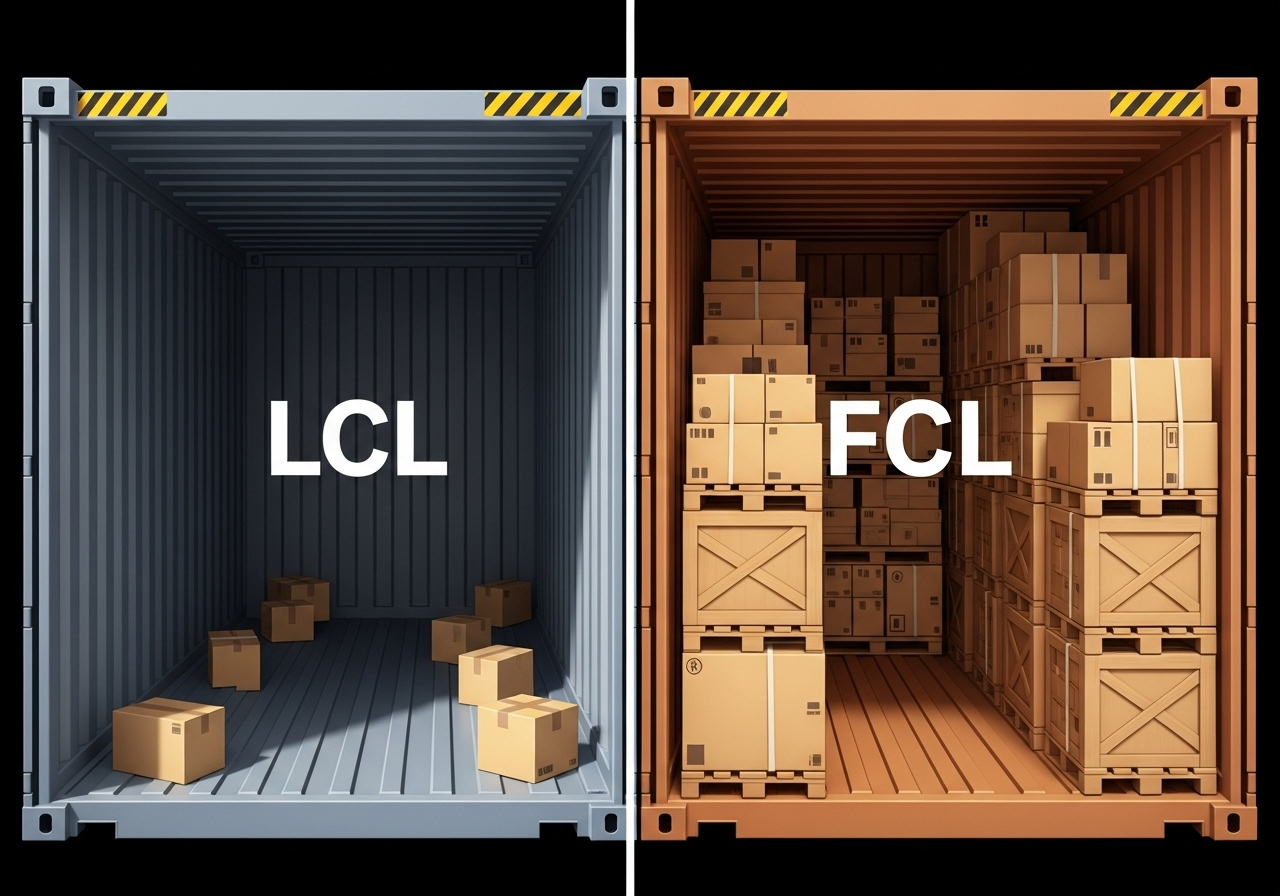
One of the biggest cost drains is paying for unused space. The first strategic decision an importer faces is choosing between Full Container Load (FCL) and Less than Container Load (LCL).
Understanding the Volume Breakpoint
FCL (Full Container Load): You pay a flat rate for the exclusive use of an entire container (usually 20ft or 40ft), regardless of whether it’s full.
Best for: Large, bulky shipments, high-value goods, or cargo that needs to be sealed and untouched for security. The cost per unit is much lower if the container is near capacity.
LCL (Less than Container Load): You share container space with other shippers and only pay for the volume (Cubic Meter – CBM) your goods occupy.
Best for: Small shipments (typically less than 13-15 CBM), frequent, smaller orders, and managing lower inventory levels.
The Cost-Saving Action: There is a “breakpoint” (usually around 13-15 CBM) where the total cost of LCL shipments (which includes handling, consolidation, and deconsolidation fees) suddenly becomes more expensive than simply booking a full FCL container. Your goal is to calculate this breakpoint accurately. If your cargo volume is close to this point, always opt for FCL.
Consolidation is Key: For importers who work with multiple suppliers, especially on TheExporterHub.com, you can drastically cut costs by using a freight forwarder to consolidate multiple LCL shipments from different suppliers into one single FCL shipment. This leverages the better FCL per-unit rate and minimizes multiple handling and documentation fees.
Strategy 2: Optimize Packaging to Minimize Dimensional Weight
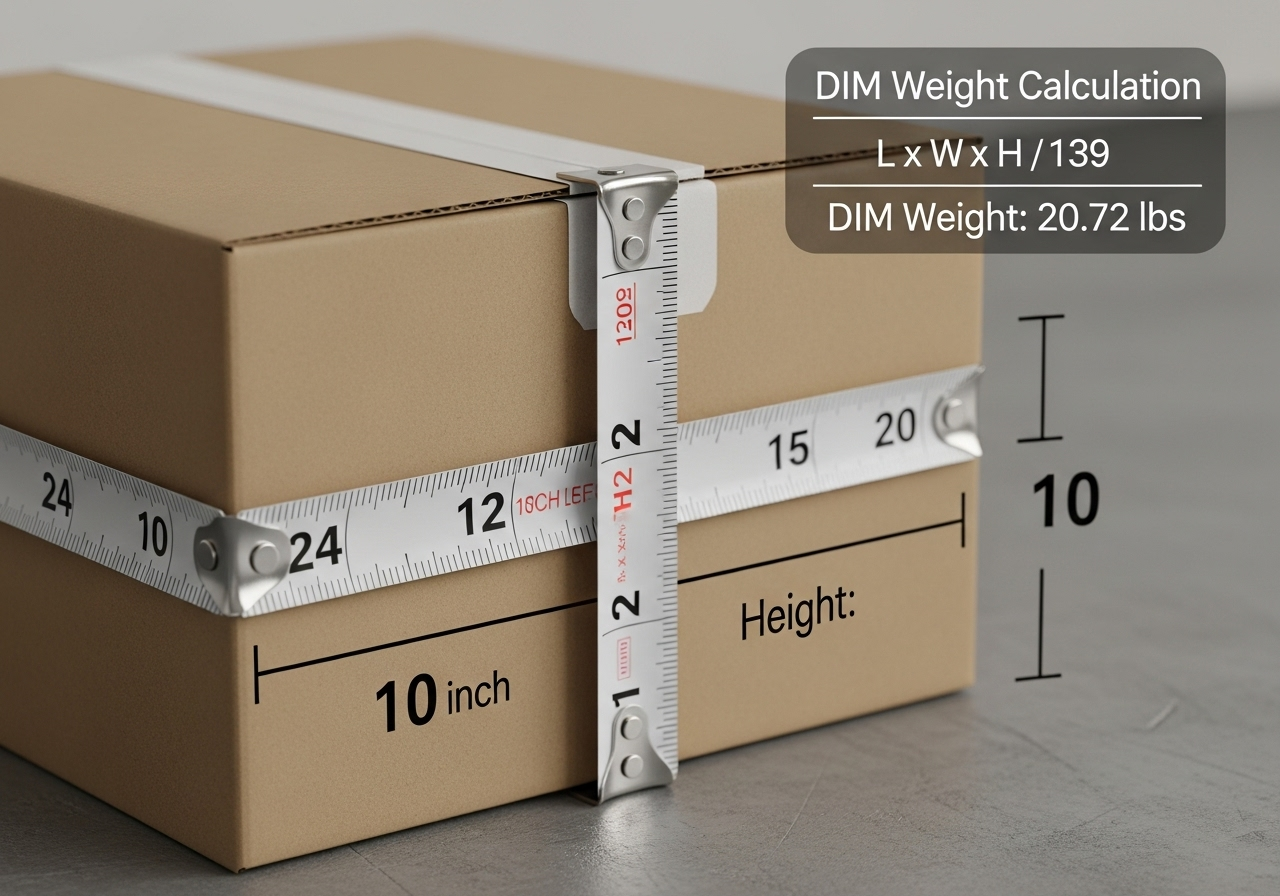
Shipping costs are often based on either the actual weight or the volumetric weight (also known as dimensional weight or DIM weight), whichever is greater. Dimensional weight is a calculation that factors in the size of the package.
DIM Weight Formula: (Length×Width×Height)/DIM Factor
The Cost-Saving Action:
Reduce Air Space: The “air” you ship is money wasted. Work with your suppliers to use the smallest possible packaging that still ensures product safety. This often means switching to right-sized boxes, using lightweight dunnage (infill material), or designing custom packaging.
Use Lightweight Materials: For certain non-fragile goods, explore lighter, yet durable, packaging materials like poly bags instead of heavy cardboard boxes.
Strategic Palletizing: Optimize how boxes are placed on a pallet (or inside a container) to maximize space utilization. A freight forwarder can assist with advanced load planning to ensure every centimeter of container space is effectively used. Maximizing container utilization can save you thousands of dollars per shipment.
Strategy 3: Negotiate Shipping Contracts Based on Volume and Loyalty
You do not have to accept the first rate quoted by a carrier or even a freight forwarder. Negotiation is a powerful tool, even for small to medium-sized importers.
The Cost-Saving Action:
Consolidate Your Spend: Instead of using five different carriers or forwarders, try to stick with two or three. By consolidating your overall volume (e.g., promising a certain number of containers per month or quarter), you gain leverage to negotiate better base rates. Carriers reward loyalty and predictable volume.
Negotiate Surcharges: Base rates are just the starting point. The real savings often lie in negotiating accessorial fees and surcharges, such as:
Fuel Surcharges: Try to negotiate a cap on fuel surcharges to protect yourself from volatile oil prices.
Peak Season Surcharges (PSS): These fees can significantly inflate costs during busy periods (like the pre-holiday rush). A strong contract can reduce or eliminate these.
Compare and Benchmark: Get quotes from at least three different freight forwarders for every shipment. Use their rates to benchmark and negotiate the best possible deal. A transparent market overview is your strongest negotiating tool.
Strategy 4: Choose the Right Incoterms® for Control and Cost
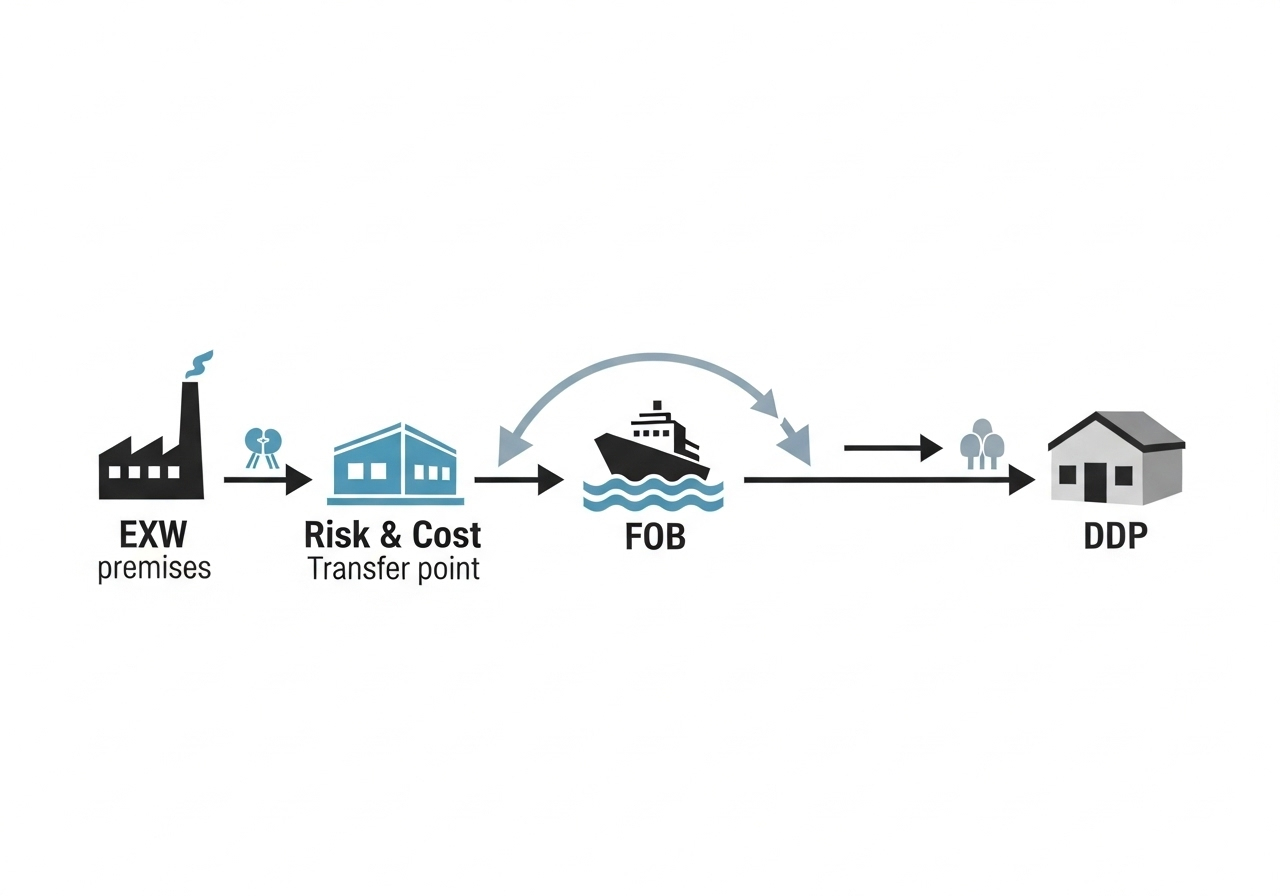
Incoterms (International Commercial Terms) define exactly where the cost and risk transfer from the seller (exporter) to the buyer (importer). Choosing the wrong term can lead to hidden costs and loss of control.
The Cost-Saving Action:
Move Beyond CIF (Cost, Insurance, and Freight): While CIF is convenient (the supplier handles everything up to the destination port), they often use carriers they prefer, and the shipping costs may be “padded.”
Opt for FOB (Free On Board):FOB is often the most cost-effective choice for experienced importers. With FOB, the supplier is responsible for getting the goods to the designated port and loaded onto the vessel. From that point, you (the importer) take control of the main freight journey. This allows you to:
Select your own freight forwarder, ensuring you get the best negotiated rates (as per Strategy 3).
Control the shipping schedule, allowing you to ship during off-peak times (as per Strategy 5).
Be Aware of DDP (Delivered Duty Paid): While DDP is convenient (the supplier handles everything, including your import duties), they often add a large margin to cover their risk, making it an expensive option. Only use DDP if you have no other choice.
Strategy 5: Embrace Planning and Technology for Predictive Savings
The most expensive shipping is usually urgent shipping. Planning ahead gives you the luxury of choosing the cheapest, albeit slowest, option.
The Cost-Saving Action:
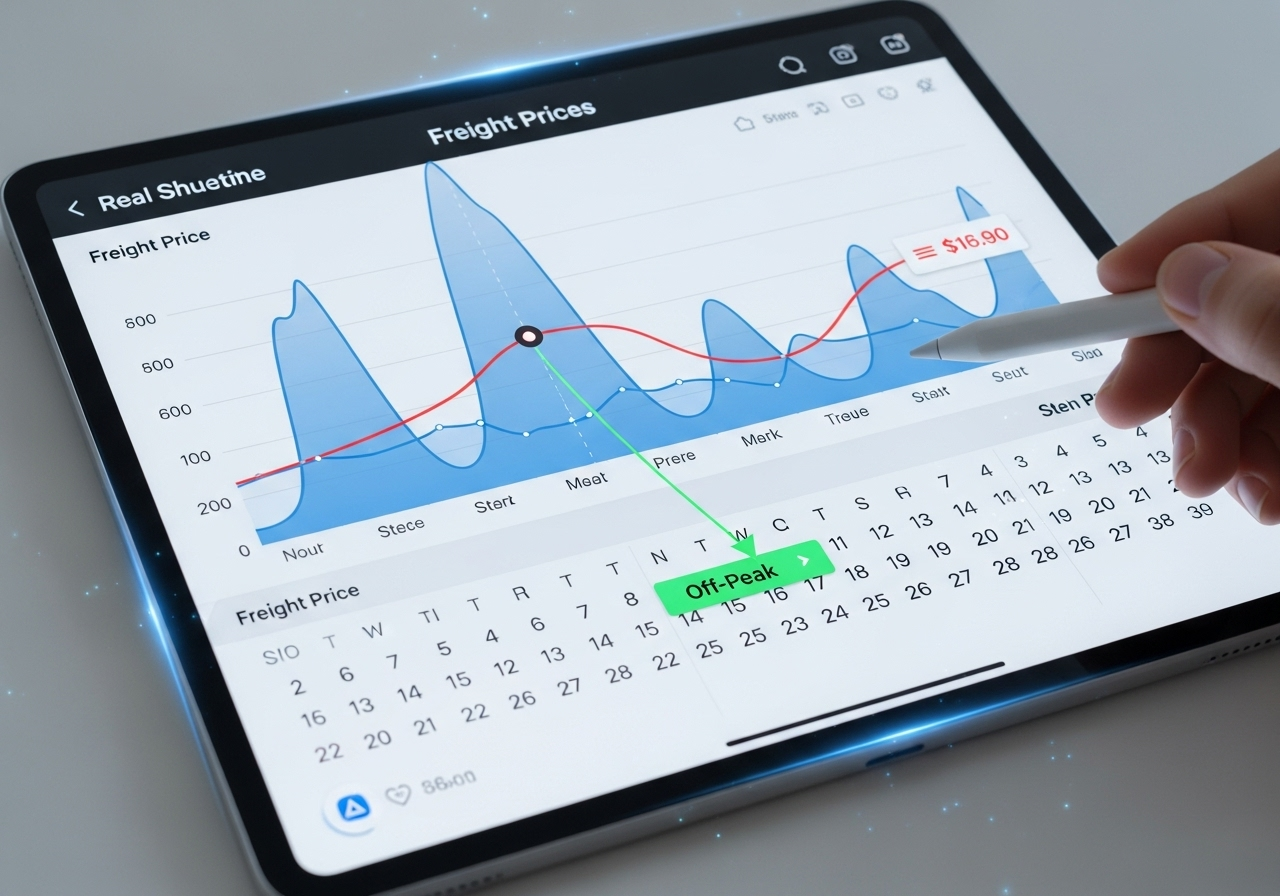
Ship During Off-Peak Times: Sea freight costs are heavily influenced by demand. Shipments around major global holidays (e.g., Chinese New Year, Christmas) and during peak retail seasons are always more expensive. Plan your inventory to ship well in advance of these windows.
Conduct Freight Audits: Shipping invoices are complex and prone to errors. Implement a system (either manual or via a Third-Party Logistics/3PL provider) to audit every single freight bill. Check for discrepancies in weight, incorrect tariffs, or duplicated accessorial fees. A good audit can save 5-10% in overcharges annually.
Leverage Digital Platforms: Use digital freight booking platforms (like those used by your freight forwarder or 3PL) to compare real-time rates across multiple carriers. This takes the guesswork out of rate shopping and ensures you always choose the most cost-effective route and service.
Conclusion: Shipping as a Strategic Lever
Reducing international shipping costs is not about cutting corners; it’s about optimizing your supply chain through knowledge and negotiation. By mastering your cargo volume (FCL vs. LCL), optimizing packaging, negotiating aggressively, choosing the right Incoterms, and planning strategically, you can gain greater control over your landed costs.
Lower shipping costs directly translate into higher profit margins and better pricing for your customers. Start implementing these five strategies today to turn your logistics from a financial burden into a sustainable competitive advantage.
Ready to find an exporter who can work with your cost-saving Incoterms? Submit your Request for Quote (RFQ) on TheExporterHub.comnow to connect with verified global suppliers.
In the global marketplace, India has emerged as a powerhouse for sourcing a wide range of products, from building materials to textiles, chemicals, and engineering goods. With its vast manufacturing capabilities, competitive labor costs, and a government increasingly focused on ease of doing business, India offers a compelling proposition for importers worldwide. However, navigating the import process can seem complex, particularly for first-time importers.
This comprehensive guide will break down the entire process into a simple, step-by-step roadmap. Whether you are a small business owner looking to diversify your supply chain or a large corporation seeking a reliable partner, this article will equip you with the knowledge to import goods from India smoothly and efficiently.
The Foundation: Essential Preparations Before You Begin
Before you place your first order, a few critical steps are necessary to ensure a seamless and legal import process.
Obtain Your Importer-Exporter Code (IEC): This is the most crucial step. In India, an IEC is a 10-digit unique code issued by the Directorate General of Foreign Trade (DGFT) that is mandatory for any business involved in importing or exporting. It is a one-time registration and has lifetime validity. You will need a PAN card and proof of your business address to apply. Without an IEC, your shipment will not be cleared by Indian Customs.
Product and Market Research: Identify the specific product you want to import. A successful import business starts with a high-demand, profitable product. Conduct thorough market research to understand the demand, potential competition, and any specific regulatory requirements for your product in your country.
Find a Reliable Supplier: This is a make-or-break step. Use reputable B2B platforms like TheExporterHub.com, attend trade fairs, and leverage professional networks to find a trustworthy and certified supplier. Perform due diligence on potential suppliers by checking their business credentials, production capacity, and quality certifications. Don’t hesitate to request product samples before finalizing a deal.
The Core Process: A 5-Step Roadmap to Importing
With your preparations complete, you are ready to execute the import transaction.
Step 1: Negotiate and Finalize the Deal Once you have selected a supplier, negotiate the terms of the sale. This includes the price, quantity, quality standards, and, most importantly, the Incoterms® (International Commercial Terms). Incoterms, such as FOB (Free on Board) or CIF (Cost, Insurance, and Freight), define who is responsible for the goods at each stage of the journey. Ensure all terms are clearly laid out in a legally binding contract or purchase order.
Step 2: Place Your Order and Arrange Payment Send a formal Purchase Order (PO) to your supplier. When it comes to payment, there are several common methods:
Advance Payment: The safest option for the supplier, but risky for the importer.
Letter of Credit (LC): A highly secure method where a bank guarantees payment to the supplier after all contract conditions are met. This is often preferred for large transactions.
Documents Against Payment (D/P) or Documents Against Acceptance (D/A): A bank-mediated process that releases documents to the importer only after payment or acceptance of a Bill of Exchange.
Step 3: Shipping and Logistics Your supplier will prepare the goods for shipment. You will need to decide on the mode of transport: sea freight (for large, heavy shipments), air freight (for urgent or high-value goods), or land transport (for shipments to neighboring countries). A reliable freight forwarder or logistics partner is essential to handle the booking, transportation, and tracking of your consignment.
Step 4: Customs Clearance at the Destination Port This is a critical stage. The freight forwarder or a customs broker will file a Bill of Entry with the customs authority of your country. This document contains all the details of the imported goods and is used for assessment of customs duties. Your goods will be inspected and verified against the documents provided.
Step 5: Receive Your Shipment Once customs clearance is complete and all duties and taxes are paid, your goods will be released. You or your logistics partner can then arrange for the final delivery of the goods from the port to your warehouse or specified location.
Navigating the Paperwork: The Essential Documents
Documentation is the backbone of international trade. Missing or incorrect documents can lead to significant delays and penalties. Make sure you have the following ready:
Commercial Invoice: A bill of sale from the supplier to the importer, detailing the goods, quantity, and price.
Packing List: Provides a detailed inventory of the contents of each package in the shipment.
Bill of Lading (B/L) or Air Waybill (AWB): A legal document issued by the carrier confirming receipt of the goods for shipment.
Bill of Entry: Filed by the importer or their agent with customs to declare the goods and pay duties.
Certificate of Origin (CoO): Certifies that the goods were manufactured or processed in India. This may be required to claim preferential tariffs under a Free Trade Agreement.
Insurance Certificate: Proof that the goods are insured during transit.
Purchase Order: Your formal request for the goods from the supplier.
Overcoming Common Challenges
Importing can have its hurdles, but a proactive approach can mitigate risks.
Currency Fluctuations: Fluctuation in the exchange rate between your currency and the Indian Rupee (INR) can impact your profit margins. Consider using foreign exchange hedging strategies or fixing the price with your supplier in a stable currency.
Regulatory Complexity: India’s regulatory landscape is constantly evolving. Staying updated on new policies, tariffs, and product-specific restrictions is crucial. Working with a knowledgeable local agent or customs broker is highly recommended.
Logistics and Delays: Unforeseen shipping delays, port congestion, or supply chain disruptions can happen. Use a freight forwarder with a strong track record and robust tracking systems.
Pro-Tips for a Successful Import Operation
Build a Strong Relationship: Cultivate a good working relationship with your supplier and logistics partners. Trust and open communication can resolve issues quickly.
Calculate Total Landed Cost: Don’t just focus on the product price. Calculate all costs, including shipping, insurance, customs duties, taxes, and handling fees, to determine your true cost and profitability.
Leverage Technology: Use digital platforms for communication, document sharing, and tracking to streamline your operations.
Conclusion
Importing from India offers a world of opportunities for businesses seeking high-quality, competitively priced products. While the process involves multiple steps and requires careful planning, it is highly manageable with the right preparation and knowledge. By following this guide, you can navigate the complexities of international trade and build a thriving import business.
Ready to find your perfect supplier? Explore thousands of verified exporters on TheExporterHub.com and get your first Request for Quote submitted today.
What Exactly Is a Trade Deal? Let’s Start with the Basics.
Before we dive into the big news, let’s quickly understand what a “trade deal” is.
Think of it like a special friendship agreement between two countries. Normally, when you send a product from one country to another, you have to pay a tax called a tariff or customs duty. This tax makes your product more expensive for the buyer.
A trade deal, or a Free Trade Agreement (FTA), is a promise between countries to lower or completely remove these taxes on certain goods and services. The main goal? To make it cheaper, easier, and faster for businesses to buy and sell from each other.
It’s about opening up new markets and creating bigger opportunities for everyone involved.
The Big News: India and the UK Have Signed a Historic Trade Deal!
This deal is not just about reducing taxes; it’s a comprehensive agreement that touches everything from customs procedures to professional services. It’s designed to double the bilateral trade between the two nations to $112 billion by 2030.
So, what does this new agreement mean for you, as an Indian exporter? Let’s break it down in simple points.
This is the biggest and most exciting benefit. The UK has committed to eliminating tariffs on almost 99% of all Indian goods that enter its market.
What this means for you: Your products will now be significantly more competitive in the UK. Instead of facing duties that can be as high as 10-15% on some goods, you will now have a massive advantage over competitors from countries that do not have a similar deal. Your products will be cheaper for British buyers, which can lead to a huge increase in sales and market share.
2. Simpler and Faster Customs Procedures
One of the biggest headaches for any exporter is customs paperwork and delays. This new deal aims to fix that.
What this means for you: The agreement commits both sides to making customs procedures more transparent and efficient. There’s a specific goal to release goods from customs control within 48 hours, as long as all your documentation is in order. This will reduce administrative burdens, save time, and make your supply chain much smoother and more reliable.
3. Clear Rules of Origin
A key part of any trade deal is figuring out where a product actually comes from. This is called “Rules of Origin.”
What this means for you: The deal provides a clear framework to determine if a product is “Indian-made” and therefore eligible for the benefits. This gives you peace of mind and certainty that your products will qualify for zero-tariff access, as long as you meet the agreed-upon criteria.
Which Sectors Stand to Gain the Most?
While the deal benefits almost every sector, a few are set to see a major boost:
Textiles and Apparel: Indian textile and garment exporters, especially from hubs like Tiruppur, will get a huge competitive edge, as the tariffs on these products will be completely eliminated. This will make Indian knitwear and other garments much more attractive in the UK market.
Gems and Jewellery: With the reduction of tariffs, India’s exports of gold jewellery, cut and polished diamonds, and other precious stones are expected to surge. This is a big win for artisans and manufacturers.
Leather and Footwear: Indian leather goods and footwear exports will now be able to compete on a level playing field with other major players, with tariffs of up to 16% being removed.
Engineering Goods and Auto Components: Manufacturers of everything from machinery to auto parts will benefit from new market access, making it easier to export to the UK’s advanced manufacturing sector. This is a great opportunity for businesses in states like Gujarat.
Marine Products: Exporters of seafood, particularly shrimp and tuna, can expect a significant jump in sales as tariffs are eliminated, making Indian marine products more competitive in the UK market.
A New Gateway to Global Trade
This trade deal is a landmark achievement that opens a new gateway for Indian businesses. By eliminating duties on a wide range of products, streamlining customs, and providing a stable framework for trade, it creates an environment where you can grow, innovate, and compete on the world stage with more confidence.
It’s a fantastic time to be an Indian exporter, and this deal makes the UK a top-priority market for your business.
Importing goods from India( Import From India ) can be a great business move. It lets you access a wide range of products at good prices. To do well, you need to know the import process inside out. TheExporterHub.com is a great tool that connects you with India’s trusted exporters. It makes importing easier for you.
With the right help, you can handle the tough parts of international trade. This guide will show you how to import goods successfully. It covers all the key steps you need to know.
Key Takeaways
Understand the import process and regulations
Identify reliable Indian exporters through platforms like TheExporterHub.com
Navigate the complexities of international trade
Capitalize on the benefits of importing goods from India
Ensure compliance with import regulations and laws
Understanding India’s Export Market
India is a big player in global trade, offering many chances for businesses to import goods. The country has a wide range of products for different markets around the world.
Key Industries and Products
Several key industries drive India’s export market. Some of the top export categories include:
Textiles and Garments: India is famous for its textile industry. It produces high-quality fabrics, clothes, and accessories.
Pharmaceuticals and Chemicals: Indian pharmaceutical companies are known worldwide for their affordable, high-quality medicines and chemical products.
Jewelry and Handicrafts: India’s rich cultural heritage is seen in its exquisite jewelry and handicrafts. These are highly sought after in international markets.
India’s Position in Global Trade
India is a key player in global trade, with its exports playing a big role in the country’s economy. Its strategic location and trade agreements with many nations make it a reliable supplier.
Recent Export Trends
Recent trends show a growing demand for Indian goods worldwide. The country’s export sector is adapting to market changes, focusing on innovation and quality.
To navigate this thriving market, businesses can use platforms like TheExporterHub.com. It connects buyers with verified Indian exporters, making imports easier.
Benefits of Importing from India
India is becoming a top choice for imports due to its growing manufacturing and business-friendly environment. This makes it easier for businesses to find quality products at good prices. By importing from India, you can improve your product range and stay ahead in the global market.
Competitive Pricing and Cost Advantages
Importing from India means getting products at lower prices without losing quality. This is great for businesses wanting to save money without sacrificing quality. It’s a smart move for optimizing your supply chain.
Product Diversity and Specialization
India offers a wide range of products, from textiles to electronics. This variety lets you find many products in one place, making imports easier.
English-Speaking Business Environment
India’s business scene is welcoming to international trade, with many English speakers. This makes talking and negotiating with suppliers much easier, cutting down on misunderstandings.
Growing Manufacturing Capabilities
India’s manufacturing sector is booming, thanks to government support and new infrastructure. This means better quality products and more goods available for export.
Benefits
Description
Competitive Pricing
Cost-effective solutions without compromising on quality
Product Diversity
Wide range of products across various industries
English-Speaking Environment
Smoother communication and negotiation with suppliers
Growing Manufacturing
Improved product quality and increased availability of goods
Using platforms like TheExporterHub.com can help you take advantage of India’s strengths. You’ll get better prices, a wide variety of products, and a business-friendly environment. This can really boost your importing success and help your business grow.
How to Import from India: Essential Steps
To import from India, you must follow key steps. Importing goods from India can be profitable. But, it needs careful planning and action.
Establishing Your Business Entity
First, register your business and get any needed licenses or permits. This is important for following Indian export rules and your country’s import laws.
Obtaining Necessary Import Licenses
It’s crucial to understand India’s import regulations and get the right licenses. TheExporterHub.com can help you find verified exporters. They know the rules, making things easier for you.
Creating an Import Strategy
A good import strategy is essential for success. It includes:
Market Research: Find the products you want to import and check their demand in your market.
Budget Planning: Set your budget for products, shipping, and customs duties.
Timeline Development: Plan your import process timeline, from finding products to delivery.
By following these steps and using resources like TheExporterHub.com, you can handle importing from India. This will help you build a successful business.
Finding Reliable Indian Suppliers
Finding a reliable supplier is key when importing from India. India has a wide range of products, from textiles to machinery. It’s important to find suppliers who deliver quality products on time.
Using TheExporterHub.com for Verified Exporters
TheExporterHub.com connects you with verified Indian exporters. It checks if exporters are real and reliable. This makes you feel secure when buying products.
How TheExporterHub.com Verifies Indian Exporters
TheExporterHub.com checks business licenses and export history. It also looks at other important credentials. This helps avoid fake suppliers and ensures you deal with real ones.
Navigating the Platform Effectively
Use TheExporterHub.com’s search features to find what you need. It also helps you talk to suppliers easily. This makes it simpler to agree on terms and details.
Alternative Sourcing Methods
While TheExporterHub.com is great, you might also look at trade shows, referrals, and online directories. But, always check suppliers carefully to avoid scams.
Evaluating Supplier Credentials
Look for suppliers with a good export history and certifications. Also, check their customer reviews. Make sure they can produce quality products and have good quality control.
Red Flags to Watch For
Watch out for suppliers who ask for money first without showing samples. Also, be cautious of those who don’t communicate well or have a history of late deliveries. Doing your homework can help avoid problems and losses.
Experts say verifying suppliers is crucial for a smooth import process. Use platforms like TheExporterHub.com and be careful when choosing suppliers. This way, you can import from India with confidence.
Understanding Import Regulations
Getting to know the U.S. import rules is crucial for importing from India. The U.S. has strict rules to make sure imported goods are safe and of good quality.
U.S. Import Regulations for Indian Goods
When you import from India, you must follow several U.S. rules. These include:
FDA requirements for food, drugs, and cosmetics
CPSC standards for consumer products
FDA Requirements
The FDA checks on food, drugs, and cosmetics. Make sure your Indian supplier meets FDA standards. This includes correct labeling and safety checks.
CPSC Standards
The CPSC has rules for consumer products. Items like toys, electronics, and furniture must meet these standards to enter the U.S.
Product-Specific Compliance Requirements
Each product has its own set of rules. For example, textiles need to show what materials they’re made of. Electronics must pass certain safety tests.
Restricted and Prohibited Items
Know what can’t be imported into the U.S. This includes some chemicals, endangered species, and fake goods.
Recent Regulatory Changes
Keep up with new U.S. import rules. TheExporterHub.com can help you understand these changes and follow the latest rules.
By following U.S. import rules, you can make importing from India easier. TheExporterHub.com connects you with trusted Indian exporters. They can help you navigate the rules.
Essential Documentation for Importing
To import goods from India, you need to gather important documents. It’s key to have accurate and complete paperwork for easy customs clearance.
Commercial Invoice and Packing List
The commercial invoice and packing list are key in the import process. The commercial invoice shows the transaction details, like the goods’ value. The packing list lists what’s in each shipment.
Certificate of Origin
A Certificate of Origin is needed to prove where the goods came from. It’s important for figuring out tariffs and following trade rules.
Bill of Lading/Airway Bill
The Bill of Lading or Airway Bill is a receipt for the goods and a title document. It has info on the shipment, like who carried it and where it’s going.
Import License and Permits
You might need an import license or special permits for certain goods. Make sure you meet all the rules.
Product-Specific Certificates
Some items need extra certificates, like quality or safety ones. Check what’s needed for your goods.
Documentation Verification Process
It’s vital to check all documents for correctness and fullness. TheExporterHub.com can connect you with trusted Indian exporters, making this easier.
Document
Purpose
Importance Level
Commercial Invoice
Details the transaction value
High
Certificate of Origin
Certifies the country of origin
High
Bill of Lading/Airway Bill
Receipt and document of title
High
Import License and Permits
Compliance with regulations
High
Navigating Customs Clearance
To ensure a smooth import process from India, it’s critical to understand US customs clearance procedures. Navigating customs clearance is a complex but crucial step when importing goods from India to the USA. Understanding the intricacies of this process can help you avoid delays and ensure compliance with US regulations.
U.S. Customs Entry Process
The U.S. Customs entry process involves submitting required documentation to clear your imported goods. This includes a commercial invoice, packing list, and a bill of lading or airway bill. Ensuring that all documents are accurate and complete is vital to avoid any clearance issues.
Determining Harmonized System (HS) Codes
Harmonized System (HS) codes are used to classify your imported goods for duty assessment. Accurately determining the HS code for your products is essential. Misclassification can lead to incorrect duty payments or even delays in customs clearance.
Calculating Import Duties and Taxes
Once you’ve determined the correct HS code, you can calculate the import duties and taxes owed. The U.S. Customs and Border Protection (CBP) website provides resources to help you determine these costs.
Duty Drawback Opportunities
Duty drawback is a program that allows you to reclaim duties paid on imported goods that are later exported or destroyed. Understanding and utilizing duty drawback opportunities can help reduce your import costs.
Free Trade Agreements
Free trade agreements (FTAs) between the US and other countries, including India, can reduce or eliminate duties on certain goods. Familiarizing yourself with these agreements can help you take advantage of potential savings.
FTA
Description
Benefit
United States-India Trade Agreement
Reduces tariffs on specific goods
Lower import duties
Generalized System of Preferences (GSP)
Provides duty-free treatment for certain products
Duty-free imports
Working with Customs Brokers
Customs brokers are experts in navigating the complexities of customs clearance. They can help ensure that your imports comply with all regulations and that you take advantage of available duty savings programs.
“Using a customs broker can simplify the customs clearance process and help avoid costly mistakes.”
– U.S. Customs and Border Protection
TheExporterHub.com can guide you through the customs clearance process. They connect you with verified Indian exporters and provide the necessary tools and information for a smooth import experience.
Shipping and Logistics Considerations
To import from India, you must handle shipping and logistics well. This means choosing the right shipping method, knowing your shipment terms, and managing risks.
Choosing Between Air, Sea, and Land Freight
When picking a shipping method, think about cost and time. Air freight is quick but pricey. Sea freight is cheaper for big shipments but takes longer.
Cost Comparisons
Air freight: Best for urgent or valuable items.
Sea freight: Good for lots of or heavy goods.
Land freight: Handy for moving goods within nearby countries or areas.
Transit Times
Shipping Method
Typical Transit Time
Air Freight
3-7 days
Sea Freight
15-30 days
Land Freight
Varies by distance
Incoterms and Shipping Terms
Knowing Incoterms is key. They set delivery terms and affect costs and duties. Learn about FOB and CIF to understand your obligations better.
Insurance and Risk Management
Shipping goods comes with risks like damage or loss. Marine insurance can safeguard your goods. Know what it covers and what it doesn’t.
Managing Shipping Delays
Delays can occur for many reasons, like customs issues or weather. Plan ahead and have backup plans to deal with these problems.
By carefully thinking about these shipping and logistics points, you can make importing from India easier. Using sites like TheExporterHub.com can also help. It connects you with trusted Indian exporters.
Payment Methods and Financial Considerations
When you import goods from India, knowing about payment methods and financial aspects is key. TheExporterHub.com helps you understand these, connecting you with trusted exporters in India.
Letters of Credit
Letters of Credit (L/C) are a secure way to pay for imports from India. They ensure payment to the seller when they present the right documents. This method builds trust between the buyer and seller, making transactions smoother.
Wire Transfers and Digital Payments
Wire transfers are a common choice for international payments. They’re easy but might cost more. Digital payments are becoming popular for their convenience and quickness. Remember to look at the fees and exchange rates for these options.
Currency Exchange Considerations
Changes in currency exchange rates can affect your import costs. Watching exchange rates and using hedging strategies can reduce losses. TheExporterHub.com can help you find suppliers who can help manage these risks.
Managing Financial Risks
To handle financial risks, think about using escrow services. They hold the payment until you confirm the goods are delivered. Also, talk to your supplier about payment terms to fit your budget.
Escrow Services
Escrow services are a neutral third party that holds your payment until conditions are met. This adds security to your transactions.
Payment Terms Negotiation
When you negotiate payment terms, like how much to pay upfront versus on delivery, it helps with your cash flow. Good communication with your supplier is crucial for successful negotiations.
Payment Method
Security Level
Transaction Speed
Letter of Credit
High
Moderate
Wire Transfer
Low
Fast
Digital Payments
Moderate
Fast
Quality Control Strategies
Effective quality control is key to your importing business’s success from India. It’s vital to ensure products meet your standards. This keeps customers happy and protects your brand.
Pre-Shipment Inspections
Pre-shipment inspections are a must. They check if products match your specs before shipping from India.
Finding Reliable Inspection Services
To do good inspections, you need trustworthy services. TheExporterHub.com connects you with top exporters and inspectors in India. This way, your products get a thorough check before shipping.
What to Include in Inspection Reports
Inspection reports should detail the product’s condition, packaging, and if it meets your specs. This info helps you make smart import decisions.
Product Testing and Certification
Product testing and certification are also crucial. They ensure your imports follow all rules and standards.
Type of Product
Testing/Certification Required
Regulatory Body
Electronics
Compliance with safety standards
UL (Underwriters Laboratories)
Food Products
Compliance with food safety regulations
FDA (Food and Drug Administration)
Textiles
Compliance with flammability standards
CPSC (Consumer Product Safety Commission)
Managing Product Quality Issues
Even with the best planning, quality issues can happen. It’s important to have a plan to handle them. This helps keep your business running smoothly.
Establishing Quality Standards with Suppliers
Working with suppliers to set quality standards is crucial. TheExporterHub.com helps you communicate with suppliers. This ensures your imports meet your quality expectations.
Leveraging TheExporterHub.com for Successful Importing
TheExporterHub.com is your entry to a vast array of Indian products. It makes importing easier. You can make your import process smoother with its features.
Advanced Search Features for Finding Indian Products
TheExporterHub.com has advanced search features for finding Indian products. You can filter by category, supplier location, and more. This helps narrow down your search.
Verification Process and Trust Indicators
The platform’s verification process ensures you work with reliable Indian exporters. Trust indicators like supplier ratings and reviews help you make better choices.
Communication Tools and Support Services
TheExporterHub.com offers communication tools and support services for smooth transactions. This includes messaging systems and customer support for any issues.
Success Stories and Case Studies
The platform shares success stories and case studies of businesses that imported from India successfully. These stories can inspire and guide you in your importing journey.
Using TheExporterHub.com simplifies importing from India and connects you with verified exporters. It saves time, reduces risks, and boosts your import operations’ efficiency.
Conclusion: Succeeding in Your Import Journey
Importing from India can be rewarding if done right. Follow the steps in this guide to handle the import process well. This will help you build a strong business relationship with Indian suppliers.
To import from India successfully, know about India’s export market and import rules. Use resources like TheExporterHub.com to find verified Indian exporters. This makes importing easier.
TheExporterHub.com is a great tool for your import journey. It connects you with trusted Indian exporters. This helps you find reliable suppliers and makes sourcing easier.
When importing from India, focus on quality control and logistics. Also, keep up with import rules. With the right help and resources, you can grow your business through imports.
FAQ
What are the benefits of importing goods from India?
Importing goods from India has many advantages. You can find products at competitive prices and enjoy a wide range of options. India’s growing manufacturing sector and business-friendly environment also help. Plus, the English-speaking workforce makes importing easier.
How do I find reliable Indian suppliers?
To find trustworthy Indian suppliers, use TheExporterHub.com. It connects you with verified exporters. You can also explore other options, but always check the supplier’s credentials and watch for any red flags.
What are the essential steps to import from India?
To import from India, start by setting up your business. Then, get the necessary import licenses. Next, plan your import strategy, including market research, budgeting, and setting a timeline.
How do I navigate U.S. import regulations for Indian goods?
To comply with U.S. import rules, follow FDA and CPSC standards. Be aware of items you can’t import and keep up with regulatory updates.
What documentation is required for importing from India?
You’ll need several documents for importing from India. These include a commercial invoice, packing list, and certificate of origin. You’ll also need a bill of lading/airway bill, import license, and permits. Don’t forget product-specific certificates.
How do I manage shipping and logistics when importing from India?
When shipping from India, choose between air, sea, or land freight. Consider costs and transit times. It’s important to understand Incoterms, shipping terms, and insurance. Managing risks is also crucial.
What payment methods can I use when importing from India?
For payments, you can use letters of credit, wire transfers, or digital payments. Keep in mind currency exchange and manage financial risks well.
How can I ensure product quality when importing from India?
To ensure quality, do pre-shipment inspections and product testing. Certifications are also key. Set quality standards with suppliers and handle any quality issues effectively.
How can TheExporterHub.com help me import from India?
TheExporterHub.com connects you with verified Indian exporters. It offers advanced search, verification, and trust indicators. You also get communication tools and support services.
What are the best practices for importing from India?
For successful importing, understand India’s export market and regulations. Stay updated on export trends, regulatory changes, and market developments. This knowledge helps in making informed decisions.
India’s export industry is booming, making it an ideal time for businesses to go global. In 2023 alone, India’s exports surpassed $770 billion. This presents a lucrative opportunity for entrepreneurs.
With The Exporter Hub, you can become a successful exporter. You’ll learn to navigate the complexities of exporting and tap into global markets. This guide will walk you through the essential steps to build a thriving export business.
Key Takeaways
Understand the benefits of exporting from India
Learn the steps to start an export business
Discover how to navigate global markets
Find resources to support your export journey
Maximize your export potential with The Exporter Hub
Understanding the Indian Export Landscape
To navigate the Indian export landscape, you need to know the current trends and key sectors. It’s important to understand the opportunities and challenges in the global market. This knowledge is crucial for starting to export from India.
Current Export Trends and Opportunities
India’s export sector is growing fast, thanks to industries like textiles, machinery, and pharmaceuticals. The focus is on diversifying products and finding new markets. By identifying emerging opportunities, you can align your products to capitalize on these trends.
Key Export Sectors and Products from India
India excels in several sectors, including IT services, spices, and textiles. Knowing these sectors can guide your export business decisions. Below is a table showing some major export products from India:
Sector
Key Products
Export Value
Textiles
Garments, Fabrics
$30 billion
Pharmaceuticals
Generic Medicines
$20 billion
IT Services
Software Development, IT Consulting
$150 billion
By focusing on these sectors and understanding trends, you can craft a winning export strategy from India.
Benefits of Starting an Export Business in India
Exporting from India can be very profitable. The government supports exports with policies and advantages. Knowing these benefits can help your business grow.
Economic Advantages for Entrepreneurs
Starting an export business in India has many economic benefits. You can use the country’s vast resources and skilled workers. This lets you make high-quality products at good prices, attracting international buyers.
Exporting also means more money and reaching more markets. This reduces your reliance on just the domestic market. By selling to more places, you can grow your business and make more money.
Government Incentives and Support Programs
The Indian government helps exporters with incentives and programs. Schemes like the Merchandise Exports from India Scheme (MEIS) and Remission of Duties and Taxes on Export Products (RoDTEP) cut costs and boost profits.
Here’s a quick look at MEIS and RoDTEP:
Scheme
Benefits
Eligibility
MEIS
Provides financial incentives on exports of specified goods
Exporters of notified products
RoDTEP
Remits duties and taxes on exported products
All exporters
Using these government incentives can help your export business grow and stay competitive.
Essential Prerequisites Before You Begin Exporting
Before starting to export from India, you need to prepare well. It’s important to have the right legal and financial setup. This is key for a successful export business.
Legal Requirements and Business Structure
First, you must set up a legal entity. Choose a business structure that fits your export business, like a sole proprietorship or private limited company. Registering your business and getting the right licenses are crucial. They help you follow Indian laws and regulations.
Financial Preparations and Capital Requirements
Good financial planning is a must. You need to figure out how much money you’ll need for production, marketing, and logistics. Exploring financing options like loans or grants can also help your export venture.
Market Research and Product Viability
Doing deep market research is vital. It helps you understand your target market and if your product will work. Key steps include:
Identifying your target audience and their needs
Analyzing competitors and market trends
Evaluating the demand for your product
By focusing on these key steps, you can set your export business up for success. Good planning and preparation will help you deal with the challenges of exporting from India.
How to Start Export from India: The Registration Process
Starting your export journey from India needs a good understanding of the registration process. This step is key for following Indian export rules and getting government incentives.
Obtaining an IEC (Import Export Code)
The first step is getting an IEC, or Import Export Code, from the Directorate General of Foreign Trade (DGFT). This 10-digit code is needed for any business wanting to export or import goods from India. To apply, you’ll need your PAN card, proof of address, and other documents. The process is easy and can be done online.
Additional Registrations and Licenses
You might also need to get other registrations like the Registration Cum Membership Certificate (RCMC) and Goods and Services Tax Identification Number (GSTIN). The RCMC is for export benefits and is from the Export Promotion Council. GSTIN is for tax under the Goods and Services Tax regime. Having all these registrations makes exporting smoother. The Exporter Hub can help you through this process, making it simpler to start exporting from India.
Key registrations include:
IEC (Import Export Code)
RCMC (Registration Cum Membership Certificate)
GSTIN (Goods and Services Tax Identification Number)
Identifying Your Target Markets and Buyers
To succeed in exporting from India, finding the right markets and buyers is key. You must do deep research to understand where your products are wanted. Also, finding reliable buyers and distributors is important.
Researching International Market Demand
Understanding international market demand is vital. You need to find countries where your products are in demand. Use reports, statistics, and online databases to learn about market trends and consumer behavior.
Analyze this data to see where your products could do well.
After finding your target markets, look for buyers and distributors. Attend trade shows and events to meet potential partners. Use online platforms like trade directories and social media to reach more people.
Working with export promotion councils and trade organizations can also help you find verified buyers.
Evaluating Competition in Target Markets
It’s important to know who your competitors are in your target markets. Look at their strengths, weaknesses, and strategies. This helps you find areas where you can stand out.
Use competitor analysis reports and market surveys to get the information you need.
By researching markets, finding buyers, and understanding competition, you can build a strong export strategy. This will help you succeed in the export business from India.
Mastering Export Documentation and Procedures
Exporting from India requires you to know the essential documents well. These documents are key to a smooth export process. Each one has its role, making your export journey easier.
Commercial Documents Required
Commercial documents are vital for any export deal. You’ll need a commercial invoice and a packing list. These details help with customs clearance and payment.
Regulatory and Compliance Documents
Regulatory documents keep you in line with Indian and foreign rules. You might need an export license and a certificate of origin. Following these rules avoids delays and legal trouble.
Digital Documentation Platforms
Digital platforms have changed the export game. They make creating, sending, and tracking documents easier. This means less paper and more speed in your export work.
Learning about export documents and procedures makes your exports better. The right tools and documents help you grow your business faster.
Logistics and Shipping for Indian Exporters
Logistics and shipping are key to getting your products to international markets on time. They ensure timely delivery, which is crucial. By understanding these elements, you can boost your export business’s success.
Choosing the Right Shipping Method
Choosing the right shipping method is vital for timely and cost-effective delivery. Consider the type of goods, their destination, and the delivery speed needed. Air freight, ocean freight, and land transportation are the main options, each with its own pros and cons.
Packaging and Labeling Requirements
Proper packaging and labeling are crucial for meeting international standards and ensuring products arrive safely. You must follow the packaging standards of the destination country. Also, make sure your labels are clear, accurate, and follow all laws.
Working with Freight Forwarders and Shipping Agents
Freight forwarders and shipping agents can make logistics easier by handling customs clearance, documentation, and transportation. When picking one, look for experience, reliability, and a wide network of international contacts. They can help you overcome complex logistics challenges and ensure efficient delivery.
By picking the right shipping method, ensuring proper packaging, and working with reliable freight forwarders, you can improve your logistics and shipping. This boosts customer satisfaction and helps your export business thrive.
Financial Aspects of Export Business
Starting an export business in India needs careful planning. It’s important to understand the financial parts that affect your business.
Pricing Your Products for International Markets
Setting the right price for your products is key to success in global markets. You must think about production costs, demand, and what others charge. Competitive pricing strategies can help you enter new markets and draw in more customers.
Payment Terms and Methods
Knowing about payment terms and methods is crucial for getting paid by international buyers. Common ways include Letters of Credit (L/C), Telegraphic Transfer (T/T), and Cash Against Documents (C/A.D). Choosing the right payment method depends on your risk level and the buyer’s trustworthiness.
Managing Currency Risks and Banking Relationships
Handling currency risks is vital because exchange rates change. You can lessen these risks with financial tools like forward contracts and options. Also, a good bank relationship can give you access to better financial options.
Financial Aspect
Description
Benefit
Pricing Strategy
Competitive pricing based on market analysis
Market penetration and increased sales
Payment Terms
Secure payment methods like L/C and T/T
Reduced risk of non-payment
Currency Risk Management
Using forward contracts and options
Protection against exchange rate fluctuations
Mastering these financial areas can make your export business more profitable and competitive worldwide.
Starting an export business from India can be tough. But with the right partner, you can succeed. The Exporter Hub is here to help you.
Services and Resources Offered
The Exporter Hub offers many services and resources. They help with export rules, logistics, and getting into new markets. This ensures you have everything to succeed globally.
Navigating Export Challenges
The Exporter Hub makes exporting from India easier. They give expert advice and support. This helps you run your business smoothly and reach your goals.
Success Stories and Case Studies
The Exporter Hub has helped many businesses succeed. Here are some success stories:
Company
Product
Export Market
ABC Exports
Textiles
USA
XYZ Enterprises
Spices
Europe
PQR Industries
Handicrafts
Australia
The Exporter Hub’s help was key to these businesses’ success. They offer valuable insights and guidance. This helps exporters make smart decisions and grow.
The Exporter Hub is committed to your success in exporting from India. With their services and expert advice, you can overcome challenges and thrive globally.
Conclusion: Building a Sustainable Export Business from India
Creating a lasting export business needs careful planning and action. This guide shows how to start a successful export business from India. It’s important to know the export scene, follow rules, and use available help.
To send goods from India, you must do several things. You need to get the right permits, find the best markets, and learn about export papers. The Exporter Hub is a great tool to help you with these steps.
Using The Exporter Hub’s services can make exporting from India easier and more efficient. This lets you concentrate on growing your business. It helps you succeed in the global market for the long haul.
FAQ
What are the key sectors for export from India?
India’s main export sectors are textiles, pharmaceuticals, and IT services. These areas have a lot of potential for growth and profit.
How do I start an export business from India?
To start exporting from India, first understand the export scene. Then, build a strong business base. Register your business and follow Indian export rules.
What government incentives are available for Indian exporters?
Indian exporters can use schemes like MEIS and RoDTEP. These help cut costs and boost profits.
What is the importance of obtaining an IEC for exporting from India?
Getting an Import Export Code (IEC) is key for exporting from India. It lets you follow export rules and get government help.
How do I identify my target markets and buyers for export?
To find your target markets and buyers, do market research. Look at the competition and create good marketing plans. This helps reach buyers and distributors.
What are the essential documents required for exporting from India?
You need commercial documents like invoices and packing lists for exporting from India. Also, you need regulatory and compliance documents.
How can I manage the logistics and shipping for my export business?
To handle logistics and shipping, pick the best shipping method. Follow packaging and labeling rules. Work with experienced freight forwarders for smooth delivery.
What are the financial aspects I need to consider for my export business?
When exporting, think about pricing for international markets. Manage payment terms and methods. Also, handle currency risk to boost profits and stay competitive.
How can The Exporter Hub support my export business?
The Exporter Hub helps with export rules, logistics, and market access. It guides businesses through exporting complexities for success in global markets.
What are the benefits of starting an export business in India?
Starting an export business in India has economic benefits, government support, and access to a large manufacturing base. It’s a great opportunity for entrepreneurs.