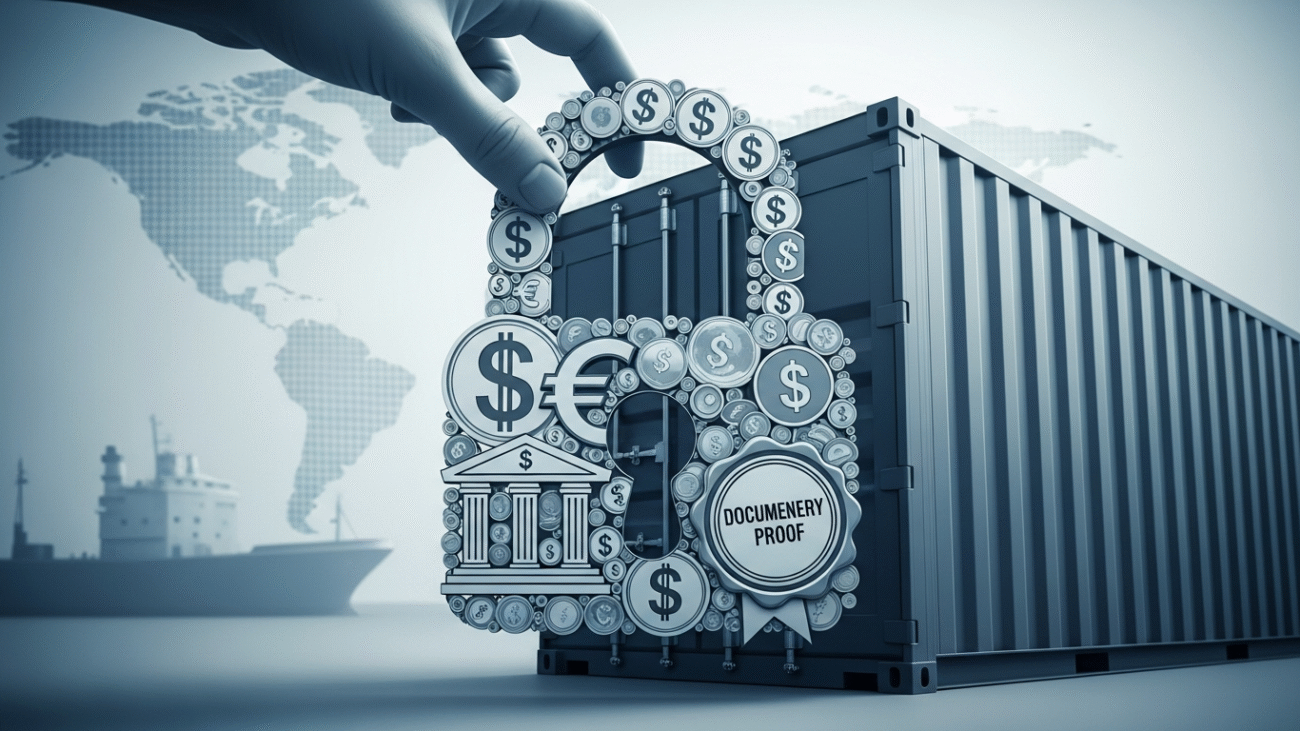

exporter verification benefits

Why Verification Saves Exporters Millions.

Exporter Verification: 3 Ways to Save Millions on Trade Fraud

Introduction: The Hidden Cost of Trust in Global Trade

For Indian exporters, the global market offers unprecedented growth opportunities. However, every international handshake carries a hidden cost: risk. A single large export deal gone wrong—due to fraud, non-payment, or a baseless cargo rejection—can instantly wipe out the profits earned from a dozen successful transactions. The financial exposure in international trade is often in the millions.

This is why verification is not just an administrative step; it is a critical financial defense mechanism. Platforms like The Exporter Hub prioritize connecting verified parties because they recognize that trust must be earned through documented due diligence. This article breaks down the three crucial ways robust verification saves exporters potentially millions in losses, litigation, and lost time.


1. Defense Against Fraud and Non-Payment (Saving Credit Risk Millions)

The most immediate and catastrophic loss for any exporter is non-payment. This risk is primarily mitigated by verifying the Importer (Buyer). Fraudulent activity often exploits the trust required in international transactions, such as promising secured payments (like Letters of Credit) that turn out to be fake, or simply disappearing after receiving goods shipped on an open account basis.

How Verification Saves Money:

  • Financial Vetting: Verification involves checking the financial stability, credit history, and regulatory standing of the importer. By ensuring the buyer has the fiscal capacity and proven history of paying debts, the exporter avoids engaging with financially weak or malicious entities.
    • Saving: A $100,000 shipment lost to fraud requires $100,000 in revenue to cover the loss. Verification prevents this direct write-off.
  • Licensing and Registration: Confirmation of the buyer’s valid Import Export Code (IEC), business registration, and required operational licenses in their home country minimizes the risk of the goods being legally detained or rejected due to the buyer’s non-compliance.
  • Vetting on Platforms: When an Indian exporter (like Shiv’s Assets Group) connects with an importer via a verified platform like The Exporter Hub, they receive an initial layer of assurance that the counterparty has passed identity and basic financial checks, elevating trust above a cold email lead.

2. Mitigating Quality Disputes and Rejection Costs (Saving Operational Millions)

While payment fraud is a direct hit, operational losses due to disputes over quality or quantity can be equally devastating, particularly when dealing with bulk goods or building materials (like AAC Blocks or TMT Bars).

Verification is a Two-Way Shield:

  • Supplier (Exporter) Verification: Exporters dealing with large international buyers are often subjected to factory audits, capacity checks, and quality management system (QMS) reviews.Exporters who have already been verified for their capacity, quality control, and ethical sourcing stand a much better chance of winning high-value contracts. This pre-verification saves the exporter the cost and time of repeated buyer audits.
    • Saving: Pre-verification minimizes the risk of a buyer later rejecting an entire shipment due to quality issues, which triggers astronomical costs (return freight, customs penalties, storage fees, and disposal costs—often exceeding the value of the goods themselves).
  • Specification Clarity: Verified companies often have standardized documentation and clear quality management processes. This reduces ambiguity, a primary cause of multi-million dollar trade disputes and subsequent litigation.
exporter verification benefits

3. Reducing Litigation, Arbitration, and Opportunity Costs (Saving Time and Future Millions)

Legal disputes in international trade are notoriously expensive, complex, and slow. Arbitration in a foreign jurisdiction can cost tens of thousands of dollars just in initial legal fees, plus months or years of lost management focus.

Verification Acts as an Insurance Policy:

  • Legal Standing Check: Verifying the legal standing and structure of the counterparty ensures that if a dispute does arise, the exporter is dealing with a legitimate entity that can actually be sued or subjected to arbitration, rather than a shell company.
  • Reputation Protection: Verification helps maintain the exporter’s reputation. Avoiding a buyer known for non-compliance prevents the exporter from becoming collateral damage in an import customs investigation, thus protecting future licensing and trade opportunities.
    • Saving: Avoiding one protracted legal dispute that costs $50,000 in fees and 300 hours of management time translates into significant savings and allows the company to focus on profitable activities.

The Exporter Hub: Making Verification Standard

The platform’s model, which connects verified exporters (like those in the Indian manufacturing sector) with reliable importers, is fundamentally designed around this financial imperative. By registering and completing the verification process, an exporter is not just getting a badge; they are building a demonstrable financial credibility profile that attracts high-value, low-risk clients.

In an industry where margins are often tight, protecting those margins from catastrophic failure is the key to sustainable growth. Verification is the single best investment an exporter can make to secure their financial future and save potentially millions in unnecessary loss.

Source : www.federalregister.gov , www.ejetprocurement.com, TIC

Indian Agro Products Exporter

5 Super Indian Agro Products: Top Certified Exporter

Ganinath International: Your Gateway to Premium Indian Harvest

Ganinath International OPC Pvt Ltd is swiftly becoming a leading Indian Agro Products Exporter, rooted in the fertile agricultural traditions of Patna, Bihar. We are dedicated to delivering a diverse range of premium food commodities—from aromatic grains to healing spices—sourced directly from trusted Indian farmers. Our mission is simple: to connect international importers and wholesalers with the purest, highest-quality produce, backed by unwavering certification and seamless logistics.


Excellence in Sourcing and Certification

The foundation of our export reliability is transparency and adherence to global standards. Unlike large brokers, we emphasize direct sourcing, ensuring fair prices for farmers and full traceability for our clients.

We stand out as a trusted FSSAI Certified Food Exporter, guaranteeing that every stage of processing, packaging, and handling meets the stringent safety and hygiene protocols required by the Food Safety and Standards Authority of India. This commitment, alongside certifications like IOC (Import-Export Code), establishes Ganinath International as a secure and compliant partner for any international food importer.


Our Core Agro Export Range: The ‘Super 5’

We offer a high-demand portfolio spanning grains, spices, and fresh produce. By grouping the Fresh Produce, we encompass the ‘5 Super’ product categories:

1. Fragrant Grains (Basmati Rice)

We specialize in superior varieties of Basmati Rice, including 1121, Pusa, 1509, and Golden Sella. Our commitment extends to providing naturally aged rice known for its exceptional elongation, fluffy texture, and unmatched aroma—a true signature of Indian cuisine.

2. Health Superfoods (Millets)

As a comprehensive Basmati Rice and Millets Exporter, we offer a wide range of nutritious grains like Finger Millet (Ragi), Pearl Millet (Bajra), Foxtail, and Kodo Millets. These millets are naturally gluten-free, rich in fibre and essential minerals, and perfectly positioned for the growing global superfood market.

3. The Golden Spice (Turmeric)

We are a premier Quality Turmeric Supplier India. Our turmeric is selected for its vibrant color, natural aroma, and critically, its high Curcumin content—the powerful compound sought after by the spice, nutraceutical, and pharmaceutical industries worldwide. We supply turmeric finger, powder, and high-curcumin extracts.

4. Fresh Produce (Fruits & Vegetables)

We ensure timely dispatch of Fresh Fruits and other seasonal produce, leveraging robust cold-chain logistics and protective packaging to guarantee freshness and preserve nutritional integrity from the farm gate to the final global destination.

5. Essential Pulses & Commodities

While specializing in the above four, our network allows us to act as a reliable source for other essential agro commodities (like pulses and ground spices), providing a valuable one-stop solution for international buyers.


Strategic Partnership for Wholesale Agro Commodity Exporter

For any Wholesale Agro Commodity Exporter, efficiency and competitive pricing are paramount. Ganinath International excels here by:

  • Competitive Pricing: Directly sourcing and maintaining low overheads allows us to offer market-leading prices without sacrificing quality.
  • Reliable Logistics: Our established network ensures consistent supply, secure packaging, and timely global delivery for large-volume orders.

Partner with Ganinath International for guaranteed quality, certified compliance, and a strategic advantage in sourcing the best of Indian agriculture.

Source : Ganinath International OPC Pvt Ltd

Ghongadi Blankets Exporter

7 Stunning Ghongadi Blankets: India’s Best Wool Exporter

The Timeless Warmth: Introducing Tyrix Domin Impex

Established in July 2025, Tyrix Domin Impex has quickly emerged as a dedicated Ghongadi Blankets Exporter, bringing a treasured piece of Indian heritage to global markets. Based in Vaduj, Maharashtra, this dynamic merchant exporter specializes in the authentic production and sourcing of 100% natural, handwoven woolen blankets.

Brown Ghongadi

Tyrix Domin Impex operates with a dual mission: to supply international buyers with exceptionally durable and eco-friendly Indian textiles, and crucially, to support and empower the skilled artisan communities who preserve this ancient craft. For importers looking for products rich in tradition and uncompromising in quality, Tyrix Domin Impex is the newly certified, ethical sourcing partner you need.

The Cultural Heritage of Ghongadi Blankets

The Ghongadi is far more than just a woolen blanket; it is a cultural icon deeply rooted in the farming and pastoral traditions of Maharashtra, India. Historically, these blankets were essential to shepherds and villagers due to their incredible durability, exceptional insulation, and water-repellent properties derived from the natural sheep wool.

White Ghongadi

Unlike mass-produced textiles, every Ghongadi is a masterpiece of Traditional Indian Wool Textiles, meticulously handwoven using age-old techniques passed down through generations. This intense, manual craftsmanship ensures that the wool maintains its natural lanolin content and dense weave, making the Ghongadi robust, naturally breathable, and superior in warmth—ideal characteristics for high-quality global imports.

Why Tyrix Domin Impex is Your Ideal Ghongadi Blankets Exporter

As a responsible Ghongadi Blankets Exporter, Tyrix Domin Impex adheres to stringent standards for quality and ethical trade, making them a preferred partner for global wholesale buyers.

Woolen Caps
  • Authentic, Ethical Sourcing: We bypass middlemen by sourcing directly from local artisans. This not only guarantees the authenticity of the handwoven product but also ensures fair compensation, directly supporting the livelihoods of the artisan community.
  • Quality Assurance: All products are made from 100% natural, locally sourced sheep wool. The company is committed to quality, backed by necessary documentation including IEC, GST, MSME, and Wool RCMC.
  • Trade Flexibility: Catering to high-volume demands, we offer reliable services for Handmade Ghongadi Blanket Wholesale orders. We provide flexibility in order quantities and customization options to meet specific retail or corporate requirements.

Our Stunning 7: Product Range and Specifications

Tyrix Domin Impex offers a curated range of Ghongadi products, fulfilling the promise of 7 Stunning variations available for export:

Product NameKey FeatureIdeal For
1. White GhongadiClassic, pristine wool colour.High-end home decor, meditation.
2. Black GhongadiDeep, rich natural wool colour.Durable outdoor use, camping.
3. Brown GhongadiEarthy tones, versatile use.Rustic interiors, cultural display.
4. Ghongadi CapsHandwoven headwear, thick insulation.Extreme cold weather gear.
5. Custom Size BlanketsTailored dimensions for specific markets.Hotels, corporate gifting.
6. Patterned GhongadiSubtle geometric patterns woven in.Premium retail collections.
7. Specialized Wool BlendsFocusing on a specific local sheep wool.Niche textile import

Source : Tyrix Domin Impex

export import payment terms

4 Proven Payment Terms to Secure Your Global Trade Deals

Introduction: The Financial Foundation of Export-Import

You’ve successfully negotiated the price, agreed on an Incoterm, and arranged the logistics. Now comes the most important question: How will you get paid?

Payment terms are the agreed-upon method and timing by which the buyer (importer) compensates the seller (exporter) for the goods. Choosing the right payment term is not just a detail—it’s a direct calculation of risk. Every method exists on a spectrum, balancing the seller’s need for security against the buyer’s need for cash flow and proof of shipment.

For exporters on TheExporterHub.com, securing payment is paramount. For importers, managing payment timing to coincide with receipt of goods is essential. This guide breaks down the four most common payment terms, helping you match security with strategy.


1. The Trade Finance Risk Spectrum

The choice of payment terms determines which party holds the financial risk. As an exporter, your goal is to move up the spectrum (towards Advance Payment). As an importer, your goal is to move down (towards Open Account).

Payment MethodSecurity for ExporterRisk for Importer
1. Advance PaymentHighest (100% Guaranteed)Highest (No guarantee of shipment)
2. Letter of Credit (L/C)High (Bank guarantees payment)Moderate (Requires bank fees and rigid documentation)
3. Documentary Collection (D/C)Medium (Importer can’t get goods without payment/promise)Medium (Dependent on banks, but no bank guarantee)
4. Open AccountLowest (Dependent on buyer’s trust)Lowest (Only pay after receiving goods)

2. Method 1: Cash in Advance (Advance Payment)

Definition: The importer pays the full contract value (or a substantial percentage) to the exporter before the goods are shipped or even produced.

  • Exporter’s Perspective: This is the most secure method. There is zero credit risk, and the payment can fund production and logistics. Often used for small transactions, custom goods, or when dealing with a brand new, unverified buyer.
  • Importer’s Perspective: This is the riskiest method. The importer trusts the exporter completely to ship the goods as agreed and on time.
Pros for ExporterCons for Importer
Guaranteed cash flow; zero credit risk.High risk if the seller defaults or delivers poor quality.
Can negotiate better material prices.Reduces working capital; ties up money early.

with bikini & get shiirtless on beach with confidence

3. Method 2: Open Account (O/A)

Definition: The exporter ships the goods and all necessary documents to the importer before receiving payment. The importer then pays at a future date (e.g., 30, 60, or 90 days after delivery).

  • Importer’s Perspective: This is the most attractive method. It greatly improves the importer’s cash flow, allowing them to inspect the goods or even sell them before the payment is due.
  • Exporter’s Perspective: This is the most risky method. The exporter has zero leverage once the goods are shipped. It is only used with long-standing, trusted, and verified partners, or when the market conditions demand it (as a competitive edge).
Pros for ImporterCons for Exporter
Maximum cash flow and time for inspection.Maximum credit risk; high potential for delayed payment.
Easier administrative process.May require credit insurance to mitigate loss.

4. Method 3: Documentary Collections (D/C)

Definition: The exporter uses their bank (Remitting Bank) and the importer’s bank (Collecting Bank) strictly as messengers to exchange documents for payment. The banks do not guarantee payment; they simply facilitate the transaction.

  • How it works: The exporter ships the goods. The exporter then sends the shipping documents (e.g., Bill of Lading, Invoice) through their bank to the importer’s bank. The importer can only obtain these documents—needed to clear the goods from customs—by agreeing to pay.

Two Main Types:

  1. Documents Against Payment (D/P): The importer pays the total amount immediately (sight draft) to the collecting bank to receive the documents.
  2. Documents Against Acceptance (D/A): The importer simply accepts a time draft (a promise to pay in the future, e.g., 60 days) to receive the documents. This is riskier than D/P.
  • Risk Balance: D/C is a middle-ground method. It gives the exporter control because the importer cannot claim the goods without the documents. However, if the importer refuses the documents, the exporter is left with goods sitting at the destination port.

5. Method 4: Letter of Credit (L/C) – The Gold Standard

Definition: A Letter of Credit is a binding commitment by a bank (the Issuing Bank, on behalf of the importer) to pay the exporter a specific amount, provided the exporter meets all stipulated documentary requirements by a specified deadline.

  • The Key Difference: Unlike Documentary Collection, the L/C shifts the primary risk from the importer’s ability to pay to the bank’s promise to pay.
  • UCP 600: All commercial Letters of Credit are governed by the Uniform Customs and Practice for Documentary Credits (UCP 600) rules, ensuring standardization worldwide.

Advantages of the L/C:

  • Security for Exporter: The risk of non-payment is practically eliminated, assuming the exporter complies with the L/C terms.
  • Security for Importer: The bank ensures the exporter has actually shipped the goods and provided all required documents (Bill of Lading, Certificate of Origin, Insurance) before payment is released.

When to use L/C:

A Note on Documentation: The golden rule for L/C is “The documents must be perfect.” If a document is missing or contains a single typo (e.g., “Shiv’s Assets Group” is misspelled), the bank can refuse payment, making the L/C worthless.


Conclusion: Matching Terms with Incoterms and Trust

The choice of payment term must align with your chosen Incoterm and, most importantly, the level of trust and relationship you have with your counterparty.

  • For New Relationships (Low Trust): Combine EXW or FCA (clear responsibility) with Advance Payment or a secure Letter of Credit.
  • For Established Relationships (High Trust): Combine DAP or DDP (high seller service) with Documentary Collection (D/P) or potentially Open Account (if credit insurance is secured).

Financial security is non-negotiable in export-import. By understanding and strategically applying these four payment terms, you can ensure that every deal conducted through TheExporterHub.com is both profitable and financially secure.

CIF Incoterm 2020 explained

CIF Incoterm 2020: The Essential Rule for Insured Sea Freight

CIF Incoterm 2020 Introduction: Convenience Meets Security on the Ocean

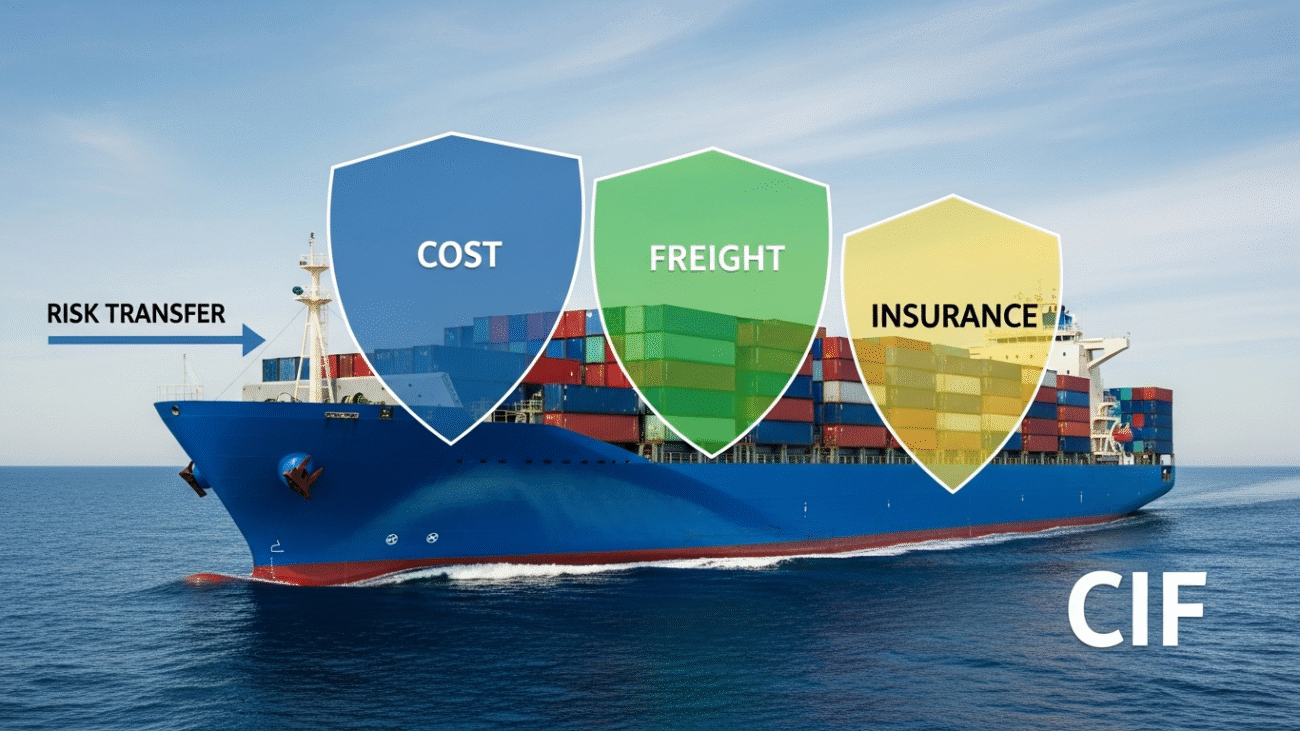
CIF (Cost, Insurance, and Freight) is one of the most recognizable and widely used Incoterms in global sea trade. Like its sister rule, CFR, CIF requires the seller (exporter) to pay the freight cost up to the named port of destination. However, the critical difference—and what makes CIF so popular with buyers—is the added, mandatory obligation for the seller to procure marine insurance on the buyer’s behalf.

CIF is used strictly for sea and inland waterway transport and is a reliable choice for importers on TheExporterHub.com who want a fixed cost that includes shipping and insurance up to the destination port, while the exporter handles the often-complex logistics and documentation from origin.


1. What is CIF (Cost, Insurance, and Freight) Incoterm 2020?

Under the CIF Incoterm, the seller fulfills their delivery obligation when the goods are:

  1. Placed on board the vessel at the port of shipment.
  2. Cleared for export in the country of origin.
  3. The seller has secured and paid for marine insurance covering the main voyage.

Transfer of Cost and Risk

  • Risk Transfer: The risk of loss or damage transfers from the seller to the buyer when the goods are placed on board the vessel at the port of shipment (same as FOB and CFR).
  • Cost Transfer: The seller pays for the freight and insurance up to the named port of destination.

The buyer assumes the risk of the voyage, but is compensated because the seller has purchased insurance on their behalf.

What is CIF (Cost, Insurance, and Freight) Incoterm 2020?

2. The Insurance Obligation: Clause C (Minimum Cover)

The insurance requirement under CIF is mandatory, but the level of coverage is standardized by the Incoterms® 2020 rule:

  • Minimum Coverage: The seller must obtain insurance that complies with the Institute Cargo Clauses (C) or similar clauses.
  • Clause C provides the lowest level of coverage (e.g., covering major incidents like sinking, fire, or grounding of the vessel).
  • Coverage Value: The insurance must be for at least 110% of the contract price (including the cost of the freight) in the currency of the contract.

CIF vs. CIP: Insurance Level Matters

Importers of high-value goods should be aware of the difference between CIF and the multimodal rule CIP:

  • CIF (Sea Only): Seller must procure Clause C (minimum coverage).
  • CIP (Multimodal): Seller must procure Clause A (all-risks coverage).

If an importer requires comprehensive (‘all-risks’) insurance for goods shipped by sea, they must explicitly agree with the seller in the contract to upgrade the CIF insurance from Clause C to Clause A.

with bikini & get shiirtless on beach with confidence

3. Exporter and Importer Responsibilities

CIF requires the exporter to manage and pay for almost everything up to the destination port, except for the risk management itself, which is handled via insurance.

ResponsibilityExporter (Seller) under CIFImporter (Buyer) under CIF
Delivery & RiskBears all risk and cost until goods are on board the vessel.Assumes risk from the moment goods are on board until final delivery.
Export ClearanceResponsible for all export formalities.Not responsible.
Main CarriageMust arrange and pay for the carriage to the destination port.Not responsible for arranging payment.
InsuranceMANDATORY: Must procure minimum Clause C insurance for the buyer.Pays the premium indirectly (built into the price) and is the beneficiary of the policy.
Unloading & Import ClearanceNot responsible for unloading at the destination port or import customs.Responsible for all destination terminal handling charges (THC), unloading, import duties, and taxes.

4. Conclusion: When to Use CIF

CIF is the definitive choice for sea-only trade when the seller has better access to freight and insurance rates, and the buyer wants the convenience of an inclusive price up to the destination port.

  • Use CIF when:
    1. Shipping non-containerized goods, bulk commodities, or vehicles (as it is a sea-only rule).
    2. The buyer requires the seller to provide mandatory insurance coverage.
    3. The seller can secure competitive freight and insurance deals and wishes to offer a simple, comprehensive quote.

As with FOB and CFR, CIF should be avoided for containerized cargo. For goods shipped in containers, CIP is the recommended multimodal alternative, as it aligns the risk transfer point correctly and mandates higher insurance coverage (Clause A).

CFR Incoterm 2020 explained

CFR Incoterm 2020: Where Cost and Risk Split in Sea Trade

CFR Incoterm 2020 Introduction: Balancing Service and Liability

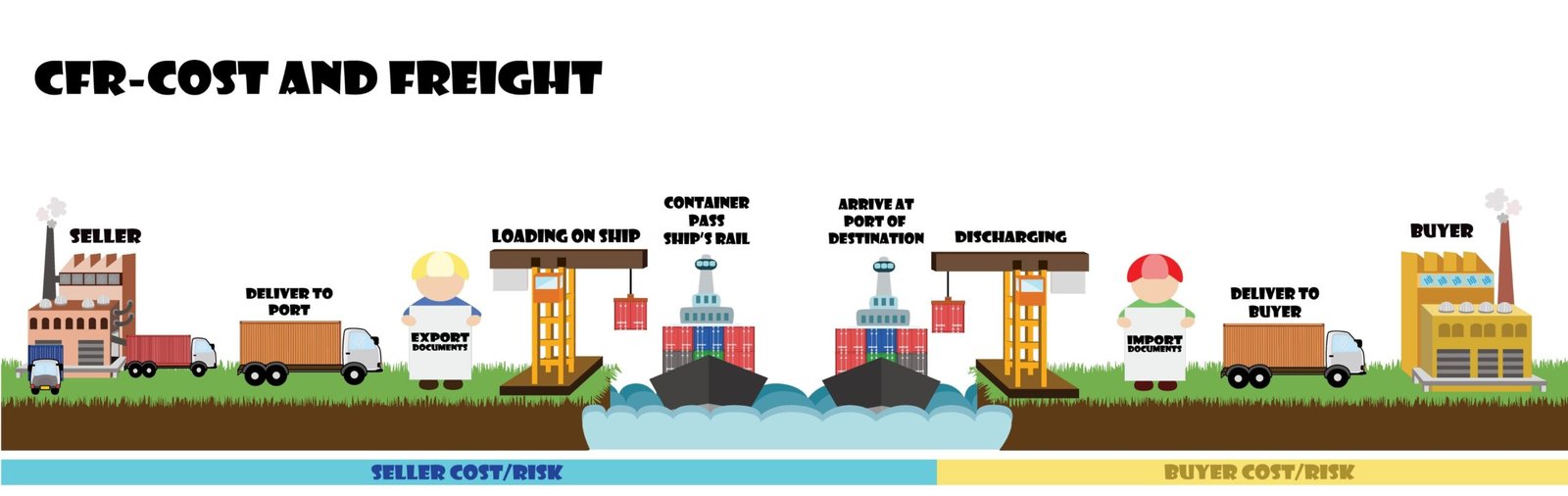
The CFR (Cost and Freight) Incoterm is a traditional sea-only rule that offers the importer (buyer) the convenience of prepaid freight up to the port of destination, while simultaneously placing the responsibility for transit risk squarely on the buyer much earlier in the journey.

CFR is widely used, particularly for non-containerized cargo, bulk commodities, and heavy industrial goods shipped via conventional ocean freight. It is a natural step up from FOB for exporters on platforms like TheExporterHub.com who want to offer a more inclusive, competitive price that covers the cost of international shipping.


1. What is CFR (Cost and Freight) Incoterm 2020?

Under the CFR Incoterm, the seller (exporter) has two main responsibilities regarding the shipment:

  1. Cost Responsibility: The seller must contract and pay for the main carriage (freight) required to bring the goods to the named port of destination.
  2. Delivery/Risk Responsibility: The seller delivers the goods when they are placed on board the vessel at the port of shipment.

The Defining Feature: The Split

The core principle of CFR is the two-point transfer, similar to CPT:

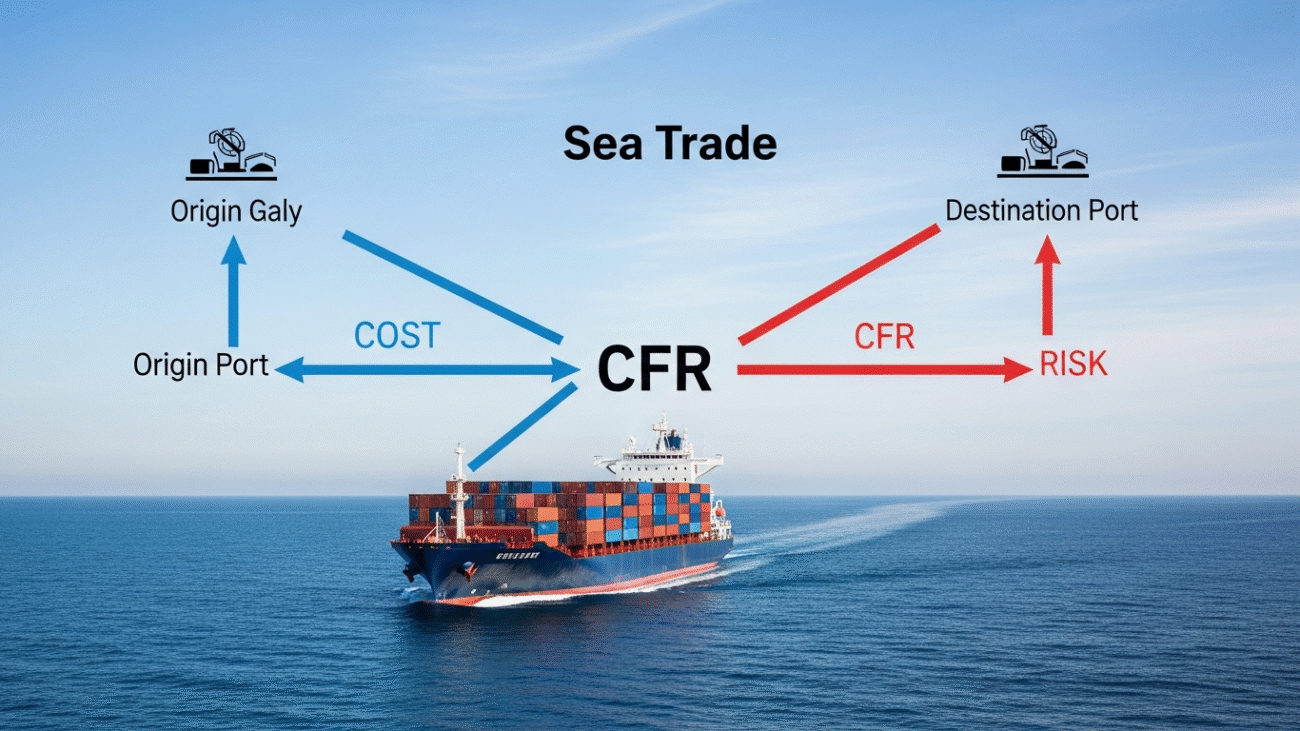
  • Risk Transfer: The risk of loss or damage transfers from the seller to the buyer when the goods are placed on board the vessel at the port of shipment (same as FOB).
  • Cost Transfer: The seller pays for the freight up to the named port of destination.

This means that while the seller pays the hefty international shipping bill, the buyer owns the risk for the entire voyage and must purchase insurance to protect their cargo.

What is CFR (Cost and Freight) Incoterm 2020?

2. CFR vs. FOB: The Cost Distinction

The relationship between CFR and FOB is simple: CFR = FOB + Freight.

  • FOB: The seller’s obligation ends when the goods are on board. The buyer pays the main freight.
  • CFR: The seller’s obligation still ends when the goods are on board (for risk transfer), but the seller also pays the main freight to the destination port.

For the importer, the CFR price is simply a higher, more inclusive price than the FOB price, giving them a clear view of the total cost up to the destination port.

3. CFR vs. CIF: The Insurance Distinction

CFR and CIF (Cost, Insurance and Freight) are also closely related. The only difference is insurance:

  • CFR: The seller pays for cost and freight, but insurance is not mandatory (the buyer must arrange it).
  • CIF: The seller pays for cost and freight AND must procure mandatory minimum insurance cover for the buyer.

For buyers, if transit risk is a major concern, choosing CIF over CFR is generally advisable, as it ensures the cargo is protected.

with bikini & get shiirtless on beach with confidence

4. Exporter and Importer Responsibilities

CFR places significant logistical responsibility on the seller, but requires the buyer to manage risk and terminal costs.

ResponsibilityExporter (Seller) under CFRImporter (Buyer) under CFR
Delivery & RiskBears risk and cost until goods are on board the vessel.Assumes risk from the moment goods are on board until final delivery.
Export ClearanceResponsible for all export formalities.Not responsible.
Main CarriageMust arrange and pay for the carriage to the destination port.Not responsible for arranging payment, but assumes risk during transit.
Unloading & Terminal FeesNot responsible for unloading or fees at the destination port (unless these are included in the freight contract).Typically responsible for destination terminal handling charges (THC), unloading, and onward transport.
InsuranceNo obligation.MANDATORY: Must purchase insurance to cover the goods for the entire voyage.
Import ClearanceNot responsible.Responsible for all import formalities, duties, and taxes at the destination.

5. Conclusion: When to Use CFR

CFR is an excellent choice when the exporter (seller) has superior access to competitive freight rates and wants to offer the importer a single, comprehensive price up to the port of arrival.

  • Use CFR when:
    1. Shipping bulk cargo or non-containerized goods (as it is a sea-only rule).
    2. The seller has better bulk freight contracts and can pass the savings to the buyer.
    3. The buyer wants to control the insurance contract (perhaps they have a floating policy) but prefers the convenience of prepaid shipping.

However, like FOB, CFR should not be used for containerized cargo; the multimodal rule CPT should be used instead, as the risk transfer point (to the first carrier) better reflects container logistics.

FOB Incoterm 2020 meaning

FOB Incoterm 2020: The King of Sea-Only Trade Rules

FOB Incoterm 2020 Introduction: The Most Recognized Incoterm

FOB (Free On Board) is the most famous Incoterm in international trade. It is the gold standard for many traditional commodity trades and is highly favored by importers because it gives them full control over the main carriage freight and insurance—the most expensive parts of the journey.

Like FAS, FOB is strictly restricted to sea and inland waterway transport. The rule is clear: the seller (exporter) bears the cost and risk of the goods until they are physically loaded on board the vessel at the named port of shipment. This guide explains this defining moment and why it’s crucial to use FOB correctly on platforms like TheExporterHub.com.


1. What is FOB (Free On Board) Incoterm 2020?

Under the FOB Incoterm, the seller fulfills their delivery obligation when the goods are:

  1. On board the vessel.
  2. At the named port of shipment.
  3. Cleared for export from the origin country.

Transfer of Cost and Risk

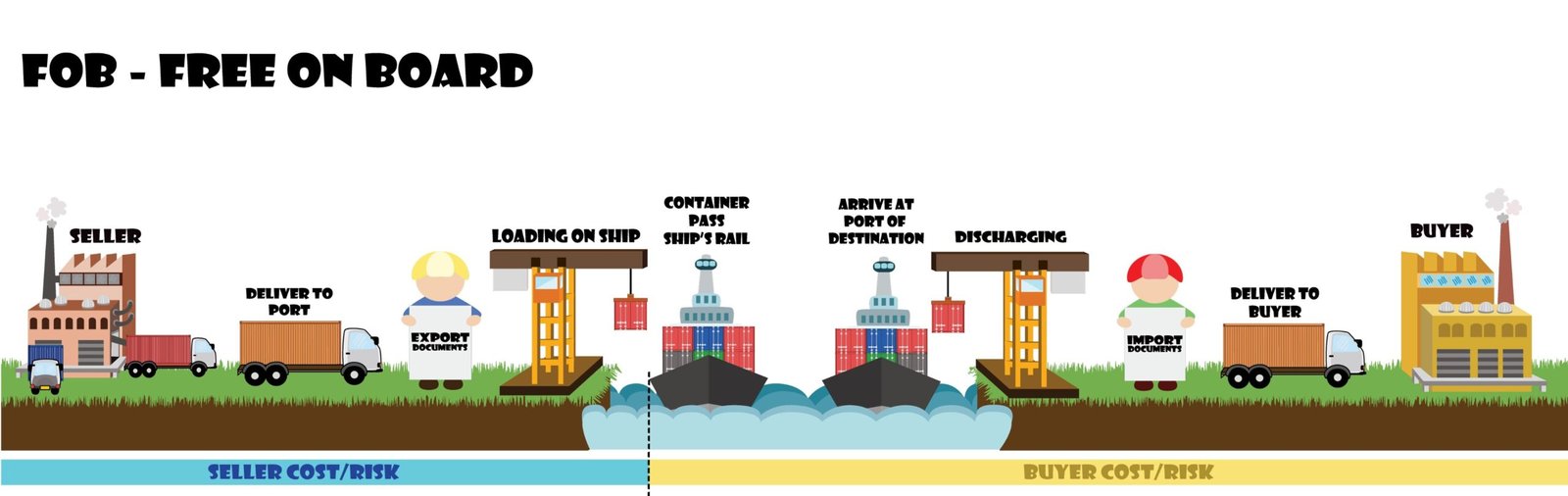
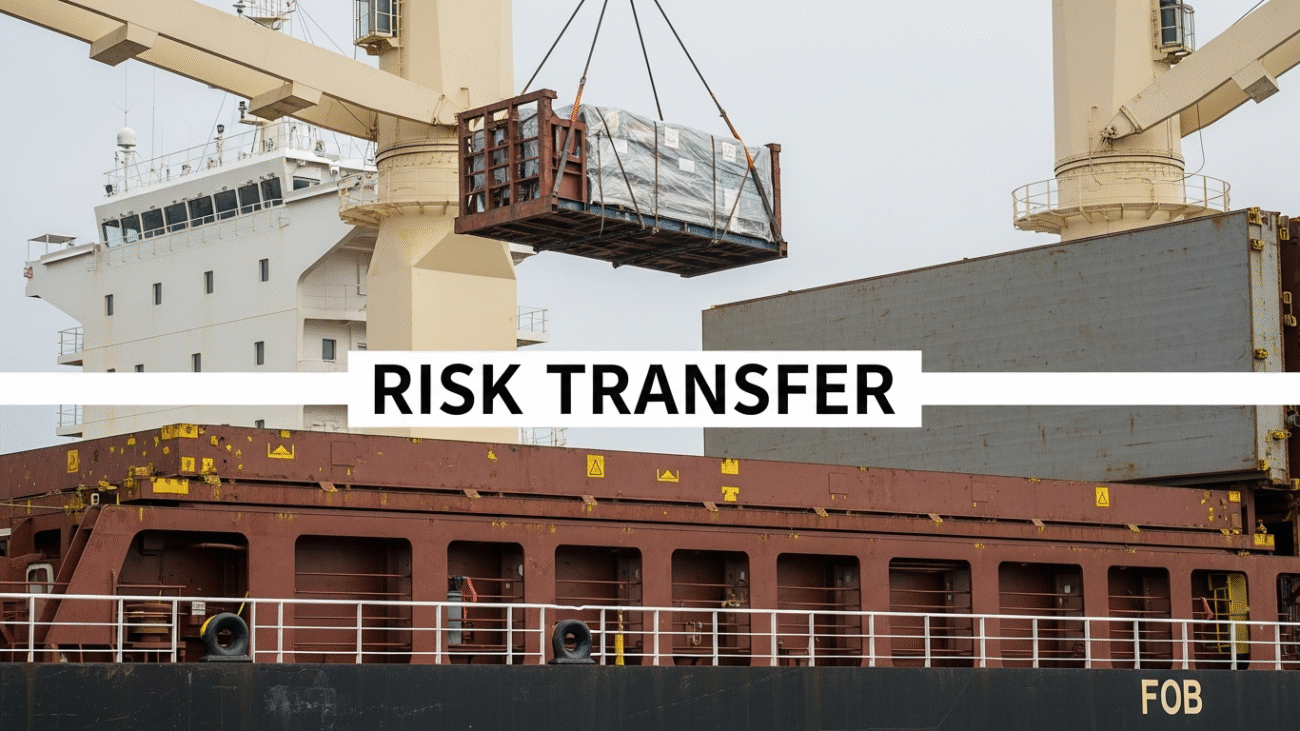
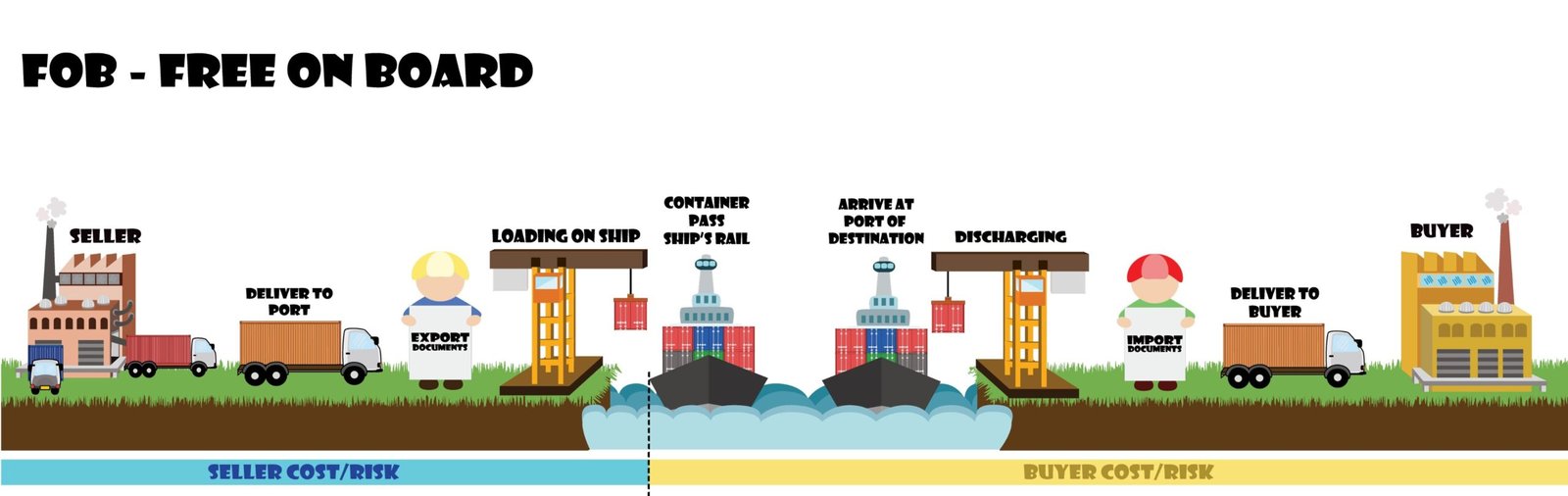
  • Risk Transfer (The Defining Moment): Both the risk of loss or damage and the transfer of costs shift from the seller to the buyer when the goods are placed on board the vessel.
  • Exporter’s Responsibility: The seller handles all costs and risks until the goods pass over the ship’s rail and are successfully loaded. This includes local transport, delivery to the port, export clearance, and the loading costs.
  • Importer’s Responsibility: The buyer assumes all risk and costs from the moment the goods are on board. This includes main carriage, insurance, and all costs from the port of destination onwards (unloading, import clearance, local delivery).
Transfer of Cost and Risk

2. The Shift in Risk: On Board the Vessel

The key responsibility shift under FOB is the physical act of loading.

  • Under FAS: The buyer handles the cost and risk of loading.
  • Under FOB: The seller handles and pays for the cost and risk of loading the goods onto the ship.

Once the goods are secured on the ship, the seller’s obligation ends, and the buyer assumes responsibility for everything, including contracting the main carrier (the ship itself) and acquiring insurance to cover the long voyage.

with bikini & get shiirtless on beach with confidence

3. Why FOB is Often Misused for Containers

As with FAS, FOB is often misused for containerized cargo, which is typically transported via multimodal means.

  • The Problem: For containers, the goods are delivered to the port terminal days before the ship arrives. The seller loses control when the container is dropped off at the yard, not when it’s loaded onto the ship (the risk transfer point).
  • The Risk Gap: If the container is damaged while sitting in the port terminal yard, the risk—according to the strict definition of FOB—still technically lies with the seller, even though the seller cannot control the goods once they are gated in.

Industry Advice: Because FOB defines risk transfer by the physical act of loading onto the vessel, it should only be used for bulk cargo, loose cargo, or heavy machinery where the seller can directly observe and control the goods until they are loaded. For all containerized goods, use FCA.


4. Exporter and Importer Responsibilities

FOB is a traditional “F-Term,” emphasizing the buyer’s control over the main, international part of the journey.

ResponsibilityExporter (Seller) under FOBImporter (Buyer) under FOB
Delivery & RiskBears all risk and cost until goods are on board the vessel.Assumes risk from the moment goods are on board the vessel.
Export ClearanceMANDATORY: Must obtain export licenses and handle all export formalities.Not responsible.
LoadingMANDATORY: Must arrange and pay for the cost and risk of loading onto the vessel.Not responsible.
Main CarriageNot responsible for contracting or paying for the main freight.MANDATORY: Must contract and pay for the main carriage.
InsuranceNot responsible for the buyer’s risk during carriage.Responsible for insuring the goods from the moment they are on board.

5. Conclusion: When to Use FOB

FOB remains an excellent and clear Incoterm for importers who have strong control over their ocean carrier contracts and can secure highly competitive freight rates. It is the preferred method for purchasing large quantities of commodities, minerals, or other non-containerized goods from Indian ports.

However, if you are an Indian exporter shipping manufactured goods in containers, offering FCA provides a clearer and more legally sound boundary for risk transfer, aligning responsibility with the actual logistics process.

FAS Incoterm 2020 explained

FAS Incoterm 2020: The Key Rule for Bulk Cargo Delivery

FAS Incoterm Introduction: The Term for Traditional Shipping

The FAS (Free Alongside Ship) Incoterm is a traditional rule primarily used for large, non-containerized goods, such as heavy machinery, grain (bulk commodities), timber, or large industrial equipment. It is one of the four rules strictly restricted to sea and inland waterway transport.

FAS is highly convenient for importers on TheExporterHub.com who specialize in purchasing raw materials or break-bulk cargo (goods shipped individually rather than in containers). Under FAS, the seller (exporter) takes on the cost and risk of getting the goods right up to the vessel, making it a natural choice when the buyer wants to control the main carriage contract.


1. What is FAS (Free Alongside Ship) Incoterm 2020?

Under the FAS Incoterm, the seller fulfills their delivery obligation when the goods are:

  1. Placed alongside the vessel (e.g., on the quay or a barge).
  2. At the named port of shipment.
  3. In the manner customary at that port.

Transfer of Cost and Risk

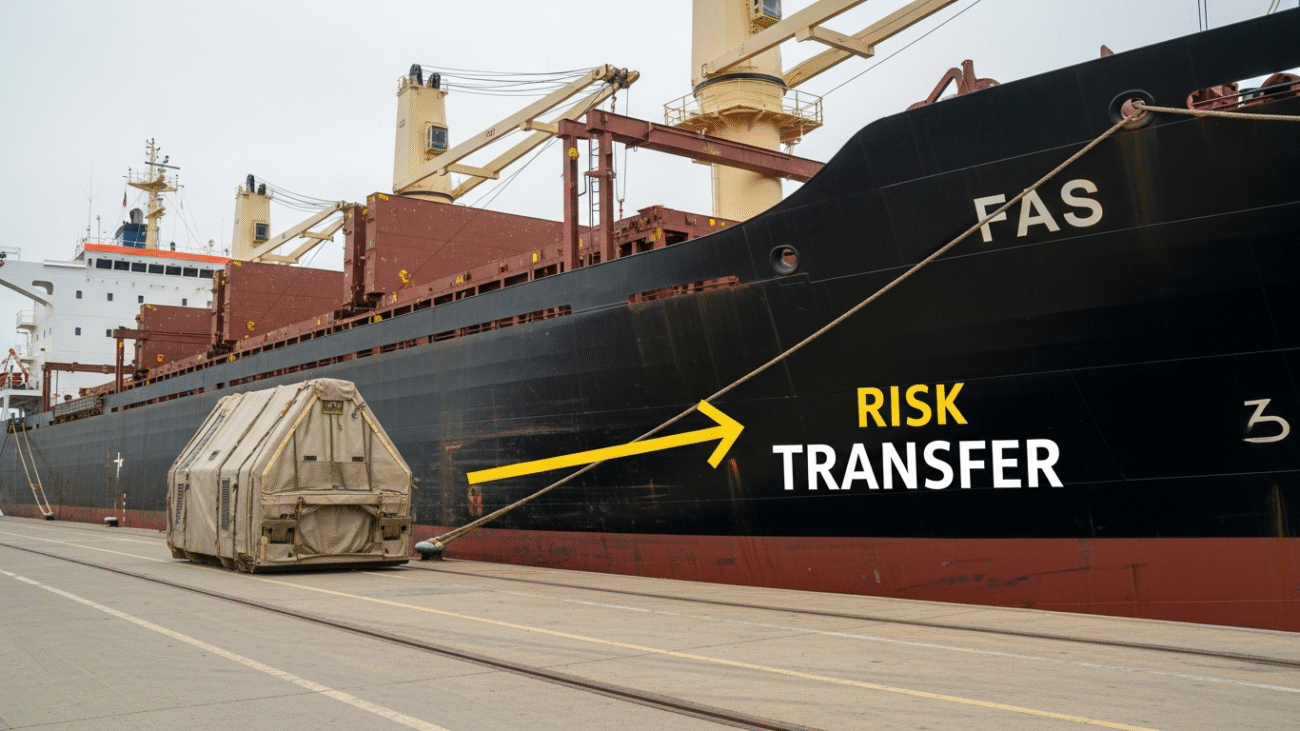
  • Risk Transfer: Both the risk of loss or damage and the transfer of costs shift from the seller to the buyer when the goods are placed alongside the vessel.
  • Exporter’s Responsibility: The seller handles all costs and risks until the goods are physically positioned next to the ship’s loading tackle. The seller is also responsible for Export Customs Clearance (a key difference from EXW).
  • Importer’s Responsibility: The buyer takes on the cost and risk from the moment the goods are alongside the ship, including the critical and often expensive step of loading the goods onto the vessel.

2. FAS is for Bulk, Not Containers

The FAS Incoterm should not be used for containerized cargo, and here’s why:

  • Container Logistics Reality: Containers are typically dropped off by the seller’s truck days before the ship arrives at a large, designated container terminal yard. They are not usually placed “alongside” a specific vessel. Once in the terminal stack, the seller loses all control.
  • Risk Misalignment: Since the goods are handed over early in the terminal, using FAS would incorrectly delay the transfer of risk until the theoretical point “alongside the ship,” long after the seller has lost control.

Industry Advice: For containerized goods, FCA (Free Carrier) is the appropriate rule to use, as the risk transfers much earlier at the container yard or forwarder’s warehouse, aligning with the modern logistics process.

3. Exporter and Importer Responsibilities

FAS is a traditional “F-Term,” meaning the seller delivers the goods, and the buyer pays the main freight.

ResponsibilityExporter (Seller) under FASImporter (Buyer) under FAS
Delivery & RiskBears all risk and cost until goods are placed alongside the vessel.Assumes risk from the moment the goods are alongside the vessel.
Export ClearanceMANDATORY: Must obtain export licenses and handle all export formalities.Not responsible.
LoadingNot responsible for loading the goods onto the vessel.MANDATORY: Must arrange and pay for the cost and risk of loading.
Main CarriageNot responsible for contracting or paying for the main freight.MANDATORY: Must contract and pay for the main carriage and subsequent costs.
InsuranceNot responsible for the buyer’s risk during carriage.Responsible for insuring the goods from the moment they are alongside the ship.
with bikini & get shiirtless on beach with confidence

4. FAS vs. FOB: The Loading Point Distinction

FAS and FOB are closely related and are the two Incoterms most relevant to the point of loading at the origin port:

  • FAS: Seller’s responsibility ends alongside the vessel. Buyer loads.
  • FOB: Seller’s responsibility ends on board the vessel. Seller loads.

When importing large, heavy cargo where the cost and risk of loading are substantial (e.g., using a specialized crane), FAS allows the buyer to retain control over that specific operation and its associated costs.

Conclusion: When to Use FAS

FAS is the essential Incoterm for the trade of non-containerized goods and bulk commodities where the loading operation is complex and often handled by the terminal or carrier contracted by the buyer. It allows the importer to centralize control over the main shipping logistics while ensuring the Indian exporter handles all necessary local transport and export clearance.

If you are shipping general merchandise in a container, stick to FCA. If you are shipping bulk grain, coal, or large pieces of equipment, FAS is the appropriate traditional rule.

DDP Incoterm 2020 explained

DDP Incoterm 2020: The Exporter’s Maximum Obligation Rule

DDP Incoterm 2020 Introduction: The ‘Zero-Hassle’ Incoterm

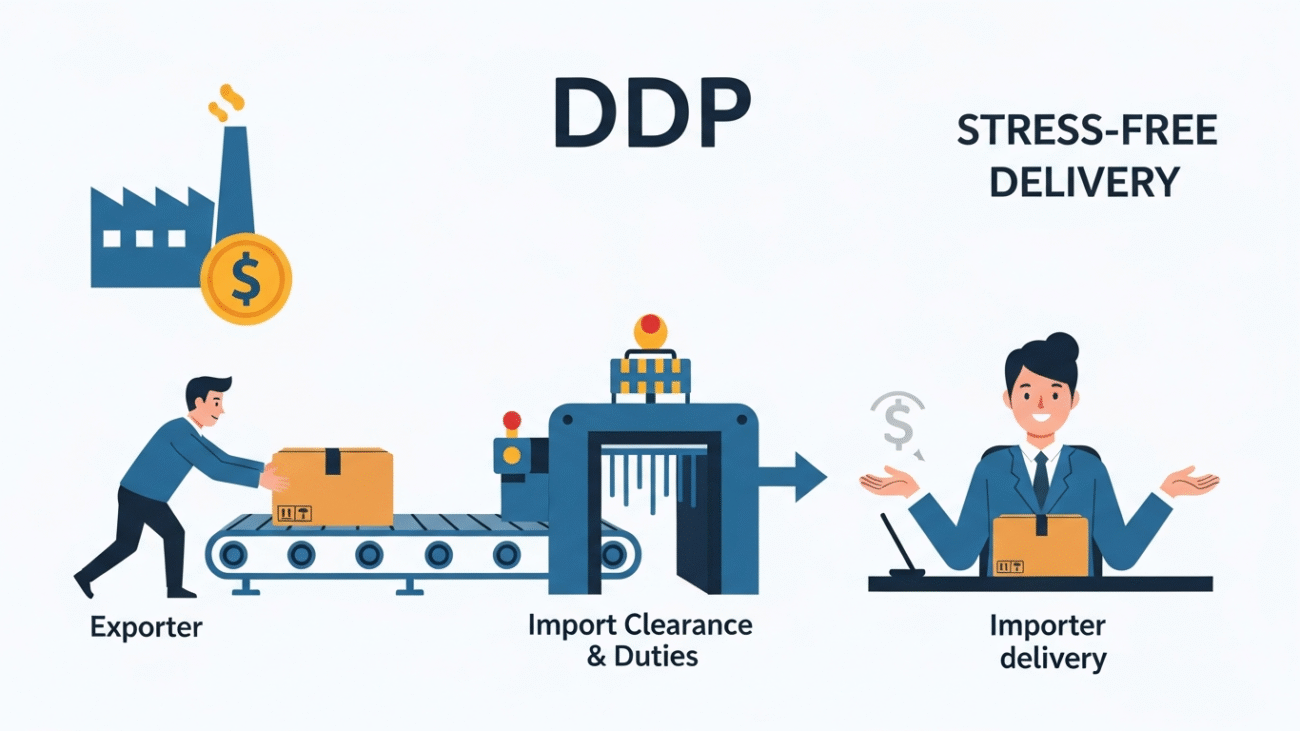
In the world of international trade, DDP (Delivered Duty Paid) represents the maximum service a seller (exporter) can offer. It is the exact opposite of EXW (Ex Works).

Under DDP, the exporter bears virtually all costs and risks required to bring the goods to the final named destination, including paying for the import duties, taxes, and customs clearance fees in the buyer’s country. For importers on TheExporterHub.com, DDP is the simplest rule, offering a true ‘landed cost’ without any hidden or unexpected charges. This is particularly common in B2C e-commerce, but also used in B2B trade when the buyer demands absolute predictability or is new to importing.


1. What is DDP (Delivered Duty Paid) Incoterm 2020?

Under the DDP Incoterm, the seller fulfills their delivery obligation when the goods are:

  1. Placed at the buyer’s disposal, ready for unloading.
  2. At the named place of destination.
  3. Cleared for import (all duties, taxes, and fees paid).

Transfer of Cost and Risk

  • Exporter’s Responsibility (Maximum): The seller is responsible for every cost and risk associated with the entire journey, including pre-carriage, export clearance, main carriage, insurance (though not mandatory, it’s necessary for the seller’s protection), and, most uniquely, Import Clearance, Duties, and Taxes (VAT/GST).
  • Transfer Point: Both cost and risk transfer from the seller to the buyer at the named destination, precisely when the goods are ready for unloading and cleared for import.

The only obligation left to the buyer is usually the physical unloading of the cargo at their receiving point.


2. The Defining Factor: Import Duties and Taxes

The defining factor that separates DDP from DAP is the seller’s responsibility for import clearance:

  • DAP: The buyer handles and pays all import duties, taxes, and clearance fees.
  • DDP: The seller handles and pays all import duties, taxes (including VAT/GST), and clearance fees.

This places an enormous burden on the exporter, who must be fully aware of the customs regulations, duty rates, tax laws, and required licenses in the buyer’s country—a foreign jurisdiction. Failure to calculate these costs accurately can result in significant financial losses for the seller.

DDP and VAT/GST

A significant risk for the seller under DDP is the payment of Value Added Tax (VAT) or Goods and Services Tax (GST) in the buyer’s country.

  • In many countries, VAT/GST paid at import can later be claimed back by the importing entity.
  • Under DDP, the seller pays the VAT/GST. If the seller does not have a legal entity registered in the buyer’s country, they cannot claim this tax back, turning it into a straight cost.
  • This VAT/GST cost can often be 15-25% of the goods’ value, making it a crucial calculation.

with bikini & get shiirtless on beach with confidence

3. Exporter and Importer Responsibilities

DDP represents the pinnacle of service for the buyer and the maximum complexity for the seller.

ResponsibilityExporter (Seller) under DDPImporter (Buyer) under DDP
Delivery & RiskBears all risk and cost until goods are ready for unloading AND cleared for import.Takes delivery and assumes risk from the point the goods are ready for unloading.
Export ClearanceResponsible for all export formalities.Not responsible.
Import ClearanceMANDATORY: Must arrange and pay all duties, taxes (VAT/GST), and fees in the destination country.Not responsible.
UnloadingNot responsible (Unless specified in the contract).Responsible for arranging and paying for unloading the goods.
InsuranceNo obligation to the buyer, but must maintain ‘all-risks’ insurance for their own protection until delivery is complete.Not responsible.

4. Conclusion: When to Use DDP

DDP is a powerful sales tool, especially for Indian exporters targeting new, small, or e-commerce buyers who demand a predictable, fixed price, or who are simply unwilling to deal with import customs complexity.

  • Use DDP when:
    1. The seller has an expert international logistics network and deep knowledge of the destination country’s customs rules and tax laws.
    2. The buyer requires a truly fixed, ‘landed cost’ quotation upfront.
    3. The seller is targeting a market where competition dictates offering maximum convenience (e.g., e-commerce fulfillment).

However, DDP should only be undertaken by exporters with high confidence in their ability to manage foreign tax and duty regulations. For most transactions, DAP is the safer choice, as it passes the variable and unpredictable import tax burden back to the local entity best positioned to handle it—the buyer.

DAP Incoterm 2020 meaning

DAP Incoterm 2020: The Importer’s Go-To for Door-to-Door Delivery

DAP Incoterm 2020 Introduction: The Convenience of DAP

DAP (Delivered at Place) is arguably the most common Incoterm for modern multimodal trade, especially for those importers who want the convenience of having their goods delivered nearly all the way to their door but prefer to handle the final steps of customs clearance and unloading themselves.

Under DAP, the seller (exporter) handles the entire logistics chain—from their factory through international transit, right up to the agreed-upon receiving point in the buyer’s country. This makes DAP highly attractive for both importers on TheExporterHub.com seeking simplicity and exporters who have strong, reliable international freight forwarder contracts. DAP clearly defines that the seller pays for carriage and bears all risk up to the named final location, providing immense clarity and transparency in pricing.


1. What is DAP (Delivered at Place) Incoterm 2020?

Under the DAP Incoterm, the seller fulfills their delivery obligation when:

  1. The goods are placed at the buyer’s disposal.
  2. On the arriving means of transport (e.g., the delivery truck).
  3. Ready for unloading.
  4. At the named place of destination (which can be a warehouse, factory, port terminal, or even a specific address).

Transfer of Cost and Risk

  • Exporter’s Responsibility (Cost & Risk): The seller is responsible for all costs and risks associated with bringing the goods to the named final destination. This includes local transport, export clearance, main carriage, and any transport within the destination country up to the delivery point.
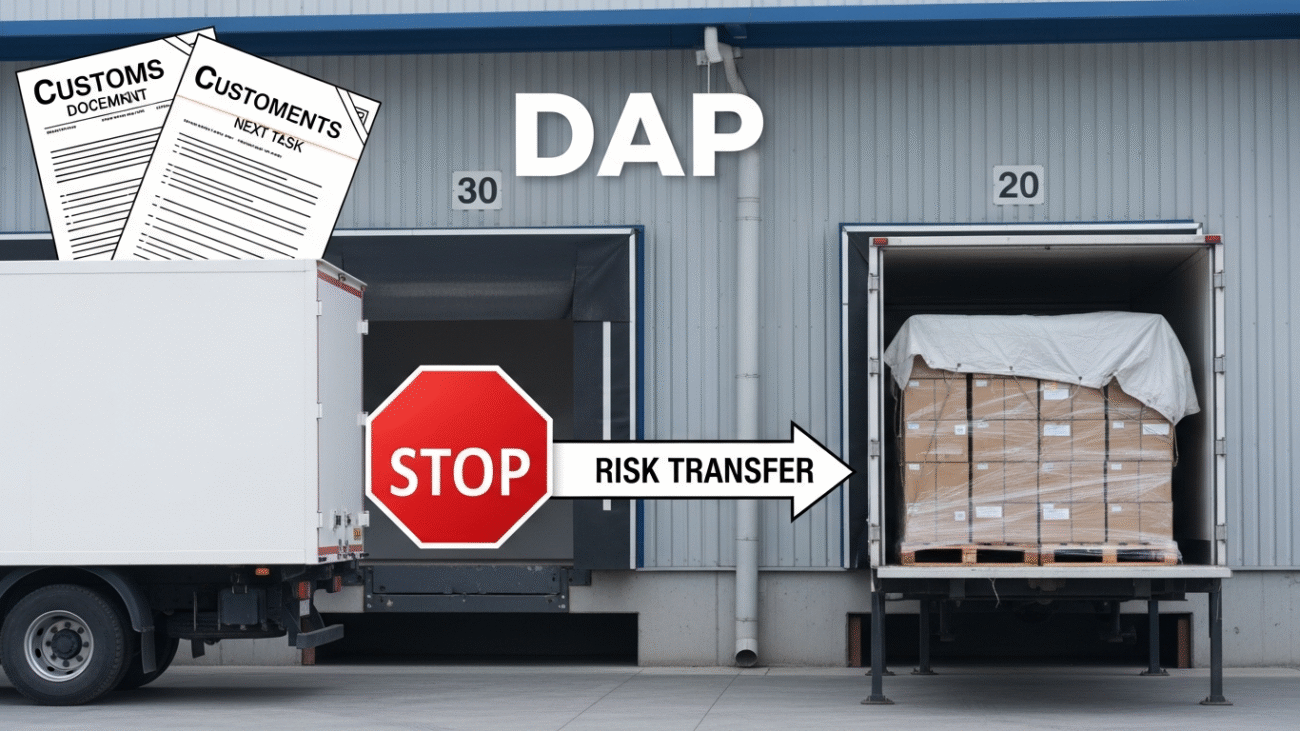
  • Transfer Point: Both cost and risk transfer from the seller to the buyer at the named destination, precisely when the goods are ready for unloading.

Crucially, Import Customs Clearance (including duties and taxes) is explicitly the buyer’s responsibility under DAP.


2. The Defining Moment: Ready for Unloading

The primary point of distinction for DAP is the moment of risk transfer, which occurs just before the goods are unloaded.

  • Risk Transfer: Once the goods have safely arrived at the buyer’s named location and are available on the delivery vehicle, the seller’s responsibility for the goods ends.
  • Unloading Responsibility: The buyer is responsible for both arranging and paying for the physical unloading of the cargo at the receiving point.
  • Why this matters: If the delivery truck arrives safely but is damaged during the buyer’s unloading process, the buyer bears the risk and the cost of the damage.

This feature makes DAP ideal when the buyer is certain they possess the necessary cranes, forklifts, or labor to safely unload the goods at their specific facility.

with bikini & get shiirtless on beach with confidence

3. Exporter and Importer Responsibilities

DAP places heavy logistical responsibility on the seller, but final regulatory and physical handling on the buyer.

ResponsibilityExporter (Seller) under DAPImporter (Buyer) under DAP
Delivery & RiskBears all risk and cost until goods are ready for unloading at the named destination.Takes delivery and assumes risk from the point the goods are ready for unloading.
Export ClearanceResponsible for all export formalities, licenses, and duties in the origin country.Not responsible.
Main CarriageMust arrange and pay for the carriage to the named destination.Not responsible.
UnloadingNot responsible.MANDATORY: Must arrange and pay for unloading the goods.
Import ClearanceNot responsible.Responsible for all import duties, taxes (VAT/GST), and customs clearance fees.
InsuranceNo obligation to the buyer, but the seller maintains ‘all-risks’ insurance to cover their own risk during transit.No obligation, but should consider contingency insurance.

4. DAP vs. DPU: The Unloading Distinction

As noted in the DPU article, the difference between the two terms comes down to a single physical step:

  • DAP: Seller delivers to the place, ready for unloading. Buyer unloads.
  • DPU: Seller delivers and unloads at the place. Seller unloads.

If you are an importer and are unsure if your receiving facility can safely handle the unloading of a heavy product like a large piece of machinery or a container of AAC blocks, it is safer to negotiate for the seller to use DPU.

5. Conclusion: When to Use DAP

DAP is the workhorse of modern Incoterms, providing a perfect blend of high service and clear responsibility separation.

  • Use DAP when:
    1. The buyer wants the seller to manage the entire complex, international logistics chain.
    2. The buyer is happy to handle the simpler, last-mile steps: unloading and import clearance (duties/taxes).
    3. The buyer wants to maintain control over the payment of local customs duties, as this is often complex to calculate accurately beforehand.

For professional trade between an Indian exporter and a global importer, DAP ensures the exporter delivers their goods with guaranteed freight and risk management, while the importer retains control over their local costs and regulatory obligations.