
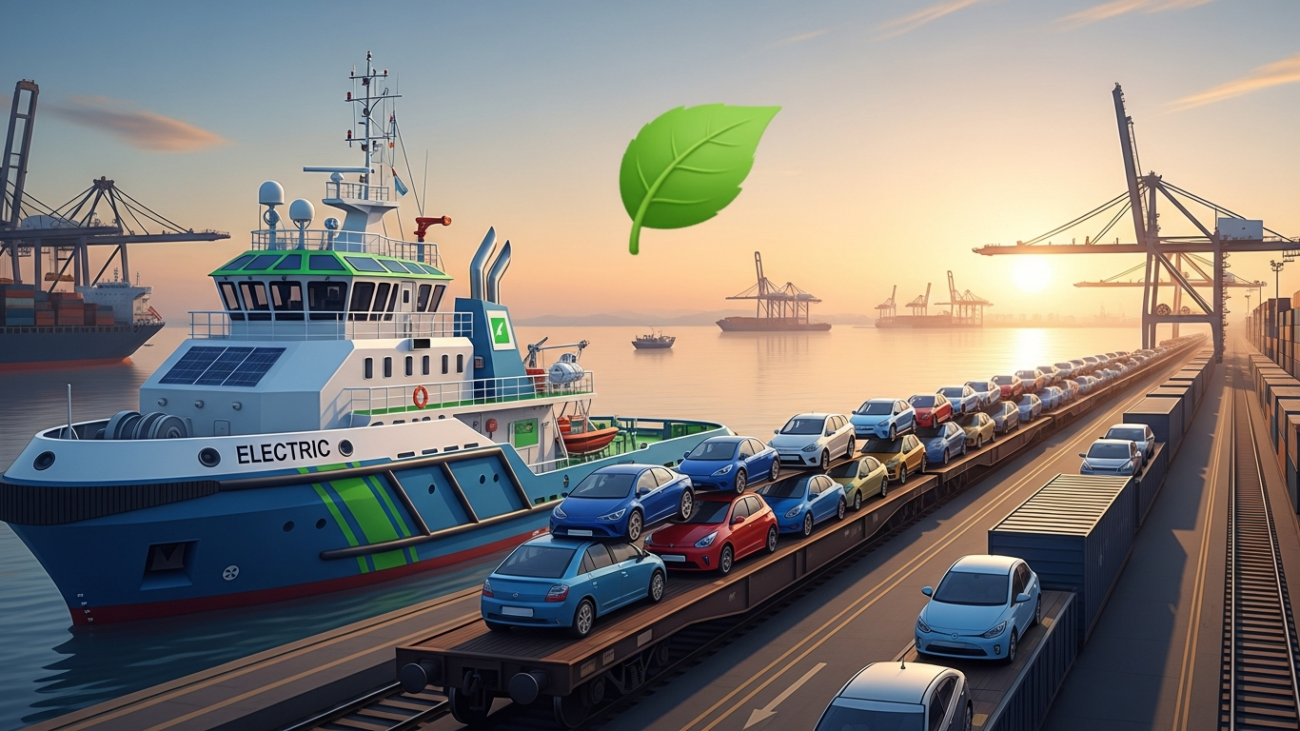
GREEN! India Launches 1st Electric Tug: 3 Logistics Shocks
The first week of December 2025 in the Logistics and Shipping sector was defined by major strides in maritime sustainability and infrastructure development, particularly in India. Key announcements centered on boosting the nation’s export competitiveness through port specialization, rail modernization, and the introduction of green technology.
This focus on operational efficiency and sustainable practices is crucial for Indian exporters, like those on The Exporter Hub, as it directly impacts transit times, reliability, and long-term supply chain costs.
1. 🚢 Green Maritime Leap: India’s First All-Electric Tug Flagged Off
In a significant step towards decarbonizing its port operations, India officially launched its first all-electric vessel, signaling the acceleration of its Green Tug Transition Programme (GTTP).
-
Electric Tug Inauguration: On December 4, 2025, the Union Minister of Ports, Shipping and Waterways flagged off the steel-cutting ceremony for India’s first all-electric tugboat. This milestone is part of the Green Tug Transition Programme (GTTP) and is designed for the Deendayal Port Authority (DPA), Kandla (located in Gujarat, the user’s home state).
-
Green Goals: The 60tonne bollard pull capacity tug will operate with zero carbon emissions and silent propulsion, contributing to the national target of inducting 50 green tugs by 2030. This transition is a direct response to global maritime decarbonization pressures and will enhance the environmental credentials of Indian ports, which is increasingly important for international trade compliance.
-
Wider Scope: The initial phase 2024-2027 of the GTTP plans to deploy 16 green tugs across major ports, reinforcing India’s commitment to making its maritime sector compliant with the IMO’s Net-Zero Framework.
2. 🚗 Gujarat’s Pipavav Port Bets Big on Ro-Ro for Auto Exports
Gujarat’s maritime infrastructure continued to gain strategic importance, with a major port announcing significant expansion focused on the automotive export sector.
-
Ro-Ro Hub Agreement: Gujarat Pipavav Port Limited (GPPL) signed an MoU with NYK India Private Limited to substantially expand its Roll-on/Roll-off (Ro-Ro) infrastructure. The goal is to scale up the port’s vehicle-handling capacity to 500,000 cars annually, with a specific focus on Electric Vehicles (EVs).
-
Multimodal Synergy: This upgrade aims to boost India’s growing automotive export ambitions by reducing vessel dwell time and improving coordination between rail and vessel transport. The investment solidifies Pipavav as a major automotive logistics hub on the West Coast, enhancing multimodal throughput for exports from manufacturing centers in Gujarat and the northern hinterland.
-
Regional Impact: This development, alongside the record-breaking performance at DPA Kandla, underscores Gujarat’s role as India’s premier gateway for both bulk and finished goods, directly benefiting regional businesses.

3. 🚆 Indian Railways Freight Records: Diversification and Efficiency
Indian Railways continued to be a backbone of the domestic supply chain, announcing robust growth figures for November, demonstrating sustained momentum in freight diversification.
-
Record Loading: Indian Railways recorded a freight loading of 135.7 million tonnes (mt) in November 2025, a 4.2 increase year-on-year. Cumulatively, freight loading reached 1,070.8 million tonnes (mt) by the end of November, achieving the 1 billion tonnes mark significantly earlier than in previous years.
-
Key Growth Segments: The growth was driven by major gains in key commodity segments, which are crucial for the user’s business (Shiv’s Assets Group), including:
-
Finished Steel and Pig Iron (+16% growth)
-
Iron Ore (+9.7% growth)
-
Containers( +6.8% growth)
-
-
Private Maintenance Plan: The Railways is also considering a major policy change to allow private players to maintain freight wagons owned by non-railway entities. This is intended to reduce turnaround time (currently up to 24 hours in some cases) and free up national capacity, potentially allowing for 10% higher freight loading by the existing fleet. This reform aims to make rail transport more competitive and reliable for bulk commodity movement.
4. 🚢 Global Container Rates Recover on Strategic Rate Hikes
After a period of modest decline, global container freight rates saw a strategic increase, primarily on the critical East-West trade lanes, signaling carrier efforts to control pricing ahead of contract negotiation season.
-
WCI Rebound: The Drewry World Container Index (WCI) increased by 7% this week to $1,927 per $40 ft container.
-
Carrier Strategy: This recovery was driven by carriers adopting a strategy of smaller, more frequent General Rate Increases (GRIs) rather than large, unsustainable hikes. Rates from Shanghai to Los Angeles climbed $\text{8\%}$, while those to New York rose 6%.
-
Outlook: While capacity remains available, this tactical pricing suggests carriers are attempting to sustain upwards pressure on spot rates before annual contract talks begin, indicating that Indian exporters should expect stable but potentially high rates in the immediate future.
Source : indianinfrastructure.com
Add a Comment