

The final week of October 2025 (October 26-31) was defined by a whirlwind of high-stakes trade diplomacy, primarily marked by a temporary but significant de-escalation of the US-China trade war and India’s energetic push to finalize two monumental Free Trade Agreements (FTAs) with the EU and the UK. For Indian exporters, particularly those in the labor-intensive sectors and building materials, these developments signal both new challenges (US tariffs remain high) and massive opportunities (new, low-tariff access to Europe and the UK).
1. The US-China Trade Truce: A Tactical Pause
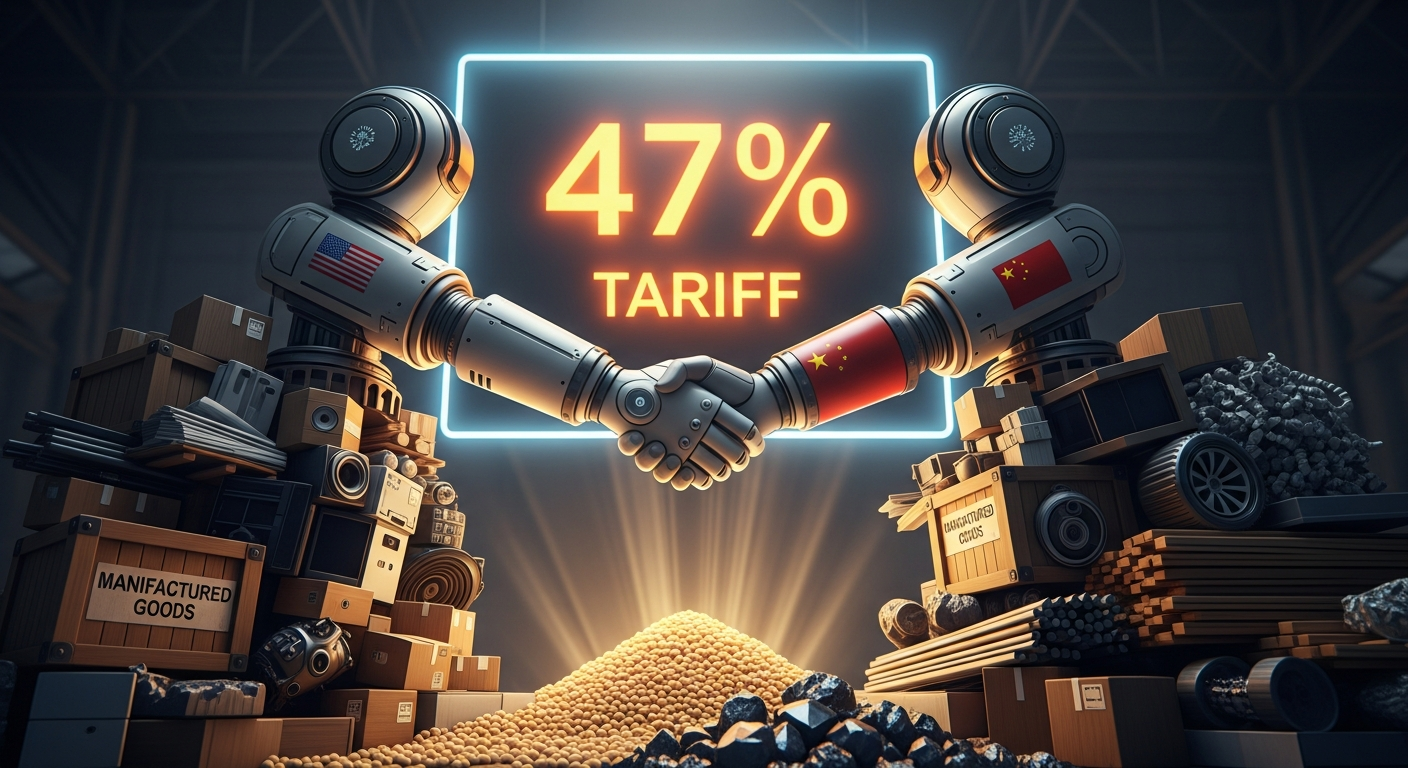
The most headline-grabbing development was the preliminary trade agreement reached between US President Donald Trump and Chinese President Xi Jinping on Thursday, October 30, 2025. This deal represents a one-year truce in the ongoing trade conflict, stepping back from a significant escalation.
Key Outcomes of the Truce:
- Tariff Reduction/Suspension: The US agreed to reduce tariffs on Chinese goods from a staggering 57% to 47% (a 10% cut), and crucially, refrain from imposing an additional 100% tariff it had threatened.
- Rare Earth Concession: China, in a major strategic move, agreed to suspend its sweeping new export controls on five additional rare earth elements and associated technologies, which are vital for the US high-tech and defense industries.
- Agricultural Buys: China committed to immediately resume significant purchases of American soybeans, including 12 million metric tons by January, and at least 25 million tons annually for 2026 and 2027.
- High-Tech Access: The agreement also opens the door for US companies, like Nvidia, to discuss the export of advanced computer chips to China, a significant point of contention.
Implication for Indian Exporters: While the truce injects some stability into global supply chains, the US tariffs on China remain historically high. This still creates an opportunity for countries like India to attract global supply chain relocation, especially in manufacturing and electronics, to bypass the 47% duty barrier. The stability, however, may slow the pace of immediate shifts.
2. India-EU FTA: Pushing Hard for a Year-End Finish
Commerce and Industry Minister Piyush Goyal was in Brussels from October 26-28, 2025, for productive and meaningful engagements with the European Commissioner for Trade and Economic Security, Maroš Šefčovič. Both sides reaffirmed their shared political commitment to conclude the India-EU Free Trade Agreement (FTA) by the end of 2025.
Key Focus Areas & Sensitivities:
- Labor-Intensive Sectors: India emphasized the need for preferential treatment for its labor-intensive sectors, such as textiles and footwear, which are critical for job creation.
- The CBAM Hurdle: Discussions continued on the EU’s controversial Carbon Border Adjustment Mechanism (CBAM), which India has strongly opposed, warning that it could act as a trade barrier. India is seeking a balanced solution that respects its developmental priorities.
- Next Steps: The EU technical team is scheduled to visit India the following week to advance the discussions toward a constructive conclusion.
3. UK-India FTA: Final Steps and Parliamentary Scrutiny
The United Kingdom and India, having already signed the Comprehensive Economic and Trade Agreement (CETA) in July 2025, were focused on the final legislative steps during this week.
Legislative Update (October 31):
- Trade Commission Report: The UK’s Trade and Agriculture Commission published its final report on the FTA on October 30, 2025.
- CRAG Process: The UK government will now produce its own report before presenting the agreement to Parliament under the Constitutional Reform and Governance (CRAG) Act 2010.
- Economic Impact: The FTA is projected to increase the UK’s GDP by 0.13% in the long run and provides significant tariff cuts on Indian exports to the UK.
For a company like yours, dealing in Building Material (AAC Fly Ash Block, TMT Bars), this deal is crucial. India’s average tariff on UK products is set to be cut significantly, and Indian sectors like engineering goods and auto parts are listed as beneficiaries, which creates a favorable environment for your broader business group. The planned reciprocal Double Contributions Convention (DCC) is also a boon for your employees on short-term transfers.

4. India-US Bilateral Trade Agreement (BTA) Progress
Despite the disruptive US government shutdown and the steep 50% reciprocal tariffs imposed by the US earlier in the year, talks for a bilateral India-US Trade Agreement continued.
- Status: Officials expressed that the two nations are “very near” to finalising a deal, with most issues converging.
- Minister Goyal’s Stance: The Commerce Minister reiterated that India will not do a trade deal “in a hurry or with a gun to our head,” emphasizing a focus on a fair and equitable, long-term agreement.
- Goal: The overarching goal remains to more than double bilateral trade to USD $500 billion by 2030.
The persistent US tariffs remain the single largest risk and opportunity driver for your sector. They make your products more competitive in the US market compared to those facing the 50% duty, but the uncertainty over future US policy keeps the pressure high.
5. WTO Global Trade Outlook Update
The World Trade Organization (WTO) announced an update to its Global Trade Outlook, which provided the overarching context for all these bilateral deals.
- 2025 Forecast Raised: Global merchandise trade growth for 2025 was raised to 2.4% (up from 0.9% in August), driven by a surge in AI-related product trade and “frontloading” of North American imports ahead of anticipated tariff hikes.
- 2026 Outlook Dims: Crucially, the WTO lowered the 2026 projection to a sluggish 0.5%, signaling that the temporary drivers of 2025 are not sustainable and that trade policy pressures continue to weigh heavily on the long-term outlook.
This dim outlook for 2026 underscores why India’s aggressive pursuit of the UK and EU FTAs is a vital diversification strategy to secure market access outside of a volatile US-China-dominated global trade system.
Add a Comment