
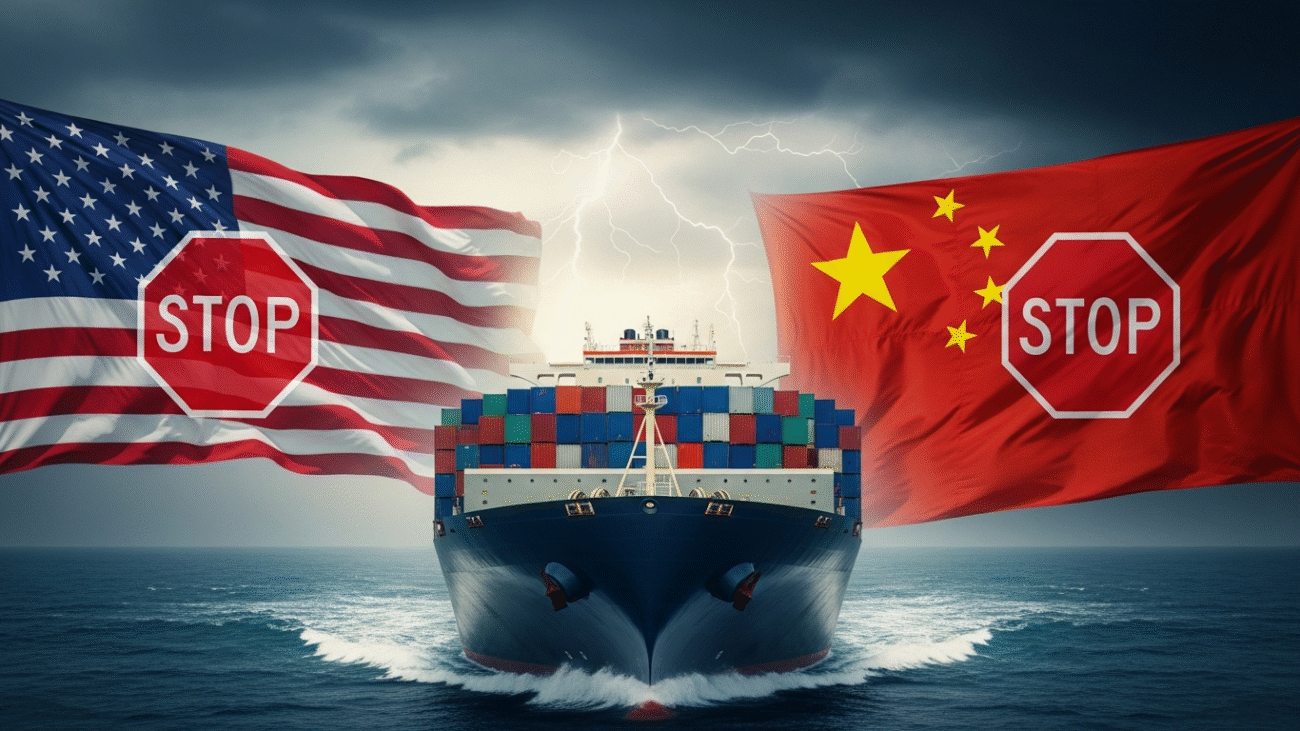
The week of October 26-31, 2025, has proven to be one of intense volatility and regulatory uncertainty in the global logistics and shipping sector. Key developments centered on the fallout from a prolonged U.S. government shutdown, the imposition of retaliatory port fees between the U.S. and China, and sharp, market-defying spikes in trans-Pacific container freight rates. For exporters, especially those in India, this week underscored the critical need for supply chain agility and compliance vigilance.
🇺🇸 U.S. Government Shutdown: Export Licensing Grind to a Halt
The extended lapse in U.S. federal funding, which began on October 1, 2025, continued to severely strain government agencies critical to international trade during this week.
Core Functions Continue, but Licensing is Frozen
- U.S. Customs and Border Protection (CBP): The most essential trade functions remained “fully operational.” As CBP officers are deemed “essential personnel,” all ports of entry are staffed, cargo is being cleared, and tariff collection, inspections, and enforcement activities are ongoing. The Automated Commercial Environment (ACE) system is also fully accessible. Cargo will move, but administrative and back-office support for importers may be slower.
- Export Licensing Agencies: This is where the biggest impact is felt. Agencies responsible for export controls have “significantly curtailed” operations:
- Bureau of Industry and Security (BIS): The processing of new and active export license applications for dual-use goods has ceased, with the exception of emergency applications related to national security or the protection of U.S. life and property. Enforcement activity, however, continues.
- Directorate of Defense Trade Controls (DDTC): Services are also significantly curtailed, making submissions for licenses (via the DECCS system), registrations, and commodity jurisdiction determinations generally unavailable.
- Office of Foreign Assets Control (OFAC): Only emergency applications are being processed, with all others held until funding is restored. Sanctions lists (SDN List) and enforcement remain active.
Impact for Exporters: Any international shipment requiring a new or pending U.S. export license (e.g., in high-tech, defense, or certain industrial sectors) is facing severe, indefinite delays. Exporters must assume a near-total freeze on non-essential license approvals, demanding a proactive review of all pending and future U.S.-bound or controlled-goods shipments.
Urgent 5 Major Risks Crippling Global Logistics in Q4
🚢 The New Trade War: Retaliatory Port Fees Hit Trans-Pacific Carriers
A fresh, worrying development this week was the escalation of the trade conflict into the maritime sector, impacting Trans-Pacific shipping operations directly.
- The U.S. Fee: Effective October 14, 2025 (and thus fully in effect this week), new U.S. port-entry service fees began targeting Chinese-owned/operated vessels, Chinese-built vessels, and foreign-built vehicle carriers. These fees are a Section 301 action imposed by the Office of the U.S. Trade Representative (USTR).
- China’s Retaliation: In direct response, China’s Ministry of Transport announced and implemented a “Special Port Service Fee” on U.S.-linked vessels (including those that are U.S.-owned, operated, or controlled) starting on October 14, 2025. This fee is levied per net ton, with a cap of five voyages per vessel per year.
Impact for Carriers & Shippers: These tit-for-tat fees introduce a significant new cost vector and a layer of extreme complexity for carriers and vessel operators on the vital Asia-U.S. trade lane. While some large Chinese carriers are reportedly absorbing the costs, these fees will ultimately be passed down to shippers through new surcharges, increasing the landed cost of goods. The move signals a concerning geographical expansion of trade friction from tariffs on goods to fees on the means of transport itself.
📈 Ocean Freight Rates Spike Amid Market Fundamentals
Against a backdrop of geopolitical tension and a U.S.-China tariff truce (announced in May 2025), ocean freight spot rates experienced sharp increases on major routes, defying the underlying market trend of subdued demand.
| Route | Average Spot Rate (30 Oct 2025) | Change from One Month Ago | Year-to-Date Change (Since Dec 31, 2024) |
| Far East to US West Coast | $2145 per FEU | Up 31.4% | Down 55% |
| Far East to US East Coast | $3046 per FEU | Up 18.2% | Down 49% |
| Far East to North Europe | $1964 per FEU | Up 10.4% | Down 61% |
- The Surge: Spot rates from the Far East into the US West Coast and East Coast showed the highest volatility, rising by over 31% and 18% respectively in October. These increases are primarily driven by carrier capacity management (e.g., blank sailings and service suspensions) and the market sentiment from the temporary US-China tariff truce, which encouraged some importers to front-load shipments earlier in the year to avoid future hikes.
- The Long View: Despite the recent spikes, rates remain dramatically lower (down 49% to 61%) compared to the end of 2024. Analysts suggest the uptick is a tactical move by carriers ahead of new contract tenders for 2026, rather than a sign of a fundamental demand rebound.
🇮🇳 Indian Exporters: Navigating Global Headwinds and Domestic Hurdles
For Indian exporters, including the vital work of The Exporter Hub in connecting verified companies with reliable importers, the global situation presents both challenges and opportunities.
- Global Exposure: Indian reefer (refrigerated container) exports to the U.S. have already dropped by 30% to 50% due to steep U.S. tariffs on goods like seafood and frozen foods. This necessitates a strategic pivot to other markets or a consolidation of logistics to cut costs.
- Logistics Infrastructure: Domestic challenges persist. While the government’s PM Gati Shakti and Sagarmala initiatives are driving investments, high logistics costs (14-16% of GDP, versus 8-10% in developed countries), poor last-mile connectivity, and warehousing inefficiencies continue to be major hurdles. The trend is moving toward rail freight (containerized rail growing at 7% CAGR) as manufacturers seek more predictable timelines compared to road transport.
- Export Momentum: Despite the difficulties, India’s merchandise exports remain robust, growing by 7.1% globally in 2024, outpacing global growth. Sectors like Drugs and Pharmaceuticals (up 7.30% year-on-year) and Readymade Garments (up 5.78%) show strong upward trajectories, with key growth in markets like Hong Kong and China, which are now being viewed as “Gateways to India.”
The week’s news solidifies the need for Indian exporters to leverage platforms like The Exporter Hub for verified connections and to utilize digital tools to gain real-time visibility and mitigate risks from volatile global trade policies.
Source : XENETA
Add a Comment