
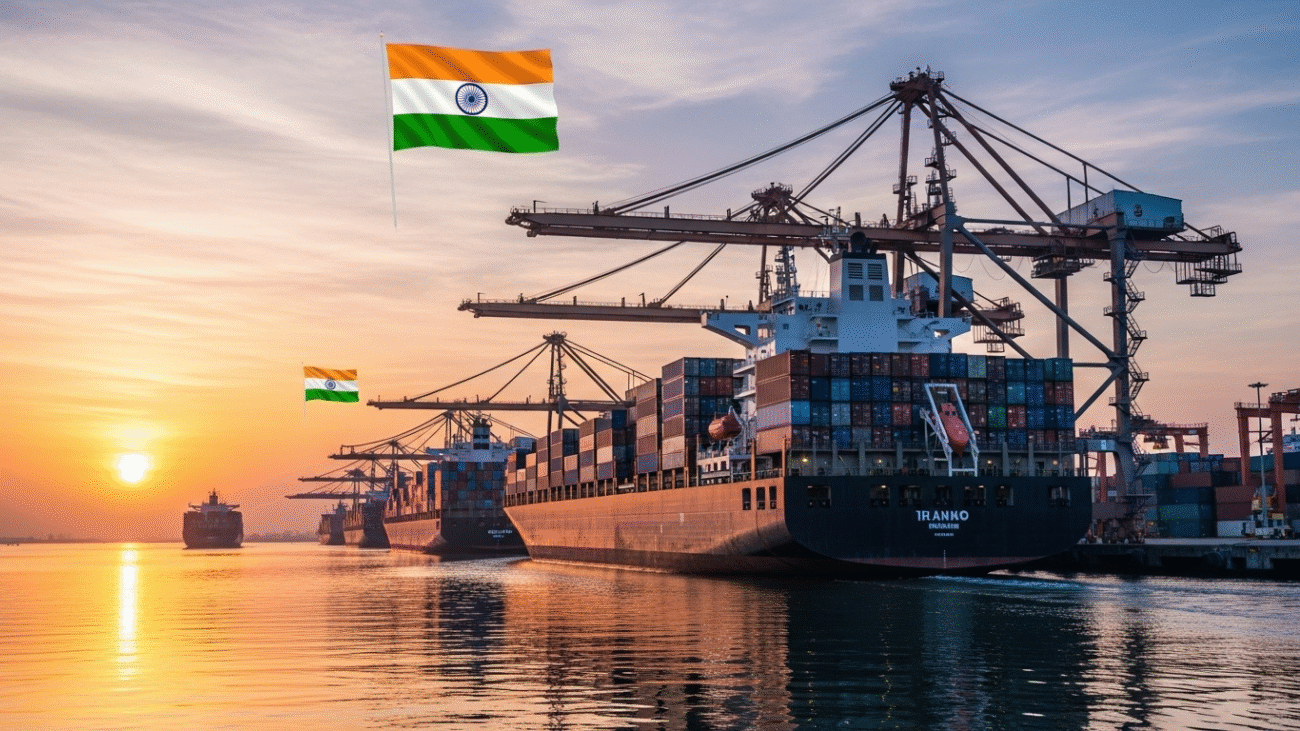
The global logistics and shipping sector, a bedrock of Global Trade, faced a confluence of geopolitical, economic, and technological pressures in the week of October 19-25, 2025. Key headlines revolved around escalating trade protectionism and its immediate impact on freight rates, continued geopolitical risk at crucial maritime chokepoints, and India’s strategic push for self-reliance and efficiency in its own port infrastructure. For exporters like The Exporter Hub, understanding these shifts is vital for managing costs, transit times, and compliance, especially as a platform connecting Indian exporters with global markets.
1. Geopolitical Turmoil Hits the Global Flow of Goods
Trade Tariffs and an Unstable Rate Environment
The specter of trade protectionism loomed large over the global shipping market this week, with major economies initiating new tariffs and trade restrictions that immediately disrupted established trade lanes.
The recent announcement of significant new US tariffs, particularly on goods like lumber, furniture, and heavy-duty trucks, set off a wave of uncertainty. While the tariffs are intended to spur domestic production, the immediate effect is a hike in costs for importers, which will inevitably be passed on to consumers.
In the container market, the week saw a minor but significant uptick in the Drewry World Container Index (WCI) of 3%, marking the second straight week of increase after a prolonged 17-week decline. This slight rise suggests that carriers’ ongoing capacity management strategies, including postponed Peak Season Surcharges (PSS) and blank sailings, are beginning to gain traction in the Transpacific and Asia-Europe lanes. However, the overarching reality remains a supply-demand imbalance fueled by massive new vessel capacity additions, which continues to keep overall spot rates depressed and below break-even levels for many operators. The turbulence created by new tariffs complicates forecasting, leading both shippers and carriers to revisit and renegotiate long-term fixed-rate contracts to ensure flexibility.
Critical Chokepoints and Supply Chain Vulnerability
The vulnerability of global trade arteries was once again highlighted, with the UN Conference on Trade and Development (UNCTAD) issuing a stern warning: disruptions at the Suez and Panama Canals continue to threaten global trade and development.
In the Panama Canal, drought-related water restrictions persist, leading to reduced daily vessel transits and increasing transit times. In the Suez Canal, traffic remains significantly down from its peak due to ongoing geopolitical tensions in the region. The necessity of rerouting vessels around the Cape of Good Hope, while increasing resilience for some, adds substantial costs—estimated at up to $400,000 extra for a large container ship due to increased fuel, crew wages, and compliance with the EU’s Emissions Trading System (ETS). These longer routes not only raise prices but also increase the risk of cargo damage, such as moisture and corrosion, due to extended exposure to fluctuating climate zones, a major concern for all exporters, including Indian businesses shipping perishable or sensitive goods.
2. India’s Strategic Push: Efficiency, Investment, and Self-Reliance
India, a key player in the global logistics arena and a focus market for The Exporter Hub, made significant strides this week towards modernizing and securing its supply chain.
‘One Nation-One Port Process’ and Major Infrastructure Deals
The Union Minister launched the ‘One Nation-One Port Process (ONOP)’ initiative. This landmark step aims to standardize and streamline operations across all major Indian ports, removing inconsistencies in documentation that previously led to delays and higher costs. Critically, the initiative has already resulted in a reduction of required container operation documents by 33% (from 143 to 96), a massive boost to the Ease of Doing Business for Indian exporters.
Complementing this reform is a push for major infrastructure investment. The Housing and Urban Development Corporation (HUDCO) and the Jawaharlal Nehru Port Authority (JNPA), India’s largest container port, signed a non-binding Memorandum of Understanding (MoU) for collaboration on existing and upcoming port infrastructure projects worth an estimated ₹5,000 crore. This investment is poised to further enhance JNPA’s capacity and efficiency, building on its already improved operational performance, where the average turnaround time across major Indian ports has significantly reduced.
The ‘Atmanirbharta’ Imperative for Resilience
Union Minister Piyush Goyal, speaking at an UNCTAD roundtable, emphasized India’s strategic shift towards ‘Atmanirbharta’ (self-reliance) in its supply chain. He stated that India is now prioritizing resilience and trust over mere cost efficiency, a policy that involves reviewing every sectoral supply chain to identify vulnerabilities and expand domestic manufacturing capacity. This national strategy directly supports The Exporter Hub’s mission to foster the growth of Indian exporters by creating a more robust and dependable domestic logistics framework. The drive for digital integration was also highlighted, with the new MAITRI initiative aiming to use AI and Blockchain to create a seamless ‘Virtual Trade Corridor’, promising reduced processing time and optimized trade flows.
3. The Digital and Regulatory Tides of Global Logistics
AI and Supply Chain Transformation
Digitalization remains an unstoppable force. A new report this week positioned the “New-Generation Supply Chain” as a top priority for 70% of executives, with Artificial Intelligence (AI) and agentic systems expected to transform supply chain frameworks. This trend underscores a move from linear chains focused purely on efficiency to resilient, digitally-connected networks. The focus is on targeted AI applications, such as for supplier discovery, selection, and spend analysis, where clear business cases provide quick, tangible returns.
Regulatory and Risk Changes
In Europe, the pending expansion of the EU’s Emissions Trading System (ETS2) to include road transport will significantly raise logistics and building heating costs, compelling companies to integrate carbon price modeling into their financial planning. This new regulation highlights the growing cost burden of sustainability compliance for businesses operating in or trading with the EU. Meanwhile, a prolonged AWS outage during the week underscored the increasing operational risks associated with deep reliance on cloud services for critical logistics workflows, causing delays in tracking and fulfillment.
Conclusion: A Complex Landscape for Exporters
The week’s news paints a picture of a logistics and shipping sector at a critical junction. Global trade faces headwinds from rising protectionism and geopolitical vulnerabilities at sea. Conversely, technological innovation and strategic government action, particularly in India, are driving domestic efficiency and building greater long-term resilience. For Indian exporters, leveraging platforms like The Exporter Hub and aligning with the government’s digital and infrastructure push will be key to navigating this complex, high-stakes environment.
Add a Comment