
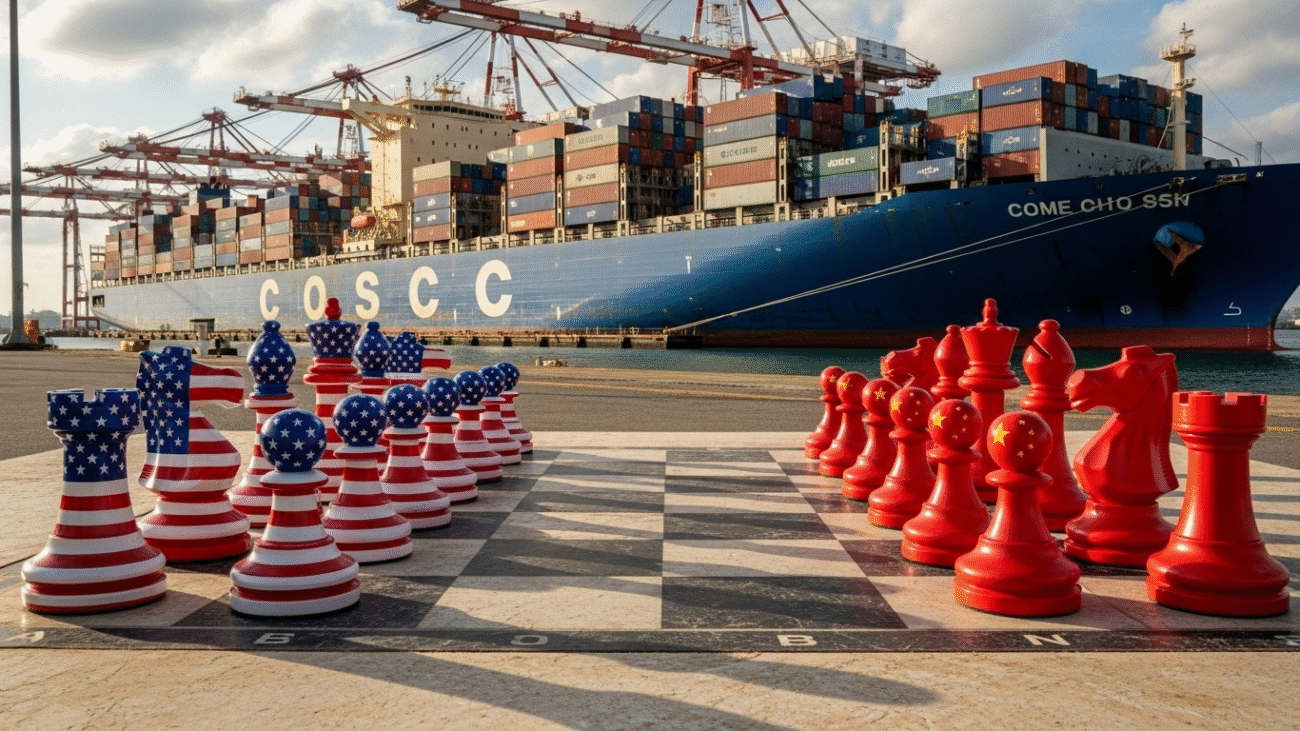
The week of October 19–25, 2025, was defined by a palpable sense of urgency in global trade circles, as high-stakes, last-minute negotiations commenced between the US-China in Malaysia. The outcome of these talks will directly impact everything from technology supply chains to commodity prices, presenting both risks and opportunities for Indian exporters like The Exporter Hub and manufacturers like Shiv’s Assets Group. Simultaneously, new data highlighted India’s impressive ability to diversify its export markets, successfully mitigating the impact of US tariff pressures.
1. The Pivotal US-China Trade Showdown in Malaysia
The most critical global trade news this week centered on the high-level economic officials from the US and China meeting in Kuala Lumpur, Malaysia (October 24–27, 2025). These consultations are widely viewed as a last-ditch effort to prevent a major escalation of the trade conflict before a tariff truce expires on November 10, 2025.
Flashpoints and the Rare Earth Standoff
- Rare Earths and Tariffs: The immediate trigger for the renewed crisis was China’s expanded export controls on rare earth magnets and minerals (critical for electric vehicles and defense tech), which was met by a threat from the US to impose new, potentially 100% tariffs on Chinese goods.
- Technology Curbs: The US side continued to expand its export blacklist, covering thousands more Chinese firms and considering curbs on software-powered exports, from jet engines to laptops. This move injects massive uncertainty into the global supply chain, forcing companies to urgently review their compliance and sourcing strategies.
- Goal: Salvaging the Summit: The talks’ primary short-term goal is to establish an “intermediate ceasefire” to pave the way for a crucial meeting between the US and Chinese Presidents at the upcoming APEC summit in South Korea next week. Failure to secure a basic agreement would likely lead to an immediate and significant tariff escalation on both sides, dealing a severe blow to global trade volumes in 2026.
Implication for Exporters: The outcome of these talks is paramount. Continued escalation could disrupt the supply of raw materials and components, increasing costs for manufacturers like Shiv’s Assets Group and creating significant price volatility for all exporters. Forward-thinking companies must accelerate their supply chain diversification away from reliance on either nation for single-source components.
2. India’s Strategic Export Diversification Pays Off
While the US-China conflict dominates headlines, positive data from the Indian trade front underscored a robust counter-tariff strategy that is beginning to yield significant results.
Resilient Performance Amidst Global Headwinds
- Sustained Growth: India’s exports performance remains resilient despite the pressures, with overall exports rising an estimated 6.7% Year-on-Year (YoY) in September 2025 (data released this week), led by sustained momentum in electronics, engineering goods, and marine products. Total merchandise exports for the first half of FY26 stood at a healthy $220 billion.
- Targeting New Markets: The key to this resilience is market diversification. Exports to non-traditional markets like Spain, the UAE, China, and Bangladesh have registered steady sequential gains, signaling a successful redirection of trade channels away from over-reliance on the US market where shipments have dropped by nearly 37.5% over four months due to new tariffs.
- Sectoral Strength: Electronic exports have remained buoyant, surging by over 50% YoY. Marine product exports, initially expected to be hit hard by US tariffs, also expanded by over 23% YoY, demonstrating the adaptability of Indian exporters in finding new destinations.
Implication for The Exporter Hub: This data strongly supports the core mission of The Exporter Hub—to connect Indian companies with a reliable, diversified base of global importers. The growth in electronics and engineering goods presents a massive opportunity for Indian manufacturers.
3. WTO and Digital Trade: Future Challenges
Discussions at the World Trade Organization (WTO) General Council (early October, details reported this week) highlighted the future challenges facing global trade, particularly in the digital realm.
- E-Commerce Stalling: Members expressed frustration that the plurilateral agreement on e-commerce has yet to be incorporated, despite estimates that its implementation could boost global trade by up to $8.7 trillion by 2040, with lower and middle-income countries benefiting most. The delay is costing the global economy approximately $159 billion annually in foregone trade.
- Regulatory Fragmentation: The impact of unilateral regulations, such as the EU’s General Data Protection Regulation (GDPR), was discussed as a factor creating a new “digital divide” by making cross-border data flows more difficult and imposing high compliance costs. This trend towards regulatory silos poses a long-term challenge to the WTO’s ability to govern global trade effectively, especially in the growing age of Artificial Intelligence (AI)-driven trade.
4. Maritime Trade & Logistics: A Constant Chokepoint
While not a new crisis this week, the ongoing volatility in global shipping logistics remains a major headwind for all trade-dependent businesses. Attacks in the Red Sea and restrictions at the Panama Canal continue to force vessels to reroute around the Cape of Good Hope, adding 10-14 days to transit times and keeping global freight rates elevated. This persistent pressure underscores the need for exporters to factor in longer lead times and higher shipping costs into their price negotiations and inventory planning.
Source: The Economic Times – Report on the US-China Trade Talks and India’s counter-tariff strategy.
Add a Comment